Power Matcher

Which power station
fits you?

Enter what you want to run, and for how long. We do the calculation.

Recommended capacity≈ 1.2 kWh

65 W × 12 h = 780 Wh, + 20% reserve = 936 Wh, ÷ 0.8 usable ≈ 1,170 Wh.

The device you entered comes with you into the full planner.

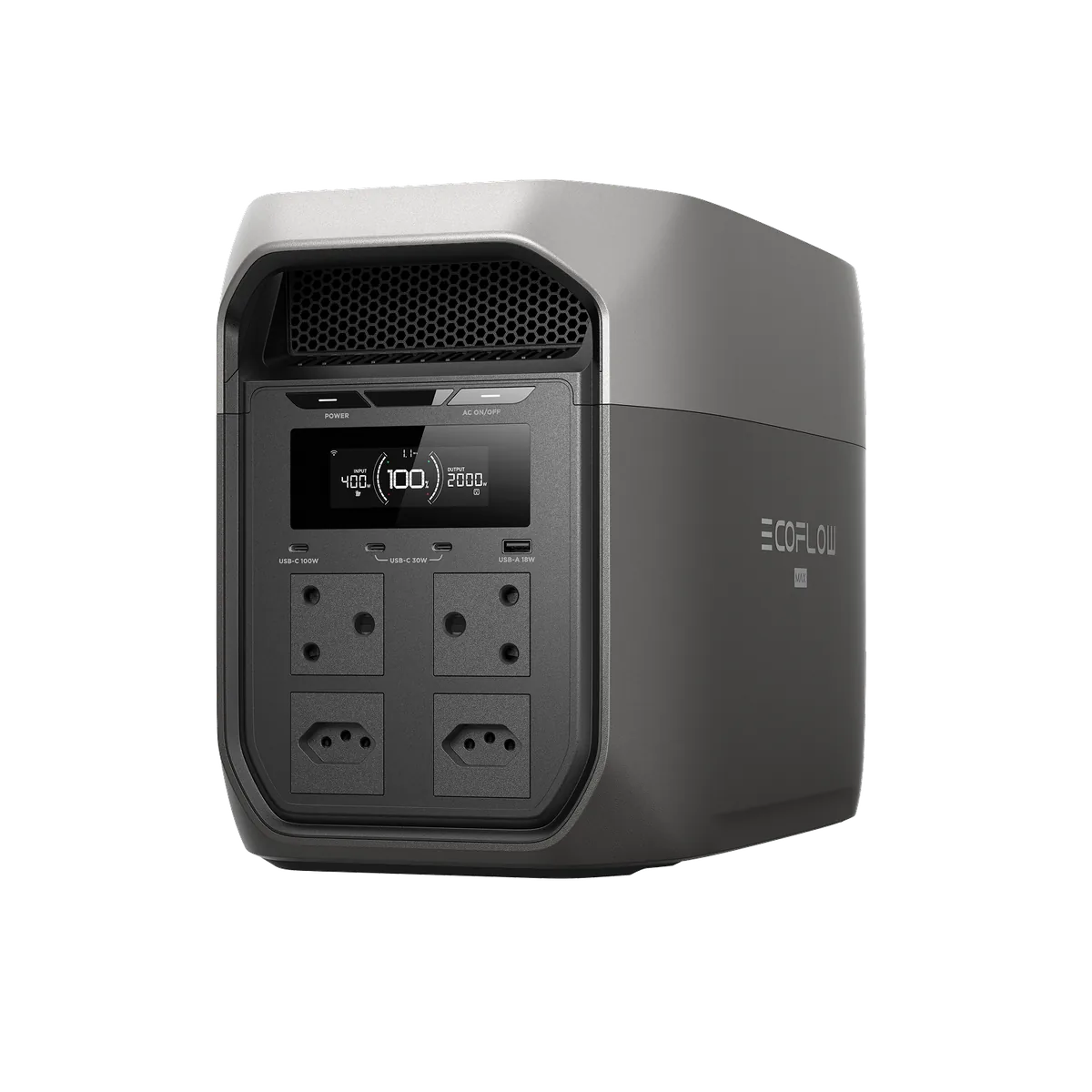
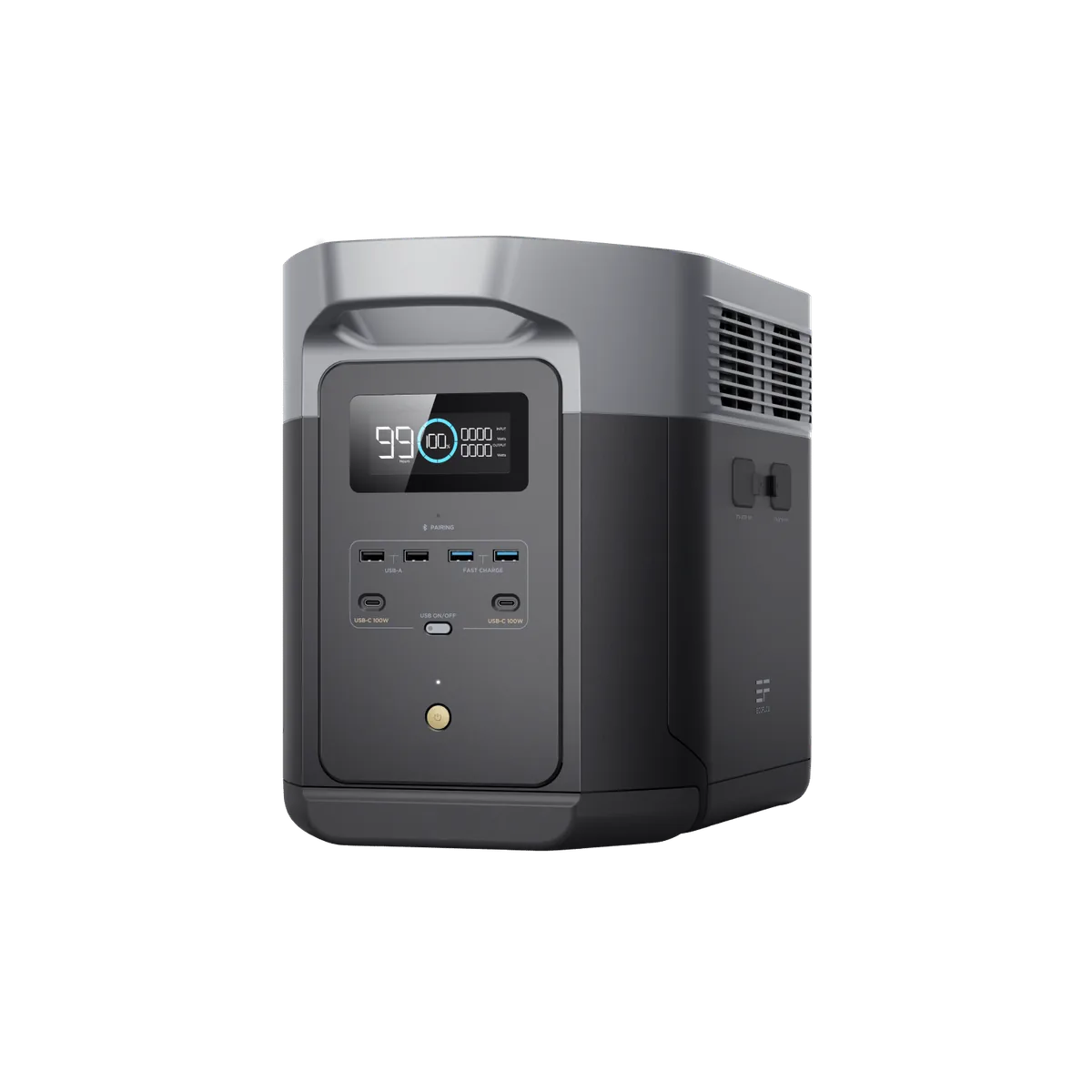
EcoFlow DELTA 3 Max — Manufacturer gallery model illustration (ZA-style outlets); delivered hardware may differ.
EcoFlow

DELTA 3 Max

2 048 Wh · 2 400 W continuous

Estimated runtime21,4hours
9,4 hours above your target

Meets your calculated target

Full product profile
Why this model?

Meets your calculated battery and power target.

2 048 Wh × 85% efficiency × 80% usable, divided by 65 W.

The starting surge is still unknown; check it separately.

Energy and continuous-power comparison from EcoFlow South Africa product pages. Stock, price, warranty, delivered SKU and socket compatibility are separate checks. Official EcoFlow South Africa gallery model illustration. Where sockets are visible, the artwork shows South African three-round-pin (Type M-style) and two-pin sockets. Gallery images do not prove the sockets, lead or hardware revision of a delivered unit. 3200 W X-Boost is not continuous output, and the South African table gives no surge figure or duration. On 5 October 2026 the standalone unit was not available in the store feed; only the solar-panel bundles were. Manufacturer gallery model illustration (ZA-style outlets); delivered hardware may differ.
EcoFlow DELTA 2 Max — Manufacturer gallery model illustration (US-style outlets); delivered hardware may differ.
EcoFlow

DELTA 2 Max

2 048 Wh · 2 400 W continuous

Estimated runtime21,4hours
9,4 hours above your target

Meets your calculated target

Full product profile
Why this model?

Meets your calculated battery and power target.

2 048 Wh × 85% efficiency × 80% usable, divided by 65 W.

The starting surge is still unknown; check it separately.

Energy and continuous-power comparison from EcoFlow South Africa product pages. Stock, price, warranty, delivered SKU and socket compatibility are separate checks. Official EcoFlow South Africa gallery model illustration. Where sockets are visible, the artwork shows South African three-round-pin (Type M-style) and two-pin sockets. Gallery images do not prove the sockets, lead or hardware revision of a delivered unit. The 4800 W surge has no duration. X-Boost is 3100 W in the table but 3400 W in a page bullet. The table’s “AC Input Voltage” row repeats the USB-A text, so the AC charging voltage is not confirmed here. No UPS or EPS switchover time is stated on the South African page. Manufacturer gallery model illustration (US-style outlets); delivered hardware may differ.
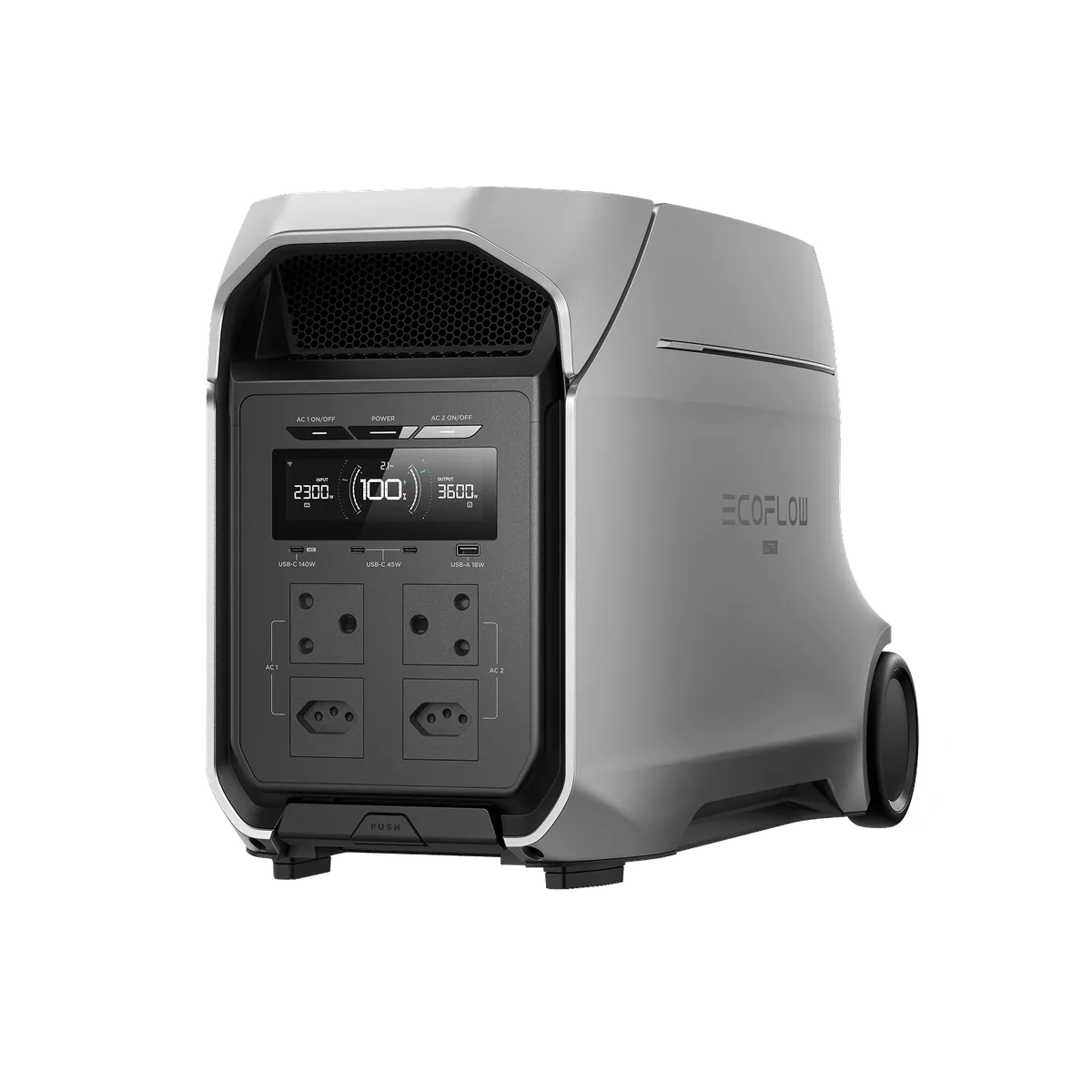
EcoFlow DELTA 3 Ultra Plus — Manufacturer gallery model illustration (ZA-style outlets); delivered hardware may differ.
EcoFlow

DELTA 3 Ultra Plus

3 072 Wh · 3 600 W continuous

Estimated runtime32,1hours
20,1 hours above your target

Meets your calculated target

Full product profile
Why this model?

Meets your calculated battery and power target.

3 072 Wh × 85% efficiency × 80% usable, divided by 65 W.

The starting surge is still unknown; check it separately.

Energy and continuous-power comparison from EcoFlow South Africa product pages. Stock, price, warranty, delivered SKU and socket compatibility are separate checks. Official EcoFlow South Africa gallery model illustration. Where sockets are visible, the artwork shows South African three-round-pin (Type M-style) and two-pin sockets. Gallery images do not prove the sockets, lead or hardware revision of a delivered unit. 4700 W X-Boost and 7200 W surge are not continuous output, and no surge duration is given. The table lists two 45 W USB-C ports, but the gallery artwork also labels a 140 W USB-C port; confirm the hardware revision. At about 34 kg it is a wheeled unit rather than a carry-around one. Manufacturer gallery model illustration (ZA-style outlets); delivered hardware may differ.

Four checks.
One confident answer.

Battery size is only the beginning. A useful recommendation must last long enough, handle the load, connect correctly and suit the country where it will be used.

  1. Will it last? Energy.

    Usable capacity covers the runtime you need.

  2. Can it start? Output.

    Continuous power and startup load both fit.

  3. Will it connect? Connection.

    The plug, cable and charging path are correct.

  4. Is it local? Region.

    Voltage, sockets and the regional model match.

When every check passes: A realistic candidate—not a blind recommendation.

How we verify products →

Worldwide by design Country is part of compatibility—not just delivery. Regional matching →

  • Calculations stay independent of sales
  • 230 V / 50 Hz: check each appliance, its start-up power and SANS 164 sockets
  • Check the exact South African version and supplied lead
Choose a real situation

Start where you are.

Pick the situation closest to yours. Each example opens on its own page with the full energy budget.

See all 7 setups →
One question at a time

Choose the answer you need.

No wall of explanations. Open one focused guide, or browse the complete guide library.

See all guides →
Privacy
YOUR POWER SETUP

Cookies

May we use Google Analytics cookies to understand which pages are useful? Only with your permission. We do not send calculator entries. You can change your choice below at any time. Cookie policy · Privacy