Camping and off-grid power: daily consumption and solar charging
Plan off-grid camping power: daily energy use for a 12 V fridge, lights and phones, how much a solar panel can realistically put back, and the voltage (Voc) limits of a solar generator input.
A 12 V fridge averaging 20 W, camp lights and two phones use about 560 Wh a day, or about 660 Wh drawn from the battery at 85% efficiency. A 200 W panel puts back roughly 300 to 750 Wh a day depending on the equivalent full-sun hours you assume.
See why this fits200 W panel: harvest under different assumptions
usable Wh ÷ average W = hoursUse the row closest to your situation. The explanation below shows what can move the result.
Comparison table
| Equivalent full-sun hours (assumed) | Calculation | Energy into the battery |
|---|---|---|
| 2 hours (cloud, shade or poor angle) | 200 × 2 × 0.75 | About 300 Wh |
| 4 hours | 200 × 4 × 0.75 | About 600 Wh |
| 5 hours (clear sky, well aimed) | 200 × 5 × 0.75 | About 750 Wh |
Planning estimate only. Real runtime varies with temperature, load behavior, battery condition and conversion path.

Use your own watts, hours and reserve.
A realistic input gives you a useful range instead of a false promise.
Open Power Planner →What does this mean
for your choice?
Start with a day's consumption
A 12 V compressor fridge averaging 20 W over 24 hours uses 480 Wh. Two LED camp lights at 5 W each for five hours add 50 Wh, and two phone charges add about 30 Wh, for 560 Wh. At 85% efficiency the battery must deliver about 659 Wh. Using the fridge's 12 V input directly avoids running an inverter all day.
Rated panel watts are not daily energy
A 200 W panel produces about 200 W only in strong, direct sun at a good angle, and less when hot, dusty, shaded or poorly aimed. Multiplying by equivalent full-sun hours and a 0.75 system factor gives a planning range. The sun-hour values in the table are assumptions, not a forecast for any location or season; in the example only the five-hour case covers the full day's use.
Stay inside the solar input limits
A solar generator (a power station with panels) accepts solar input only within a voltage range and up to a current and power limit. Check the panel's open-circuit voltage (Voc), not just its rated voltage. Voc rises in cold weather, so two panels in series that are close to the limit on a warm day can exceed it on a cold morning. Panels in series add voltage; in parallel they add current. Check your setup in the solar input checker and read “Which solar panel can charge your power station?”.
Carry a reserve for bad days
Size the battery to cover at least one day without useful sun, or plan another charging route such as the vehicle's 12 V supply while driving. Keep the station shaded and ventilated; a hot battery may charge more slowly or stop charging.
Connectors and cables
Solar connectors and adapter cables must match the station's input, polarity and current. See “Which solar cable do I need for my power station?” before buying a cable.
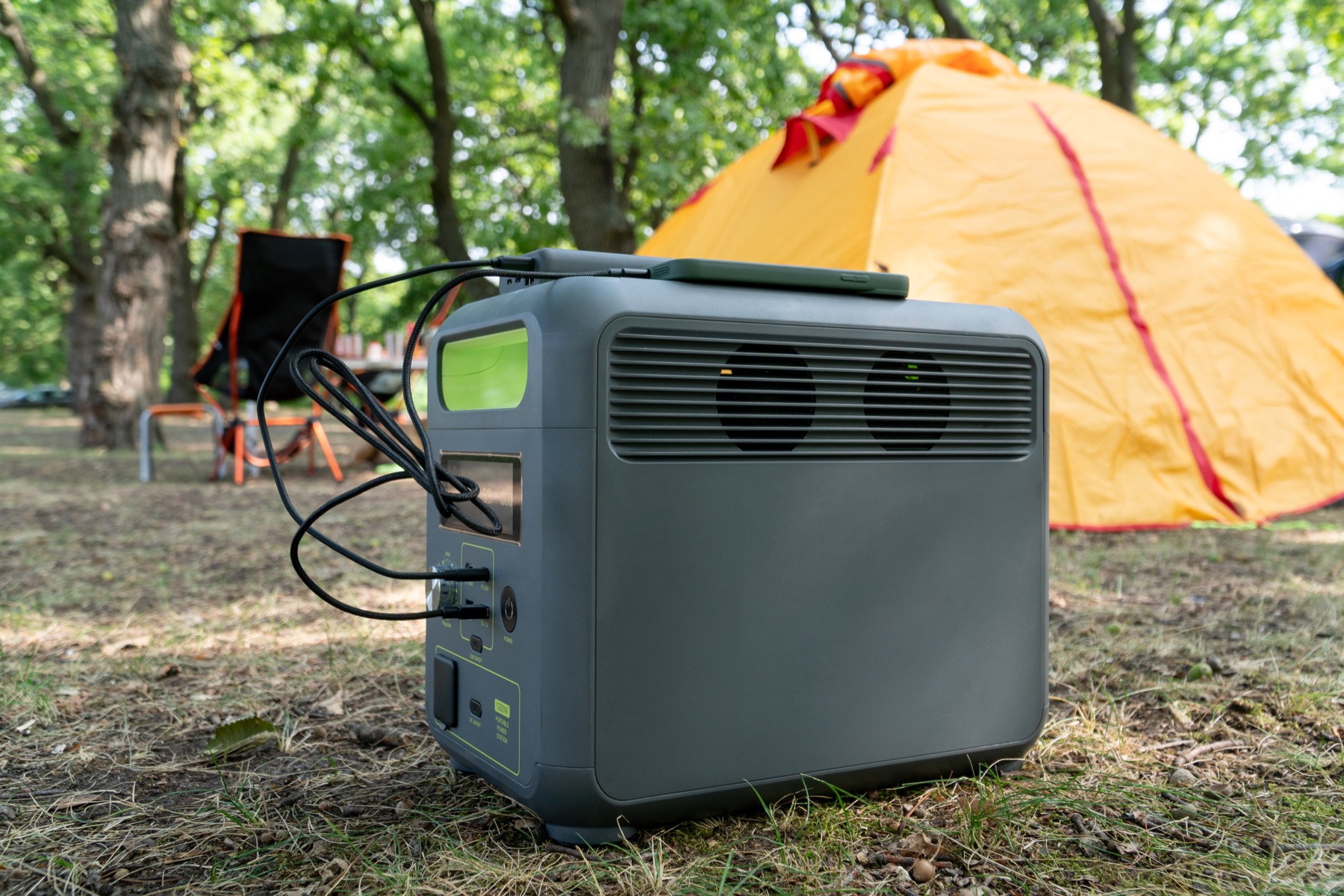
Check the complete power path.
A large enough battery can still be the wrong setup when its output, cable or regional version does not match.
- Daily Wh from measured or rated appliance averages
- Panel Voc, including cold-weather rise, inside the input range
- Input current and power limits of the station
- A reserve for cloudy days
- Correct connector, polarity and cable rating
Practical answers
Will a 200 W panel keep my camping fridge running?
Only if the harvest covers the day's use. In the example the fridge, lights and phones need about 660 Wh from the battery; a 200 W panel gives roughly 300 to 750 Wh depending on assumed sun-hours, so cloudy days can leave a shortfall.
Can I connect two panels in series to charge faster?
Only if the combined open-circuit voltage, including its rise in cold weather, stays below the station's maximum solar input voltage. Check both panel datasheets and the station manual first.
Separate documented specifications from calculated matches.
Products lists stations documented on EcoFlow South Africa product pages beside source-region technical references. A calculated match is not a compatibility guarantee, a stock or price claim or a purchase recommendation. Enter your actual device load and check the sockets, lead and instructions of the exact unit.