Backup power for home during load shedding: plan by appliance and hours
Load shedding solutions compared: size a backup power kit from your appliances and outage hours, then choose between a power station, inverter and battery, UPS or generator.
The example kit below (router, lights, TV and phones for four hours) needs roughly 600 Wh of nominal battery capacity and about 140 W of continuous output. For current load-shedding status and your area's schedule, use Eskom's official page or your municipality.
See why this fitsExample four-hour load-shedding kit
usable Wh ÷ average W = hoursUse the row closest to your situation. The explanation below shows what can move the result.
Comparison table
| Appliance | Watts × hours | Energy |
|---|---|---|
| Wi-Fi router and fibre ONT | 15 W × 4 h | 60 Wh |
| Three LED lights | 24 W × 4 h | 96 Wh |
| TV and decoder | 80 W × 3 h | 240 Wh |
| Two phone charges | 2 × 15 Wh battery | 30 Wh |
| Devices total | 139 W running at once | 426 Wh |
| Nominal battery needed | (426 ÷ 0.85 + 10 W × 4 h) ÷ 0.9 | About 600 Wh |
Planning estimate only. Real runtime varies with temperature, load behavior, battery condition and conversion path.

Use your own watts, hours and reserve.
A realistic input gives you a useful range instead of a false promise.
Open Power Planner →What does this mean
for your choice?
Start with your own load list
Read the input rating on each appliance or, better, measure it with a plug-in power meter. The example totals 426 Wh. Dividing by 0.85 covers conversion losses (501 Wh), adding 10 W of inverter idle draw for four hours adds 40 Wh (541 Wh), and dividing by 0.9 keeps a 10% unused reserve, giving about 601 Wh. Swap in your own numbers in the planner in the power planner or the runtime calculator in the runtime calculator. Leave the geyser, kettle, stove and other heating appliances off the list unless you are planning a much larger system: Eskom's generator fact sheet lists them among the appliances that draw the most power.
Energy (Wh) and output (W) are separate checks
The battery must store enough watt-hours for the outage, and the inverter must deliver the watts of everything switched on together. In the example that is about 139 W, so a small inverter is enough, but a fridge or pump adds a start-up surge that can be several times its running power. Size continuous and surge output from the actual appliances, not from the battery size.
Compare the four common load shedding solutions
A portable power station combines battery, inverter and charger in one box and plugs in like an appliance, without changing your wiring. An inverter with a separate battery bank can be larger and is usually wired into the house, which makes it installation work for a registered electrician (see “Inverter battery or power station: usable energy and installation rules”). A UPS is built to bridge short gaps and give time to save work or keep a router up; see “UPS for router and fibre ONT: keep Wi-Fi up during load shedding”. A generator supplies fuel-based power for long outages but must run outdoors and needs an approved changeover switch if it feeds the house circuits (see “Generator or battery for load shedding? The same appliances compared”).
Use official sources for status and schedules
This page does not show load-shedding stages, schedules or the current national situation. Eskom's official load-shedding site lets direct Eskom customers look up schedules by province and points municipal customers to their municipality. A local fault or planned maintenance can also cause a power outage outside any schedule, so plan for a duration you choose rather than a published slot.
Recharge between outages
A battery only helps if it can refill before the next cut. Check the charging power of the station or inverter charger and how long a full recharge takes from the mains, a car or solar panels. If outages come close together, a larger charger can matter as much as a larger battery.
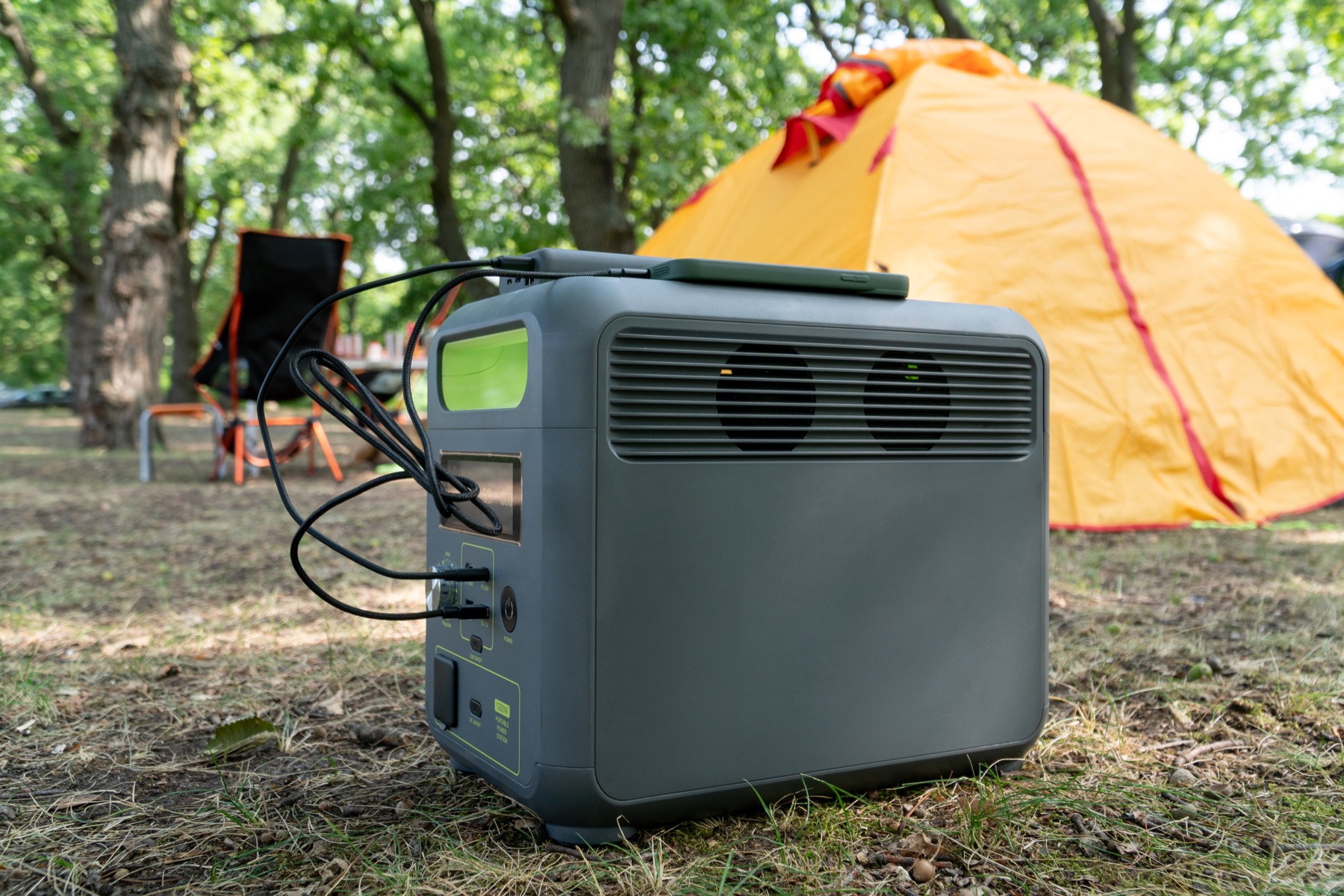
Check the complete power path.
A large enough battery can still be the wrong setup when its output, cable or regional version does not match.
- Measured watts and hours for each essential appliance
- Total running watts and the largest start-up surge
- Battery Wh after losses, idle draw and reserve
- How the system recharges between outages
- Wiring changes done only by a registered electrician with a CoC
Practical answers
Does this page show my load-shedding schedule?
No. Use Eskom's official load-shedding page or your municipality's schedule for current status and times. This guide only helps you size backup power for a duration you choose.
Why does a 426 Wh load need about 600 Wh of battery?
The example assumes 85% conversion efficiency, 10 W of inverter idle draw for four hours and 10% of the battery left unused. Replace those assumptions with your own measurements and the product's specifications.
Evidence and sources3 official sourcesShow sources
Separate documented specifications from calculated matches.
Products lists stations documented on EcoFlow South Africa product pages beside source-region technical references. A calculated match is not a compatibility guarantee, a stock or price claim or a purchase recommendation. Enter your actual device load and check the sockets, lead and instructions of the exact unit.