Power bank rules for flights from South Africa
Convert your power bank's mAh to watt-hours, see how much it can really deliver, and check the 100 Wh limit and airline rules before flying from South Africa.
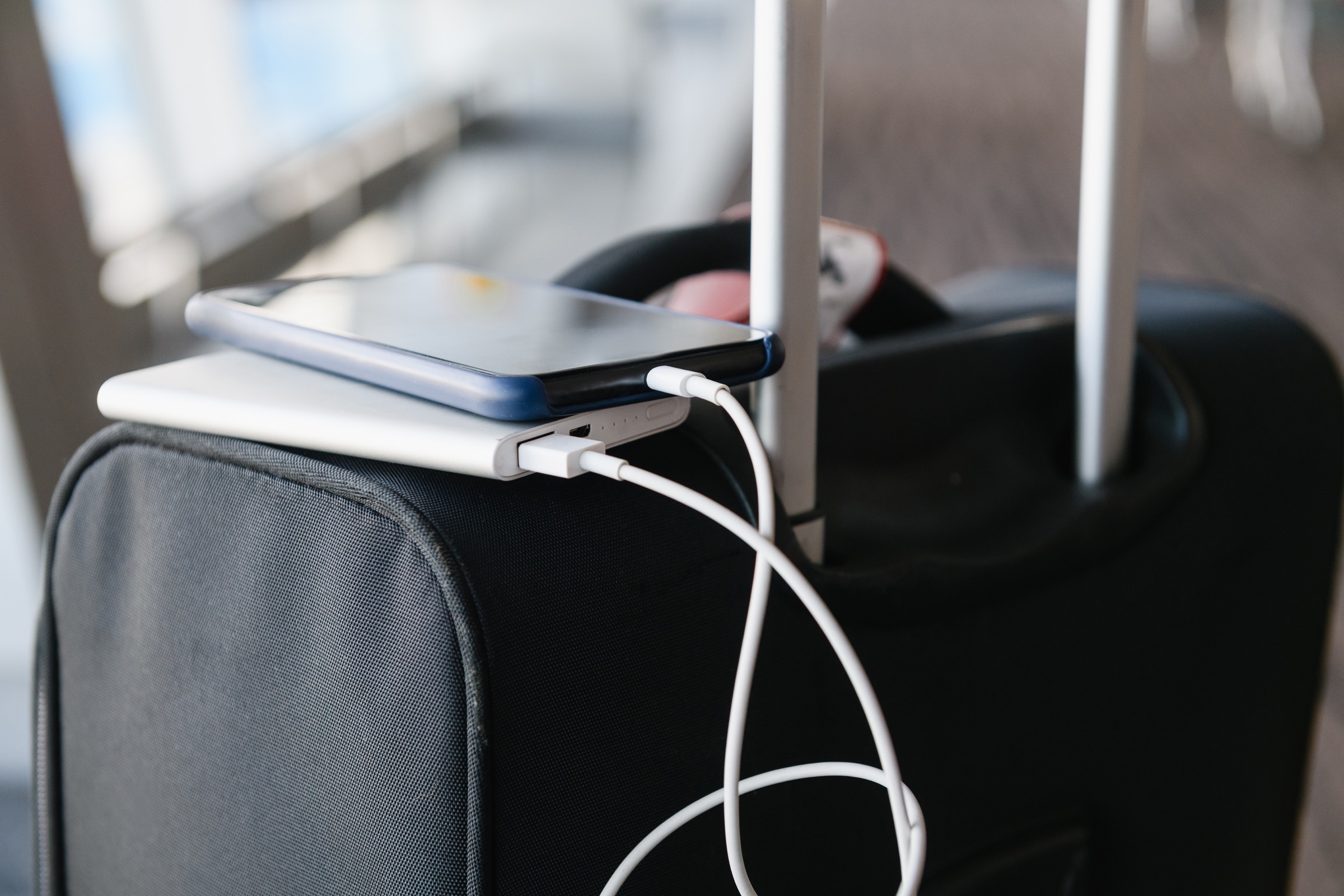
IATA's 2026 passenger guidance limits each passenger to two power banks of up to 100 Wh each and lists power banks above 100 Wh as forbidden; Airlink's own page sets the same two-bank, 100 Wh limit. SACAA confirms power banks are not allowed in checked baggage and that quantity and watt-hour limits apply. Rules can differ by airline and change, so check every airline on your ticket before you fly.
Check my power bankWhat does your label say?
Use the printed Wh number when available. It is the figure airlines use.
The printed Wh rating takes priority over a generic conversion.
Read the label: mAh to Wh at 3.7 V
mAh ÷ 1,000 × nominal V = WhStart with the Wh printed on the pack. The examples below use a typical 3.7V battery only when a conversion is needed.
Comparison table
| Label | Calculation | Energy rating | Within 100 Wh? |
|---|---|---|---|
| 10,000 mAh, 3.7 V | 10,000 ÷ 1,000 × 3.7 | 37 Wh | Yes |
| 20,000 mAh, 3.7 V | 20,000 ÷ 1,000 × 3.7 | 74 Wh | Yes |
| 26,800 mAh, 3.7 V | 26,800 ÷ 1,000 × 3.7 | About 99.2 Wh | Yes, just |
| 30,000 mAh, 3.7 V | 30,000 ÷ 1,000 × 3.7 | 111 Wh | No: power banks above 100 Wh are forbidden under IATA 2026 guidance |
Airline and national rules can be stricter than this international starting point. Check the operating airline for every leg before travel.
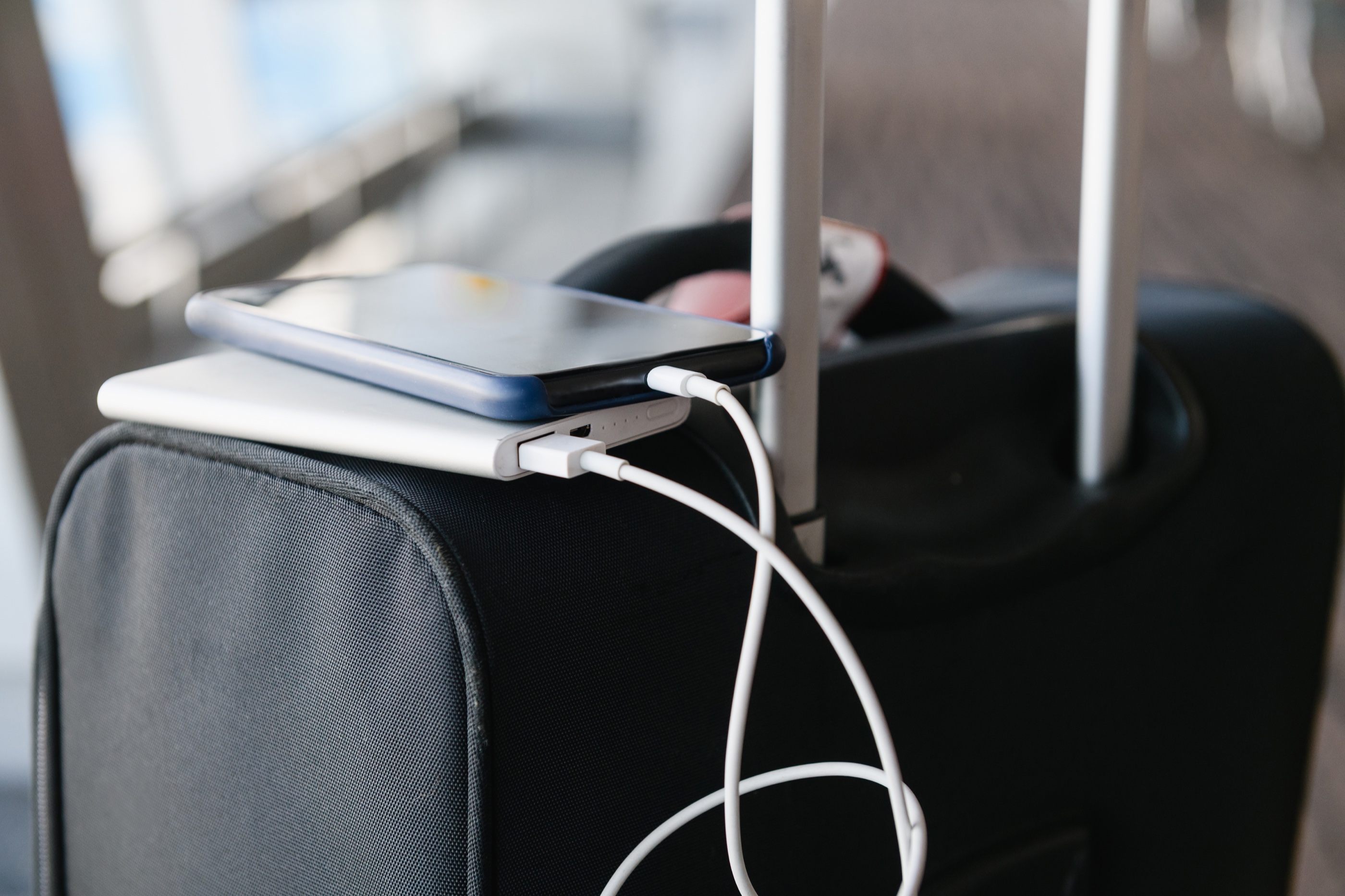
Check the label and the operating airline before you leave.
Keep the power bank in cabin baggage, protect it from short circuits and never assume one airline’s policy applies to the next.
Open Power Bank Finder →What does this mean
for your choice?
Convert mAh with the cell voltage
IATA calculates watt-hours as ampere-hours multiplied by nominal voltage. For a power bank, use the internal cell voltage printed on the label (often 3.6, 3.7 or 3.85 V), not the 5 V USB output. A 20,000 mAh pack at 3.7 V is 74 Wh. If the label shows Wh directly, use that figure. IATA notes that if staff cannot verify the Wh rating, the airline may refuse to carry the battery, so do not travel with a pack whose label is missing or unreadable.
Usable capacity is lower than the label
The rated Wh is stored energy in the cells. Converting to USB output loses some of it. At an assumed 85% conversion efficiency, a 10,000 mAh (37 Wh) pack delivers about 31 Wh, which is about 6,300 mAh at 5 V. That is roughly two charges of a phone with a 15 Wh battery, before the phone's own charging losses. Compare packs in the power bank finder and see “How many times can a 10,000mAh power bank charge a phone?”.
What the checked sources say
IATA's guidance revised for the 2026 regulations (dated 31 March 2026) limits passengers to two lithium-ion power banks of up to 100 Wh, carried in cabin baggage only, and lists power banks above 100 Wh as forbidden. It also says power banks must not be recharged from aircraft power, should not go in overhead lockers and should not power devices during taxi, take-off or landing, and that airlines may be stricter. Spare batteries for a specific device follow a different row: up to 160 Wh with airline approval. Airlink's dangerous-goods page allows not more than two power banks of up to 100 Wh each in the cabin. SACAA's FAQ says power banks are not allowed in checked baggage, spare lithium batteries must be protected against short circuit and that quantity and watt-hour limits apply.
Check your airline before every trip
We could not read the current power-bank pages of every South African carrier, and in-flight use rules differ: Airlink's page, for example, asks you to keep a power bank in view if you use it to charge another device. Look up the dangerous-goods or restricted-items page of each airline on your ticket, including codeshare and return flights, shortly before travelling.
Pack it safely
Keep each power bank in its retail packaging or tape over exposed terminals, carry it in the cabin and keep it within reach. Do not pack a damaged, swollen or recalled power bank. If your cabin bag is taken at the gate, remove power banks first. Read “How to reduce lithium-ion battery fire risk” for general battery safety.
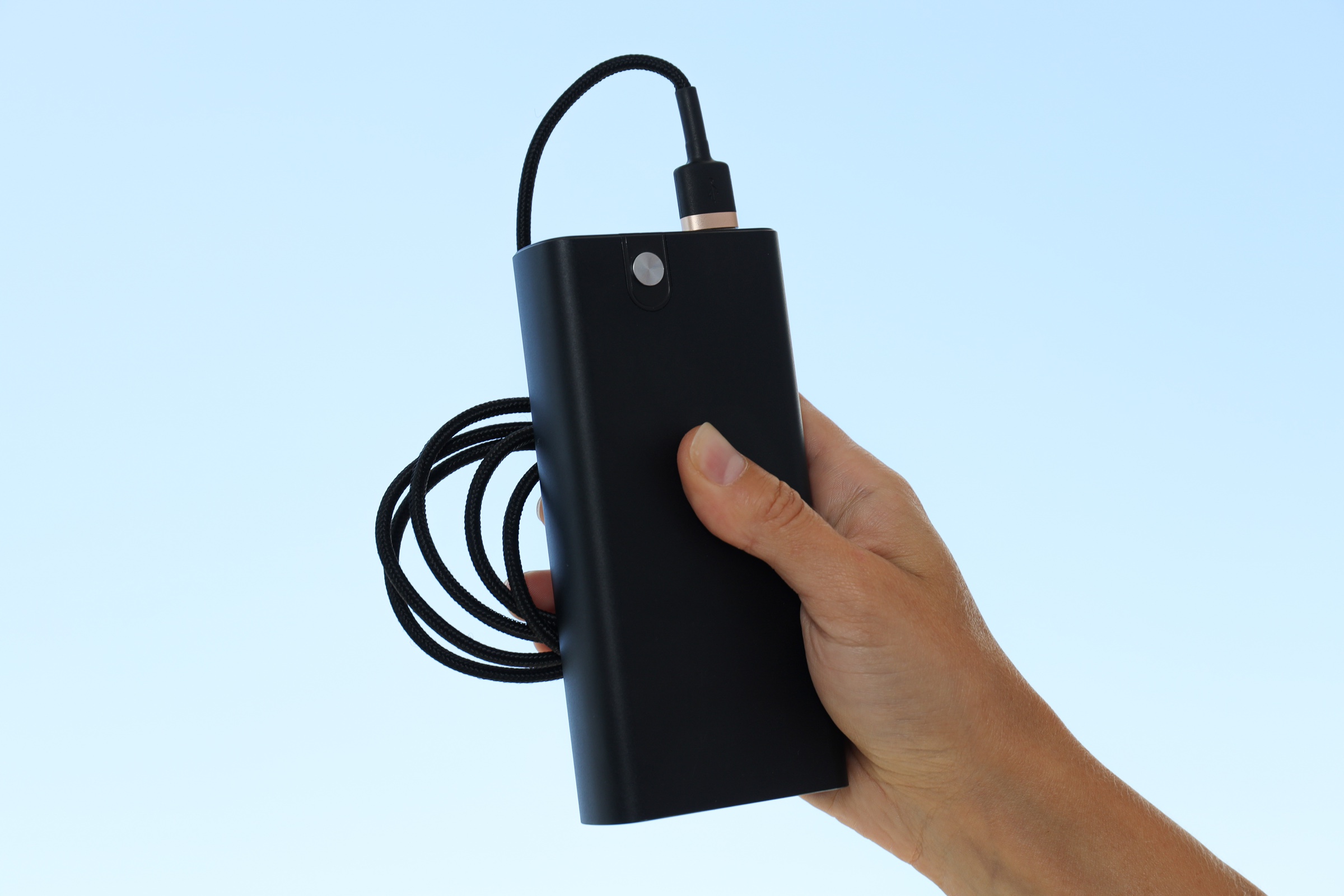
Check the pack, the bag and the airline.
The international Wh bands are only the starting point. The operating airline can set a stricter quantity, use or storage rule.
- Wh printed on the label or calculated from mAh and cell voltage
- Each power bank 100 Wh or less, no more than two
- In cabin baggage, terminals protected, not checked in
- Every airline's current rules checked, including in-flight use
- No damage, swelling or recall
Practical answers
Can I take a 30,000 mAh power bank on a flight from South Africa?
At 3.7 V a 30,000 mAh pack is 111 Wh. IATA's 2026 guidance lists power banks above 100 Wh as forbidden, and Airlink's page limits power banks to 100 Wh each. Check the Wh on the label and your airline's current rules; do not assume approval is possible.
Can I put my power bank in checked luggage?
No. SACAA's FAQ states that power banks are not allowed in checked baggage, and IATA guidance requires them to be carried in the cabin.
Evidence and sources3 official sourcesShow sources
Separate documented specifications from calculated matches.
Products lists stations documented on EcoFlow South Africa product pages beside source-region technical references. A calculated match is not a compatibility guarantee, a stock or price claim or a purchase recommendation. Enter your actual device load and check the sockets, lead and instructions of the exact unit.