Fridge, lights and phone during load shedding: runtime and start-up power
How much backup power a fridge, LED lights and phone charging need during a power outage, including the compressor start-up surge that decides whether an inverter can start the fridge.
In the example, a fridge averaging 50 W, three 7 W LED lights and two phone charges over four hours need about 455 Wh of nominal battery capacity, while the inverter must also handle a compressor start that can be several times the running power.
See why this fitsExample four-hour outage
usable Wh ÷ average W = hoursUse the row closest to your situation. The explanation below shows what can move the result.
Comparison table
| Item | Calculation | Energy |
|---|---|---|
| Fridge-freezer (cycling) | 50 W average × 4 h | 200 Wh |
| Three LED lights | 21 W × 4 h | 84 Wh |
| Two phone charges | 2 × 15 Wh | 30 Wh |
| Devices total | 314 Wh | |
| Nominal battery needed | (314 ÷ 0.85 + 10 W × 4 h) ÷ 0.9 | About 455 Wh |
Planning estimate only. Real runtime varies with temperature, load behavior, battery condition and conversion path.

Use your own watts, hours and reserve.
A realistic input gives you a useful range instead of a false promise.
Open Power Planner →What does this mean
for your choice?
Average power, not compressor power
A fridge compressor switches on and off, so its average draw is lower than its running watts. The energy label or a plug-in meter over 24 hours gives the best figure: 1.2 kWh per day averages 50 W. Over four hours that is 200 Wh. Adding the lights and phones gives 314 Wh; dividing by 0.85, adding 40 Wh of idle draw and dividing by 0.9 gives about 455 Wh.
The start-up surge decides the inverter
When the compressor starts it draws much more than its running power for a moment. Eskom's generator fact sheet gives an illustrative refrigerator of about 1,200 W starting and 132 to 192 W running, and notes some fridges start at two or three times their running power. The station's surge rating must cover that start while lights and chargers are on. Inverter-type fridges often start more gently, but check or test the exact pairing.
Phones and lights are the easy part
Two phone charges at about 15 Wh each and three LED lights for four hours add only 114 Wh in the example. A USB-C or USB-A output on a power station or a power bank charges phones without running the inverter. For lights, rechargeable LED lanterns can take this load off the main battery entirely.
Keep the fridge closed
A closed fridge keeps its contents cooler for longer and the compressor starts less often after power returns. This guide does not give food-safety times; follow the fridge manufacturer's advice and local food-safety guidance.
Freezers and larger fridges
A chest freezer or a large side-by-side fridge can use much more energy than the example. Measure it, then use “How long will a power station run a freezer?” or “How long will a power station run a home refrigerator?” and the runtime calculator with your own numbers.
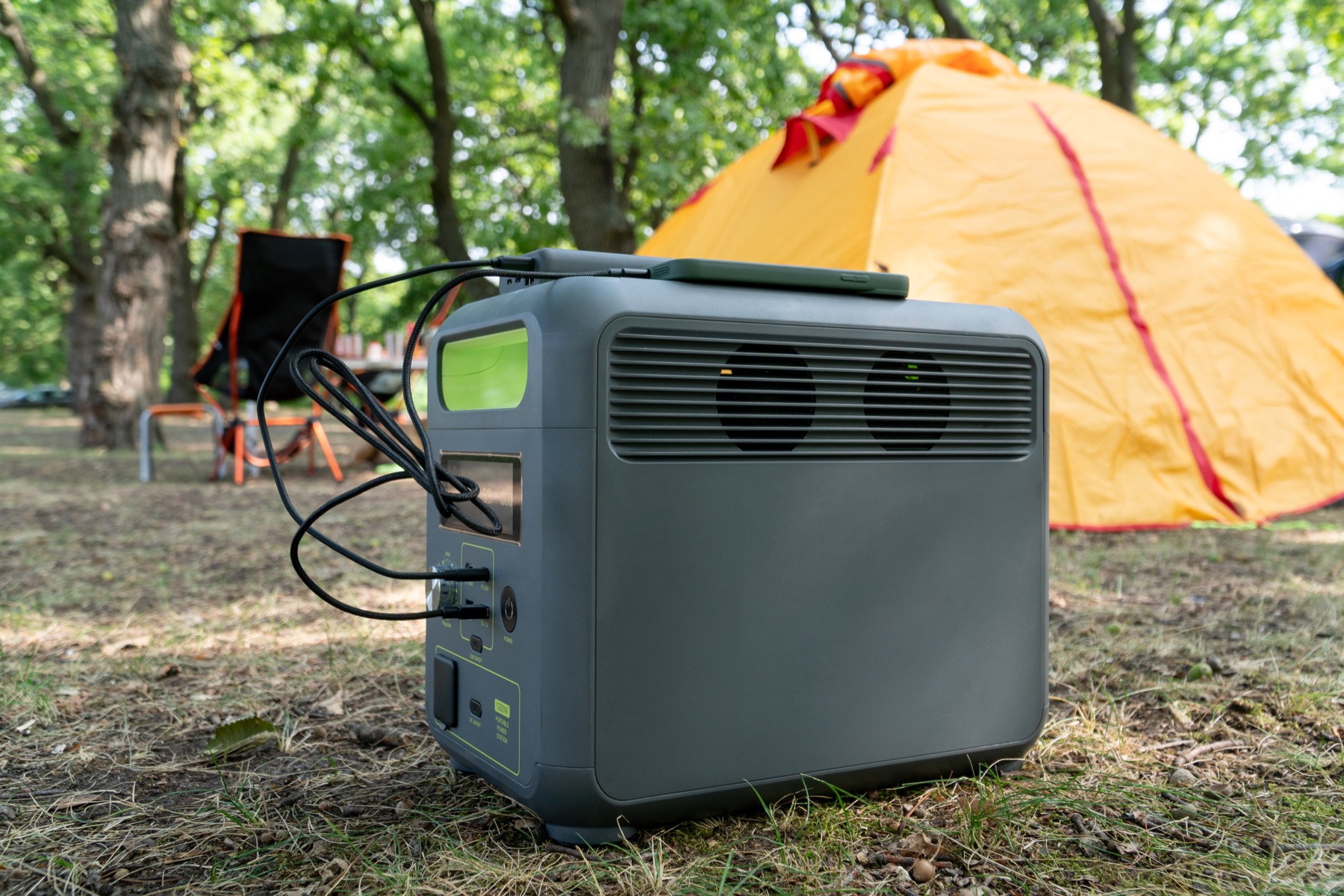
Check the complete power path.
A large enough battery can still be the wrong setup when its output, cable or regional version does not match.
- Fridge energy per day from the label or a meter
- Compressor running watts and start-up surge
- Inverter surge rating with other loads switched on
- Battery Wh after losses, idle draw and reserve
- A short test before relying on it during load shedding
Practical answers
Why does the fridge need more inverter power than battery capacity suggests?
Battery capacity covers energy over time; the inverter must also supply the brief start-up surge of the compressor, which can be several times its running watts.
How long will my fridge run on a 1,000 Wh station?
With 85% efficiency and 10% reserve, about 765 Wh is usable. At a 50 W average that is roughly 15 hours before idle draw, or about 12.75 hours if the inverter draws 10 W idle. Your fridge's real average may differ.
Evidence and sources2 official sourcesShow sources
Separate documented specifications from calculated matches.
Products lists stations documented on EcoFlow South Africa product pages beside source-region technical references. A calculated match is not a compatibility guarantee, a stock or price claim or a purchase recommendation. Enter your actual device load and check the sockets, lead and instructions of the exact unit.