Inverter battery or power station: usable energy and installation rules
Compare an inverter battery with an integrated power station: usable energy from Ah × V × depth of discharge, running hours for your load, and the installation rules that apply when wiring into the house.
A 12 V 100 Ah lead-acid battery used to 50% gives about 1.6 hours at 300 W; a 24 V 100 Ah lithium battery used to 90% gives about 6.1 hours. Connecting an inverter to the house wiring is installation work: it needs a registered electrician, a certificate of compliance and a design that cannot backfeed the grid.
See why this fitsIllustrative runtime at 300 W (plus 20 W inverter idle)
usable Wh ÷ average W = hoursUse the row closest to your situation. The explanation below shows what can move the result.
Comparison table
| Battery example | Usable at battery | After 85% inverter | Runtime at 320 W |
|---|---|---|---|
| 12 V 100 Ah lead-acid, 50% DoD | 600 Wh | 510 Wh | About 1.6 hours |
| 12.8 V 100 Ah lithium (LiFePO4), 90% DoD | 1,152 Wh | About 979 Wh | About 3.1 hours |
| 25.6 V 100 Ah lithium (LiFePO4), 90% DoD | 2,304 Wh | About 1,958 Wh | About 6.1 hours |
Planning estimate only. Real runtime varies with temperature, load behavior, battery condition and conversion path.

Use your own watts, hours and reserve.
A realistic input gives you a useful range instead of a false promise.
Open Power Planner →What does this mean
for your choice?
Same amp-hours, different energy
Amp-hours only become energy when multiplied by voltage: 100 Ah at 12 V is 1,200 Wh nominal, at 25.6 V it is 2,560 Wh. The depth of discharge (DoD) then limits how much you should use. The 50% and 90% values in the table are examples; use the figure the battery manufacturer states for the cycle life you want.
Losses and idle draw
An inverter converts battery DC to 230 V AC with some loss and draws power even with nothing switched on. The table multiplies usable energy by 0.85 and divides by 300 W plus 20 W idle. For small loads such as a router overnight, idle draw can use a large share of the battery, so check the idle figure on the specification sheet.
When a power station is simpler
A portable power station puts battery, inverter, charger and outlets in one tested enclosure and plugs in like an appliance; you move the appliance to it rather than changing the house wiring. It suits a few essentials and renters. A separate inverter and battery bank can be larger and can supply selected circuits, but it becomes part of the electrical installation.
Installation rules in South Africa
Under the Electrical Installation Regulations, 2009, additions or alterations to an electrical installation need a certificate of compliance, and only a registered person may issue one. Ask the electrician for their registration certificate, which they must produce on request. The installation must isolate the backup supply from the grid so it can never backfeed: Eskom warns that feeding power back can endanger people working on the lines and remove earth-leakage protection. Your supply authority may have its own requirements, so ask before installation. This guide gives no wiring instructions.
Charging the battery bank
Between outages the battery must recharge from the mains or solar. Check the charger's current: a 100 Ah battery charged at 20 A needs roughly five hours before losses. If outages are frequent, charging time can limit you more than capacity. Use the UPS planner or the power planner to test your own figures.
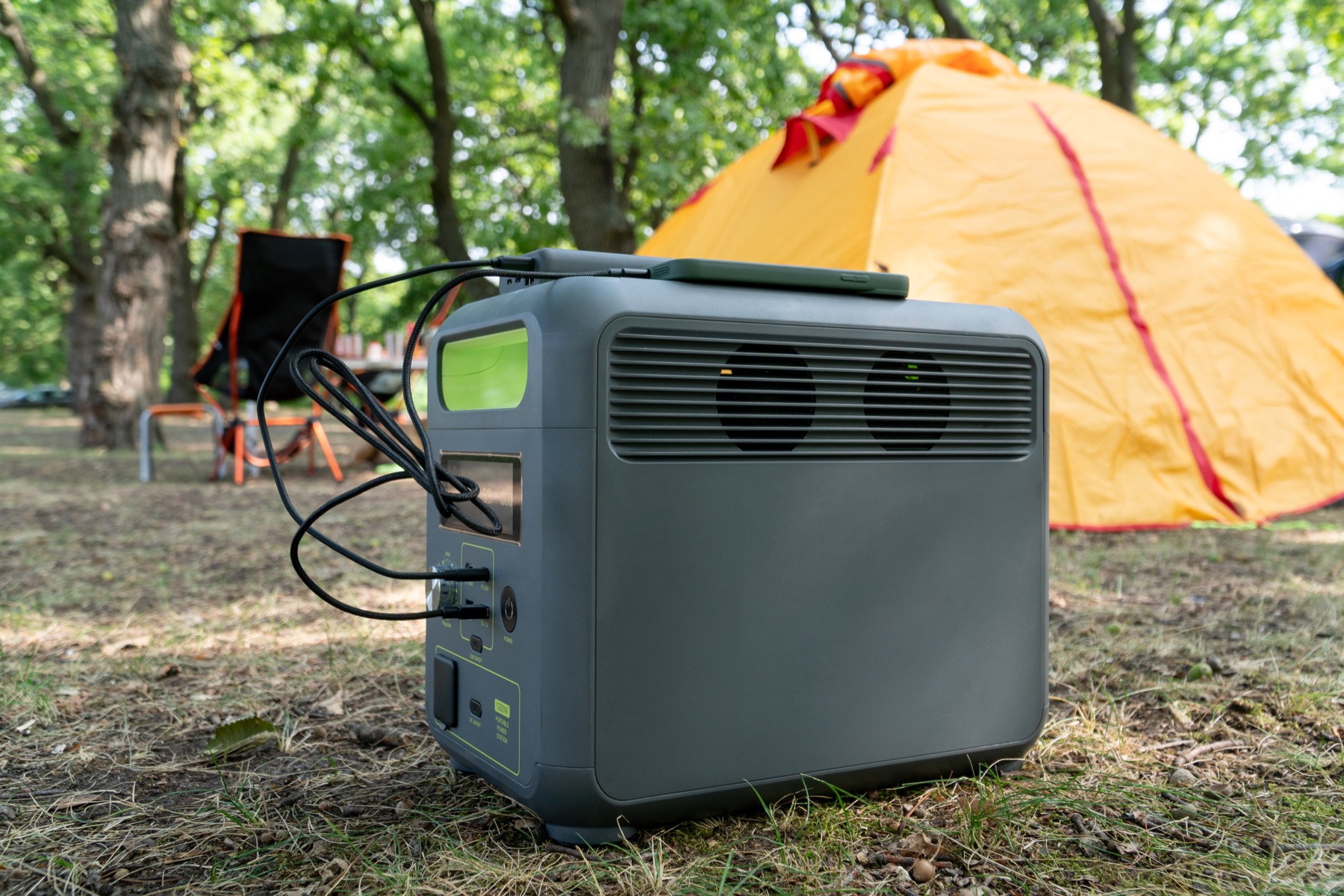
Check the complete power path.
A large enough battery can still be the wrong setup when its output, cable or regional version does not match.
- Battery voltage, amp-hours and manufacturer's DoD
- Inverter continuous and surge rating and idle draw
- Charger current and recharge time between outages
- Registered electrician, CoC and no-backfeed isolation
- Supply authority requirements checked before installation
Practical answers
Is a 200 Ah battery enough for my house?
It depends on voltage, chemistry and your load. A 12 V 200 Ah lead-acid battery at 50% DoD stores about 1,200 Wh usable, roughly 1,020 Wh after an 85% inverter; divide by your appliances' watts plus idle draw to estimate hours.
Can I plug an inverter into a wall socket to power the house?
No. Feeding power into a socket backfeeds the wiring and can energise the grid. A backup supply connected to house circuits must be installed by a registered electrician with proper isolation and a certificate of compliance.
Evidence and sources3 official sourcesShow sources
Separate documented specifications from calculated matches.
Products lists stations documented on EcoFlow South Africa product pages beside source-region technical references. A calculated match is not a compatibility guarantee, a stock or price claim or a purchase recommendation. Enter your actual device load and check the sockets, lead and instructions of the exact unit.