Generator or battery for load shedding? The same appliances compared
Compare a generator and a battery power station for the same load-shedding appliance pack: energy, start-up power, running cost factors and the safety rules on carbon monoxide, changeover switches and backfeeding.
A battery runs silently indoors with no fumes; a generator suits long outages but must run outdoors, away from windows, and may only feed house circuits through an approved changeover switch installed by a registered electrician.
See why this fitsOne appliance pack, two ways
usable Wh ÷ average W = hoursUse the row closest to your situation. The explanation below shows what can move the result.
Comparison table
| Item | Battery calculation | Generator calculation |
|---|---|---|
| Fridge | 50 W average × 4 h = 200 Wh | 1,200 W start (illustrative) |
| LED lights | 30 W × 4 h = 120 Wh | 30 W running |
| TV and decoder | 100 W × 3 h = 300 Wh | 100 W running |
| Router and ONT | 15 W × 4 h = 60 Wh | 15 W running |
| Phone chargers | 2 × 15 Wh = 30 Wh | 20 W running |
| Result | (710 ÷ 0.85 + 40) ÷ 0.9 ≈ 973 Wh | 1,200 + 165 = 1,365 W |
Planning estimate only. Real runtime varies with temperature, load behavior, battery condition and conversion path.

Use your own watts, hours and reserve.
A realistic input gives you a useful range instead of a false promise.
Open Power Planner →What does this mean
for your choice?
How each side is sized
A battery is sized by energy: the pack uses 710 Wh in four hours; dividing by 0.85, adding 40 Wh of idle draw and dividing by 0.9 gives about 973 Wh. Its inverter must also handle about 315 W running plus the fridge start. A generator is sized by power: Eskom's fact sheet adds the highest starting wattage to the running watts of everything else. With its illustrative 1,200 W fridge start, that is 1,200 + 165 = 1,365 W.
When a generator makes sense
A generator keeps producing power as long as it has fuel, so it suits long or back-to-back outages and larger loads. It needs fuel storage, maintenance and an outdoor location, and it is loud. Eskom notes that electronics are voltage-sensitive and can be damaged by dips and spikes; inverter generators are designed to give cleaner output (see “Inverter generator vs conventional generator: which should you buy?”).
Carbon monoxide: never indoors
Eskom warns never to run a generator inside a house or garage, under a carport, on a porch or near an open window, even with the garage door open, because exhaust carbon monoxide can kill. It advises keeping the generator at least 5 metres from the house, having working smoke and CO detectors, and letting it cool before refuelling.
Changeover switch, no backfeeding
Never plug a generator into a wall socket. Eskom calls this backfeeding: it can send power onto the grid, endanger line workers, destroy the generator when mains power returns and leave the house without earth-leakage protection. To feed house circuits, a registered electrician must install an approved changeover switch and issue a certificate of compliance; otherwise run appliances from the generator with a suitably rated extension lead.
Combining both
Some households run essentials from a battery and recharge it from a generator during long outages. Check that the battery's charger tolerates generator power; see “Can you charge a power station with a generator?”. For generator sizing with your own appliances, use the generator sizer.
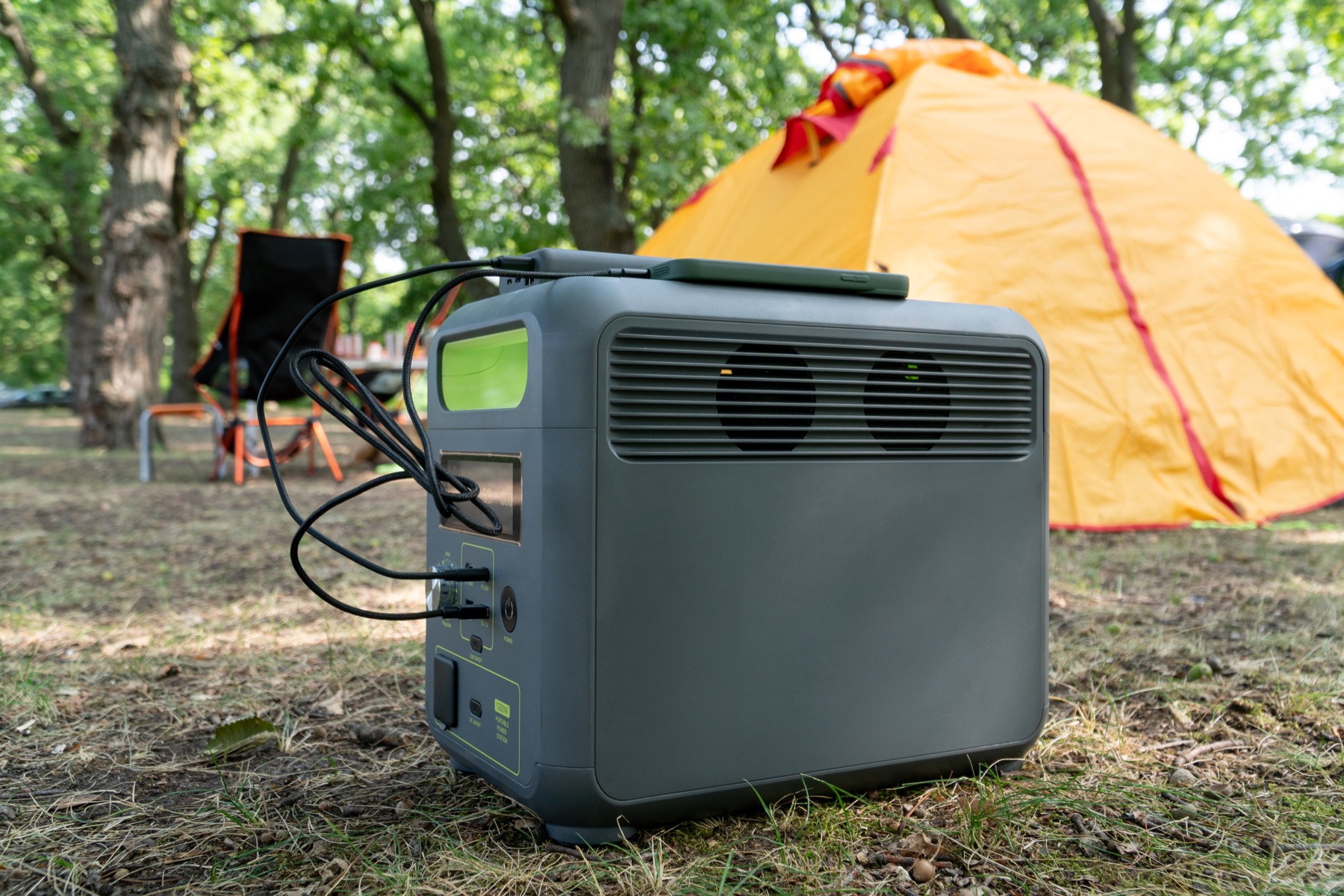
Check the complete power path.
A large enough battery can still be the wrong setup when its output, cable or regional version does not match.
- Energy for the hours (battery) and start-up watts (generator)
- Generator outdoors, at least 5 m from the house, CO alarm inside
- Approved changeover switch and CoC for any house connection
- No generator plugged into a wall socket
- Fuel storage, noise and maintenance planned
Practical answers
Can I run a small generator in the garage with the door open?
No. Eskom specifically says not to, because carbon monoxide can still build up and reach people inside the house. Keep it outdoors, at least 5 metres from the house and away from windows.
Why is the generator sized in watts but the battery in watt-hours?
A generator keeps producing power while it has fuel, so the limit is how many watts it can deliver at once, including start-up surges. A battery stores a fixed amount of energy, so the limit is watt-hours over the outage.
Evidence and sources3 official sourcesShow sources
Separate documented specifications from calculated matches.
Products lists stations documented on EcoFlow South Africa product pages beside source-region technical references. A calculated match is not a compatibility guarantee, a stock or price claim or a purchase recommendation. Enter your actual device load and check the sockets, lead and instructions of the exact unit.