EcoFlow RIVER 2 (PH)
Check the regional version, delivery and current buying status separately.
View technical profile →Estimate additional range, then verify manufacturer support for your exact vehicle, cable and source before connecting.
Calculate first. Connect only after verification.
Your entries stay saved when you go back.
The technical result determines the next step. Manufacturer links are clearly labelled and are not a price comparison.
Check the regional version, delivery and current buying status separately.
View technical profile →We deliberately show no adapter purchase button here: first verify that the manufacturer covers EV charging and the exact grounding solution.
Verify before buying →The EVSE must match the vehicle, regional plug, selected current and grounding check. A manufacturer-specific cable is not a universal choice.
Verify the cable path →These links never change the compatibility result. We do not label a best buy until price, stock, delivery and the exact regional version have been checked together.
The calculation checks energy and output. Verify the cable and grounding path separately for your actual combination.
How many Wh reach the car?
Does V × A fit the AC output?
In-cable control and protection
Exact manufacturer-supported path
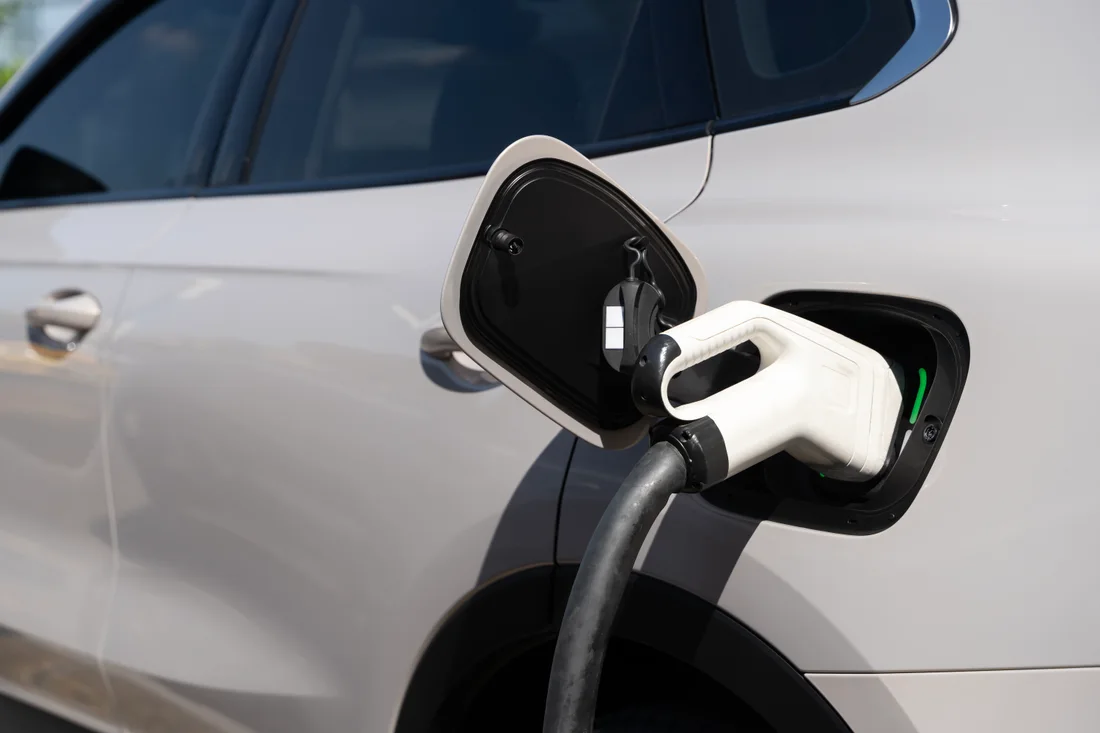
The car sees the power station as a small AC source. The onboard charger then determines how much AC power reaches the traction battery.
At 230 V, 6 A is about 1,380 W and 13 A about 2,990 W. These are arithmetic examples, not evidence that your vehicle or EVSE supports either setting. Keep the actual demand within continuous output.
Rated station energy shrinks after inverter and charging losses. Divide planned energy into the car by measured or stated vehicle consumption.
A charging cable may detect a missing grounding reference and correctly refuse to operate. Use only the exact manufacturer-documented solution.
The vehicle may refuse to charge for a good reason. Never bypass protection just to make it charge.
Sometimes, when continuous output is sufficient and the manufacturer supports the exact EV charging and grounding path. A suitable Mode 2 EVSE is still required.
It depends on usable energy after conversion losses and the vehicle consumption in Wh per kilometre. A portable station normally provides emergency range, not a full traction-battery charge.
The EVSE or vehicle may stop for inadequate grounding, incorrect voltage, overload, temperature or a cable fault. Never bypass these protections.