Can a portable power station run an induction cooktop?
Plan one induction cooktop from its electrical input, ordinary continuous AC output and actual cooking time, while keeping losses, reserve and cookware checks separate.
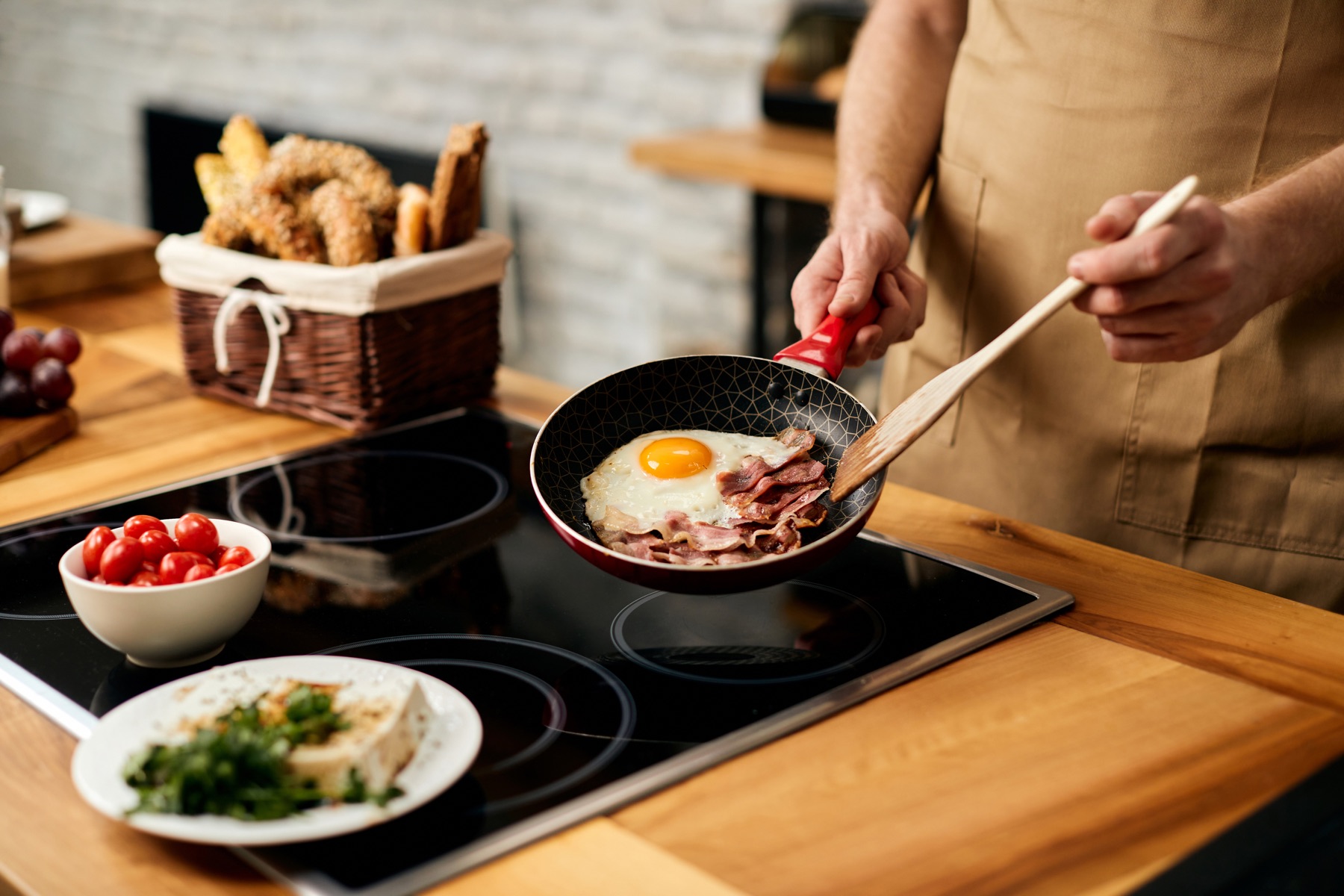
The station must first cover the cooktop’s ordinary continuous AC input; a Wh result does not prove pan compatibility, an Australian model or an operating setup.
See why this fitsSource-bounded energy examples at 1,800 W full input
usable Wh ÷ average W = hoursUse the row closest to your situation. The explanation below shows what can move the result.
Comparison table
| Full-input time | Energy at cooktop | Share of 800 Wh | Energy remaining |
|---|---|---|---|
| 5 minutes | 150 Wh | 18.8% | 650 Wh |
| 10 minutes | 300 Wh | 37.5% | 500 Wh |
| 20 minutes | 600 Wh | 75% | 200 Wh |
| 30 minutes | 900 Wh | 112.5% | Does not fit |
Planning estimate only. Real runtime varies with temperature, load behavior, battery condition and conversion path.
Brief peaks can matter more than the average load.
Use the running watts for energy and the highest starting demand for output sizing.
Open Runtime Lab →What does this mean
for your choice?
Electrical input comes before battery capacity
Read the exact cooktop electrical input and compare it with the station’s ordinary continuous AC output before counting minutes. Do not substitute a short boost rating, an advertised cooking setting or an estimate from another appliance.
Minutes, losses and reserve are separate planning inputs
Energy per cooking cycle is electrical-input watts multiplied by minutes divided by 60. The calculator removes a separately chosen conversion-loss allowance from nominal Wh, then a separate reserve. It is a planning method, not a runtime or safety guarantee.
Pan compatibility is a separate document check
Induction needs compatible ferromagnetic cookware. A positive watt or Wh result does not show that a particular pan will work, nor does it confirm appliance controls, ventilation, startup, condition or the exact instructions.
Use the Australian AC path only when it is actually used
For the AC path actually used, check 230 V, 50 Hz, Type I, earthing, the lead and both exact manuals. A plug shape or travel adaptor does not convert voltage and does not establish an Australian SKU, included lead, compliance, availability or compatibility.
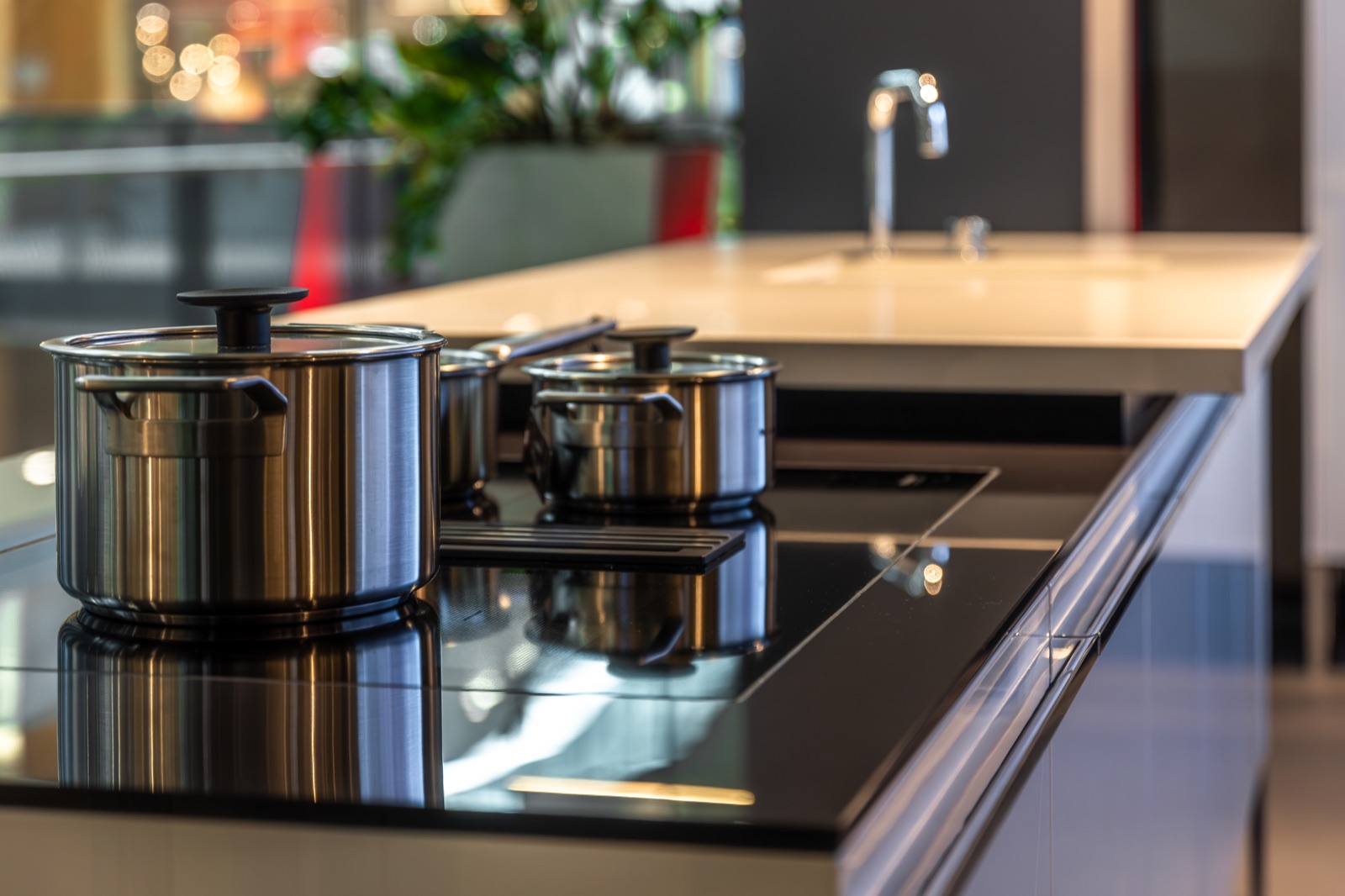
Check the complete power path.
A large enough battery can still be the wrong setup when its output, cable or regional version does not match.
- Exact cooktop electrical-input watts documented
- Ordinary continuous AC output compared with electrical input
- Cooking minutes and cycles recorded separately
- Conversion loss and reserve entered as separate planning assumptions
- Exact pan confirmed as induction-compatible from its documentation and the cooktop instructions
- Only for the actual AC path: 230 V, 50 Hz, Type I, earthing and lead checked
Practical answers
Can a 1,000 Wh power station run an induction cooktop?
Only if its ordinary continuous AC output covers the exact electrical input first. In the existing 1,800 W example, 800 Wh planned usable energy is not enough for 30 minutes at full input, and separately chosen loss and reserve can reduce it further.
Does a lower cooking setting always halve energy use?
Not necessarily. Some cooktops cycle their input. Measure or document the complete cooking session instead of treating a control setting as a constant load.
Does a positive calculator result confirm that my pan works?
No. Pan compatibility is a separate check. Confirm ferromagnetic cookware and follow the exact cooktop instructions before relying on an off-grid cooking arrangement.
Evidence and sources2 official sourcesShow sources
Australian product candidates are not activated yet.
The calculation remains useful, but no shared product card is presented as an Australian candidate until the exact 230V/50Hz Type I execution, RCM/responsible supplier, local warranty and retailer route are verified.