Can a portable power station run an induction cooktop?
Plan a single-burner induction cooktop from its electrical input, ordinary inverter output and actual cooking time using transparent 1,800W examples.

It requires at least 1,800W of ordinary continuous AC output in this example, so many compact stations are eliminated before runtime matters.
See why this fitsEnergy used at 1,800W full input
usable Wh ÷ average W = hoursUse the row closest to your situation. The explanation below shows what can move the result.
Comparison table
| Full-input time | Energy at appliance | Share of 800Wh | Energy remaining |
|---|---|---|---|
| 5 minutes | 150Wh | 18.8% | 650Wh |
| 10 minutes | 300Wh | 37.5% | 500Wh |
| 20 minutes | 600Wh | 75% | 200Wh |
| 30 minutes | 900Wh | 112.5% | Does not fit |
Planning estimate only. Real runtime varies with temperature, load behavior, battery condition and conversion path.
Brief peaks can matter more than the average load.
Use the running watts for energy and the highest starting demand for output sizing.
Open Runtime Lab →What does this mean
for your choice?
Portable does not mean low power
A single-burner unit can still be a demanding AC load. Read the exact electrical input and compare it with the station’s normal continuous output before calculating cooking time.
Power settings may cycle
A lower control setting does not always translate into a perfectly steady lower draw. For a dependable energy budget, measure the complete cooking cycle or size conservatively from full input time.
The pan is part of compatibility
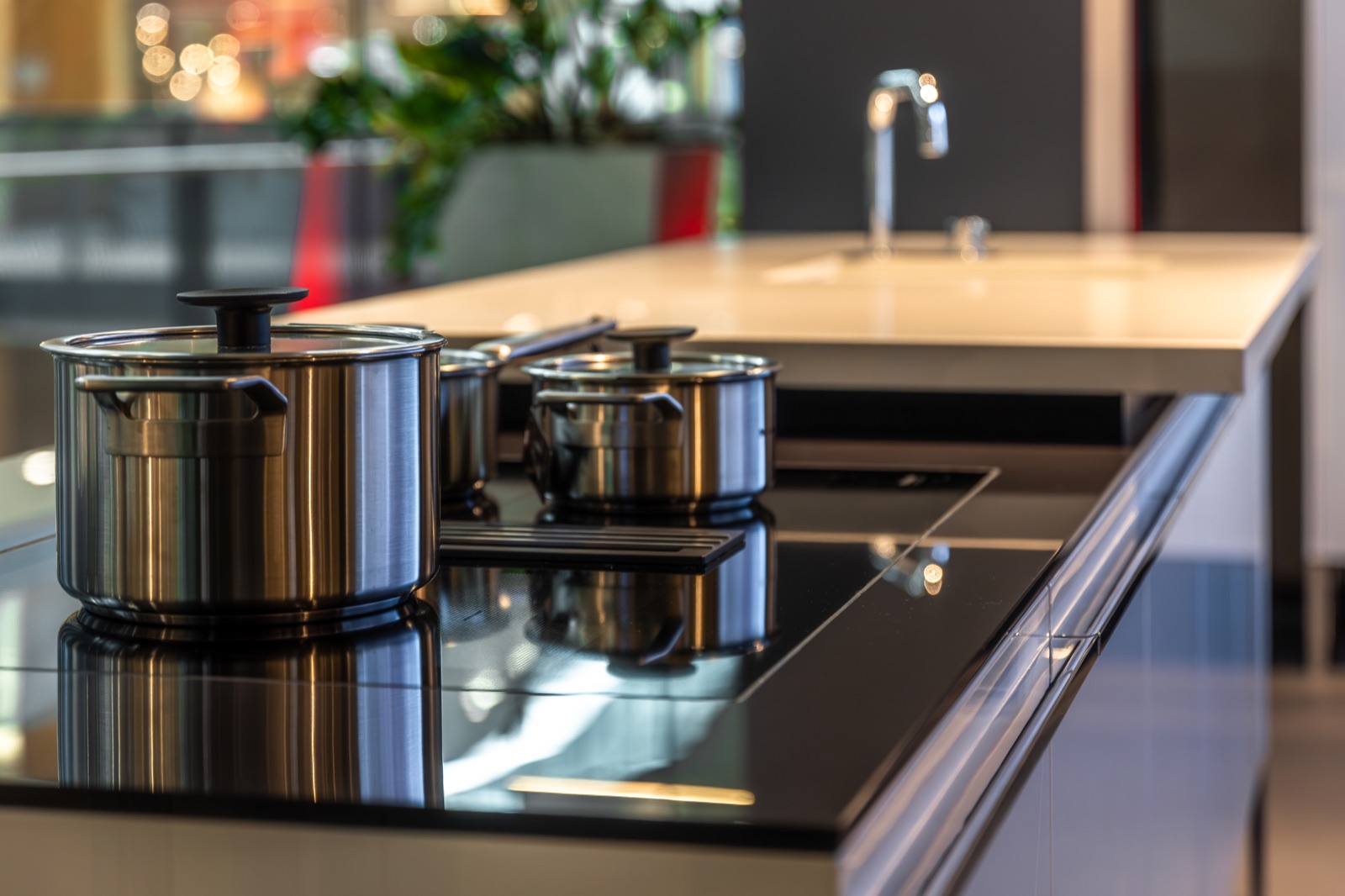
DOE explains that induction transfers energy through an electromagnetic field and requires compatible cookware. Electrical fit alone does not prove that a given pot or pan will work.
Check the complete power path.
A large enough battery can still be the wrong setup when its output, cable or regional version does not match.
- Cooktop electrical-input watts
- Station ordinary continuous AC output
- Actual cooking time and control setting
- Induction-compatible cookware
- Correct regional voltage and outlet
- Battery reserve after cooking
Practical answers
Can a 1,000Wh station run an induction burner?
Only if its inverter also supports the burner’s electrical input. With 800Wh planned usable energy, a 1,800W full-input example has roughly 26.7 minutes of theoretical on-time before extra reserve.
Does setting the burner to half power halve battery use?
Not necessarily at every instant because some appliances cycle power. Measure the full cooking session or use the manufacturer’s documented behavior.
Will every metal pan work?
No. Induction requires compatible ferromagnetic cookware. Follow the cooktop instructions and verify the pan before relying on an off-grid cooking setup.
Evidence and sources2 official sourcesShow sources
Stations worth checking against this calculation
These are relevant specification profiles, not automatic recommendations. Confirm energy, output protocol, cable behavior and the exact regional model before buying.