Solar power banks:
useful or just a tiny panel?
We compared the solar specification manufacturers actually publish—not just the word solar on the box.
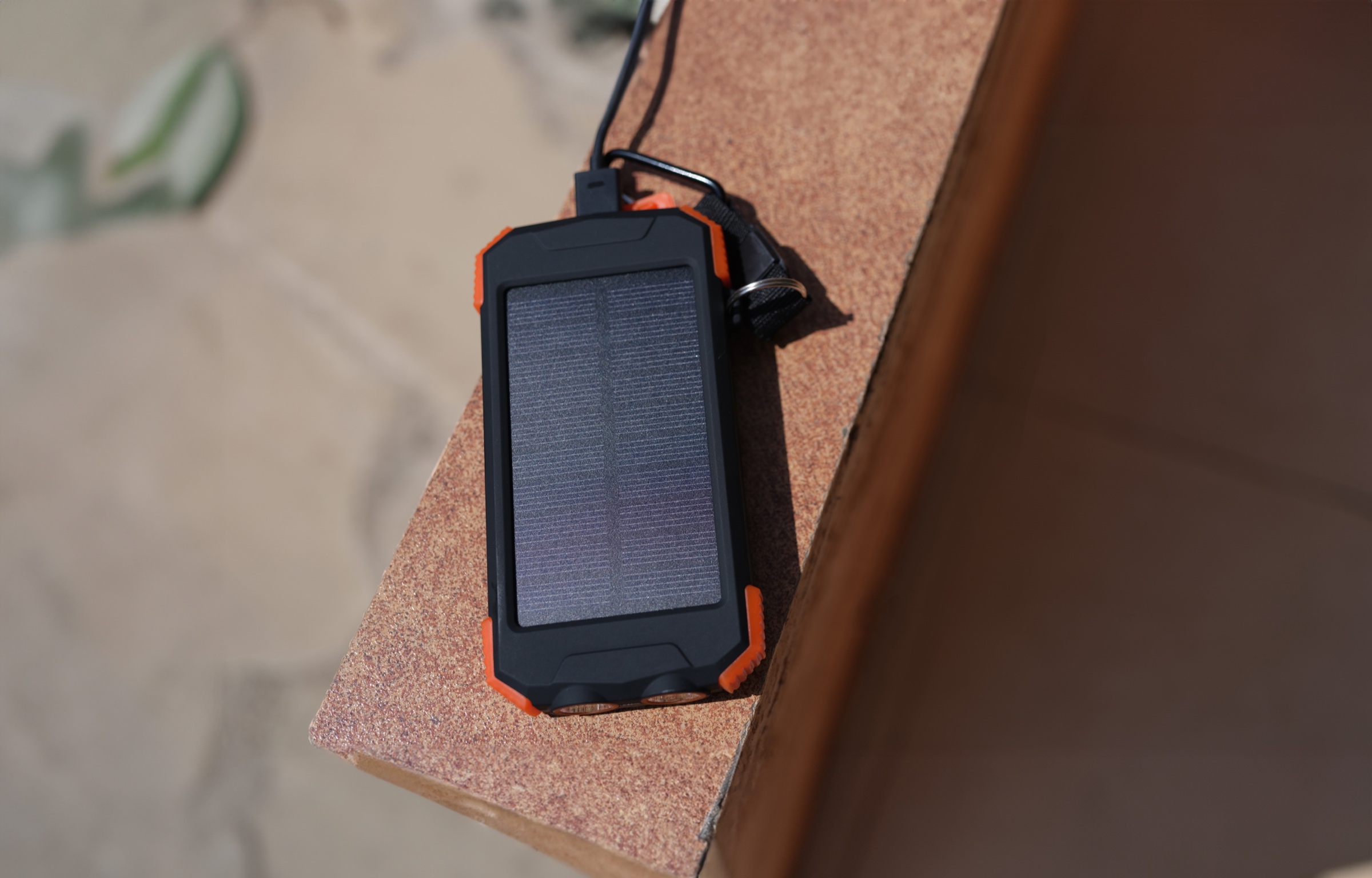
Panel area changes everything.
A single 1–1.8W panel is an emergency feature. A fold-out 8–8.5W array is far more useful in sustained sun, but USB-C is still the reliable way to start a trip with a full battery.
Compare the panel before the battery.
Every figure below comes from the linked manufacturer page. “Not published” stays visible instead of being replaced with an estimate.
Solar 5-Panel Powerbank 10000
The larger fold-out surface makes this meaningfully different from a token panel, although full-sun output is never guaranteed.
- Solar
- 8W
- Panel format
- 4 fold-out panels
- Wired output
- USB-C PD 20W
- Weight
- 550g
Solar 10K
Its published solar ceiling leads this group by a small margin. Availability and exact regional support may be more limited.
- Solar
- Up to 8.5W
- Panel format
- 4 fold-out panels
- Wired output
- USB-C up to 20W
- Weight
- Not published
XR105 SuperCharger
Xtorm says a complete solar refill can take about five sunny spring or summer days—useful context that many listings omit.
- Solar
- About 4.5W
- Panel format
- Single integrated panel
- Wired output
- USB-C PD 20W
- Weight
- 490g
B659
The compact panel can collect some energy when stranded, but it should not be your normal way to refill a 10,000mAh battery.
- Solar
- 1.8W
- Panel format
- Single integrated panel
- Wired output
- 2× USB-A output
- Weight
- 328g
SolarTank-10PDQi
Promate publishes a 50-hour solar charge time. That honesty makes the tiny-panel trade-off particularly easy to understand.
- Solar
- ≈ 1.2W
- Panel format
- Single integrated panel
- Wired output
- USB-C up to 20W
- Weight
- Not published
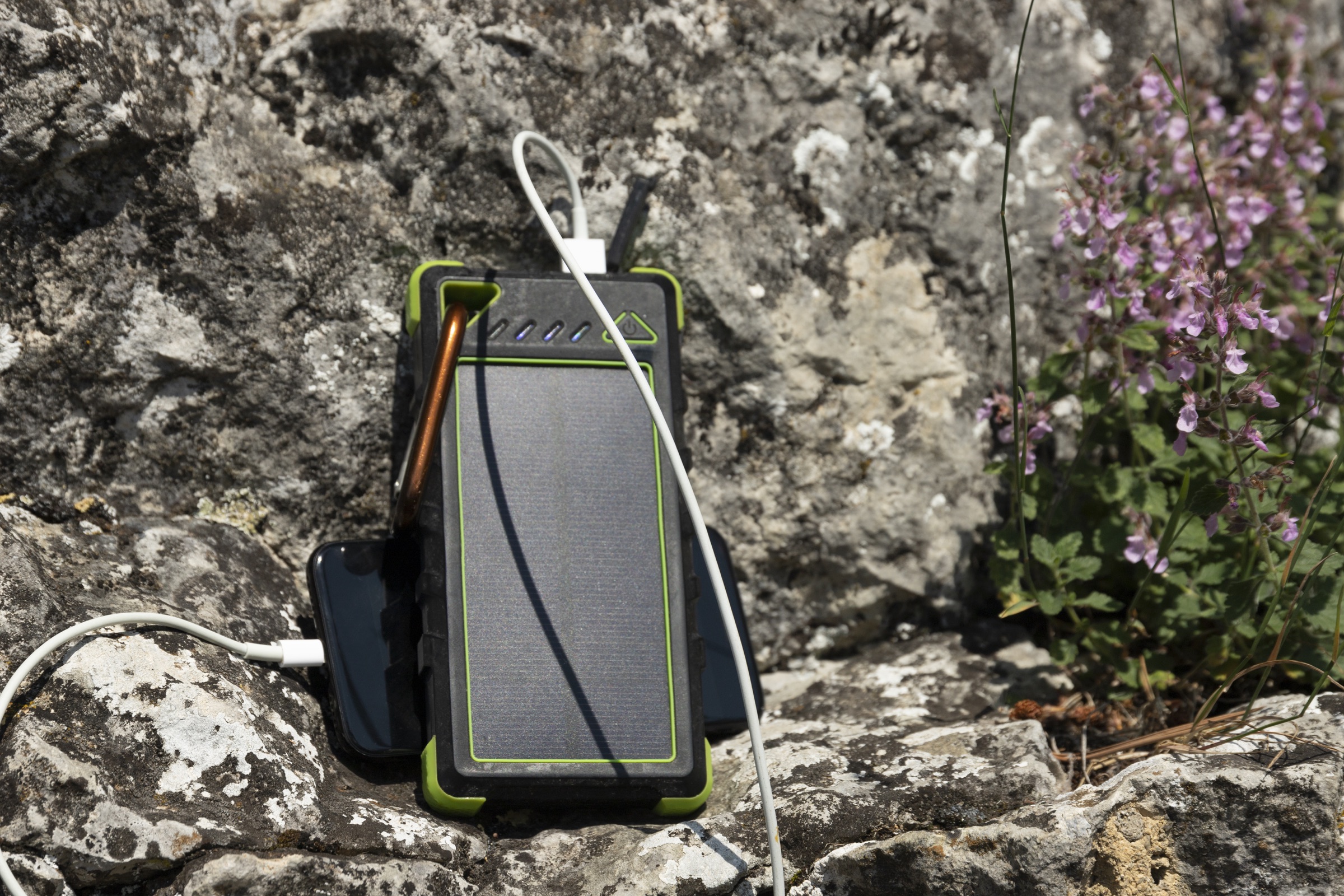
Start full. Let daylight extend the trip.
The small panel is a reserve, not a substitute for charging by cable before you leave. Keep it unshaded and follow the maker’s temperature limits.
Compare normal power banks first →Start full. Use sun as the reserve.
- 01Check solar wattsPanel power reveals more than a solar badge.
- 02Look at the surfaceFold-out arrays collect more light but add bulk.
- 03Keep it unshadedA pack hanging behind a backpack rarely sees ideal sun.
- 04Check heat guidanceDirect sun also heats the battery; follow the maker’s limits.
What solar can—and cannot—do.
Can a solar power bank charge itself in one sunny day?
Usually not. A 10,000mAh pack stores roughly 37Wh, and actual solar harvest is lower than the panel's laboratory rating because of angle, heat, cloud, shade and conversion loss.
Is a fold-out solar power bank worth the extra weight?
It can be when integrated solar is a real requirement. The 8–8.5W fold-out products here offer several times the published panel power of compact single-panel models, but they are also bulkier.
Should I buy this instead of a separate solar panel?
Choose integrated panels for compact emergency replenishment. For dependable daily energy, a larger separate panel with more collection area is normally the stronger system.