Do solar power banks actually work?
Compare phone power banks with built-in solar panels by published panel watts, USB-C output, weight and realistic solar usefulness.
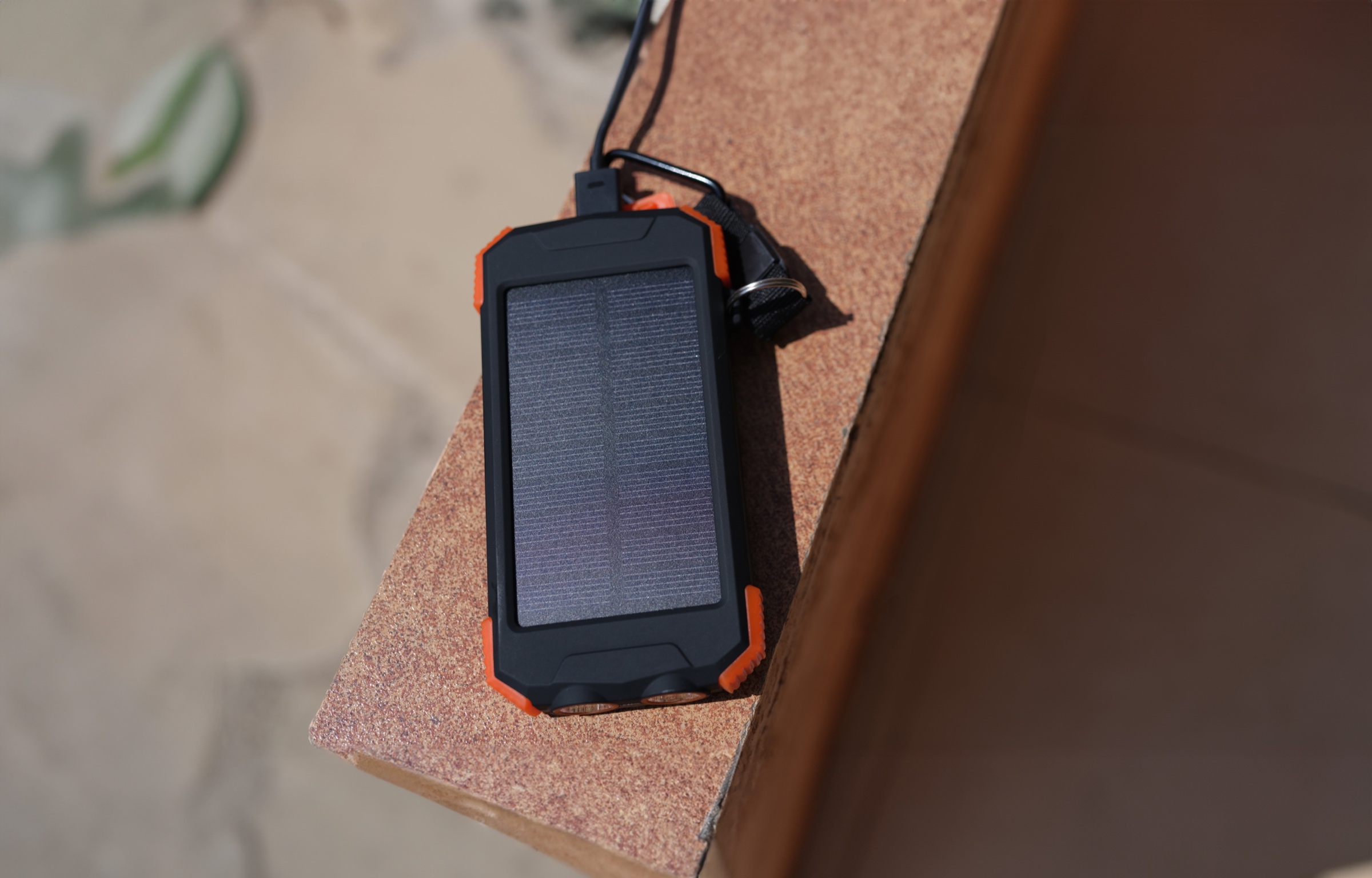
A compact 1–1.8W panel is mainly an emergency top-up; an integrated fold-out 8W array is more useful in sustained sun, yet still far slower than USB-C charging.
See why this fitsPublished specifications, not a universal ranking
Panel W × equivalent sun hours ≈ harvested WhUse the row closest to your situation. The explanation below shows what can move the result.
Comparison table
| Model | Solar specification | USB output | What the panel is for |
|---|---|---|---|
| Sandberg Solar 5-Panel 10000 | 8W fold-out array | USB-C PD 20W | Practical daylight replenishment |
| Ambrane Solar 10K | Up to 8.5W fold-out array | USB-C 20W | Practical daylight replenishment |
| Xtorm XR105 | About 4.5W integrated panel | USB-C PD 20W | Multi-day solar refill |
| Choetech B659 | 1.8W integrated panel | USB-A output; Qi 5W | Emergency top-up |
| Promate SolarTank-10PDQi | 5.5V / 220mA (about 1.2W) | USB-C up to 20W | Emergency top-up |
Planning estimate only. Real runtime varies with temperature, load behavior, battery condition and conversion path.

Use your own watts, hours and reserve.
A realistic input gives you a useful range instead of a false promise.
Open Power Planner →What does this mean
for your choice?
Solar watts matter more than the word solar
A small panel can be useful when no socket exists, but it cannot collect energy at the speed of a large camping panel. Compare the published panel watts or recharge time before treating solar as more than an emergency feature.
Fold-out panels change the category
Several integrated panels create much more collection area than one panel on the face of a power bank. Sandberg publishes 8W and Ambrane up to 8.5W, which is still weather-dependent but materially different from roughly 1W.
Charge by cable before leaving
Even the stronger integrated arrays are slower and less predictable than USB-C. Start with a full battery, keep panels cool and unshaded, and regard solar as replenishment rather than a guaranteed daily reset.
Read the port direction and the exact specification
Choetech’s detailed B659 table lists USB-C as input and USB-A/Qi as output; a USB-C socket alone does not establish USB-C output. Xtorm’s XR105 description says 4.5W while its specification field rounds to 5W. The table uses the descriptive value, not an independently measured result.
Technical examples, not verified Philippine stock
These manufacturer records illustrate different panel sizes and power paths. They do not establish Philippine availability, a local warranty or an approved seller. Confirm the exact model, Wh label, operating temperature, supplied instructions and seller before buying. Charge by cable before a trip; do not budget solar harvest as guaranteed daily energy.
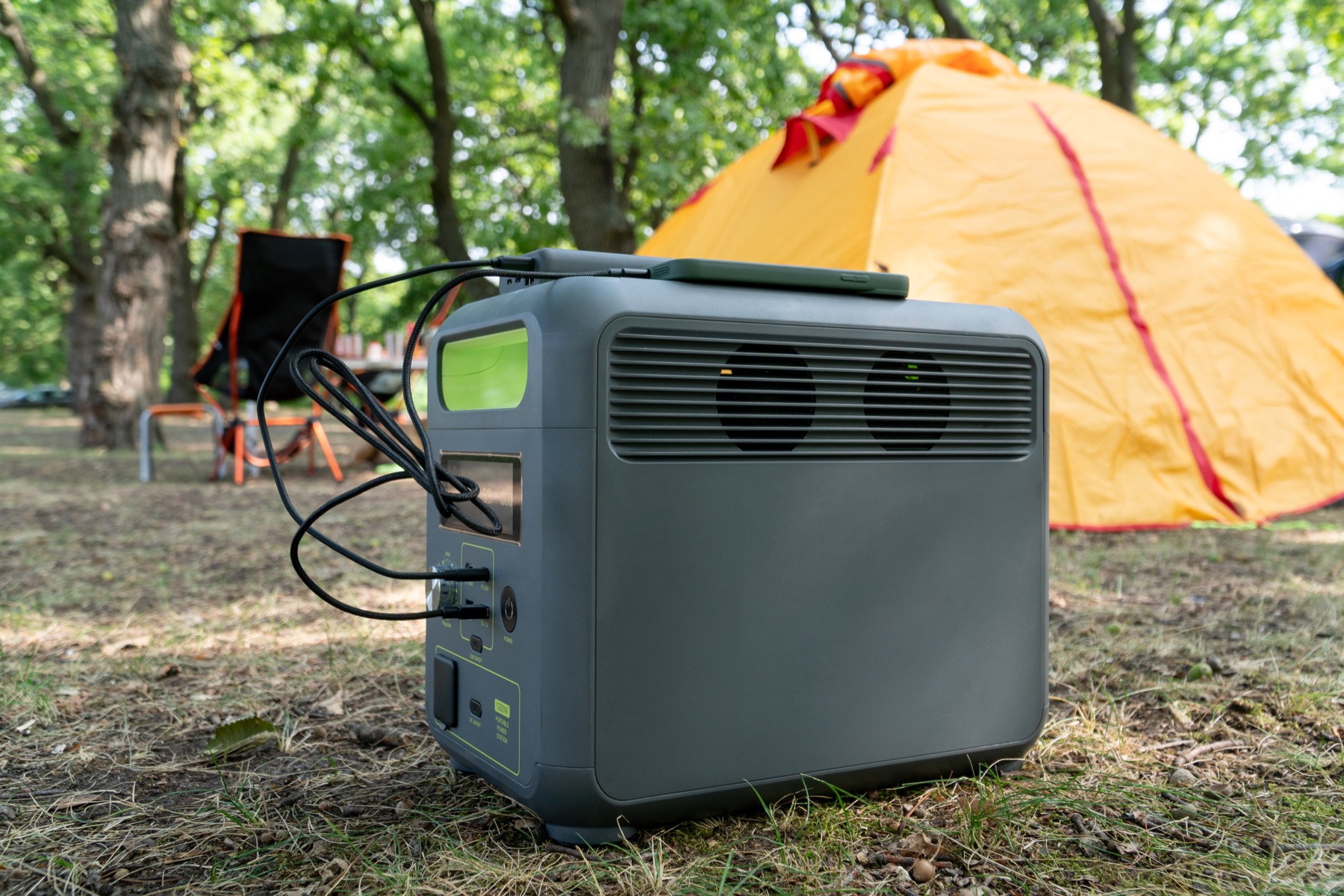
Check the complete power path.
A large enough battery can still be the wrong setup when its output, cable or regional version does not match.
- Published solar input watts or a stated solar charge time
- One panel versus a fold-out integrated array
- Fastest individual USB-C output
- Rated Wh as well as advertised mAh
- Weather resistance with the ports closed
- Weight, hinges and attachment points
- Exact regional model and seller
Practical answers
Can a solar power bank fully charge itself in one day?
Usually not. A 10,000mAh pack stores roughly 37Wh, while the published integrated panels in this comparison range from about 1.2W to 8.5W before weather and conversion losses.
Is a single-panel solar power bank useless?
No, but it is best treated as an emergency or maintenance source. Promate publishes a 50-hour solar charge time for its compact-panel model, illustrating the difference from normal wired charging.
Which type is better for hiking?
A fold-out integrated array collects more energy, while a single-panel model is usually smaller and lighter. Choose between meaningful solar collection and the weight or bulk you will actually carry.
Evidence and sources5 official sourcesShow sources
Separate documented specifications from calculated matches.
Products separates technical references from documented Philippine versions. The home calculator compares your inputs with models whose regional specifications have been checked. A calculated match is not a compatibility guarantee or a purchase recommendation. Enter your actual device load and check its connections and instructions.