Can you take a power bank on a plane?
A worldwide, plain-language guide to the 2026 rules for power banks in hand luggage, quantity limits, watt-hours, storage and in-flight use.
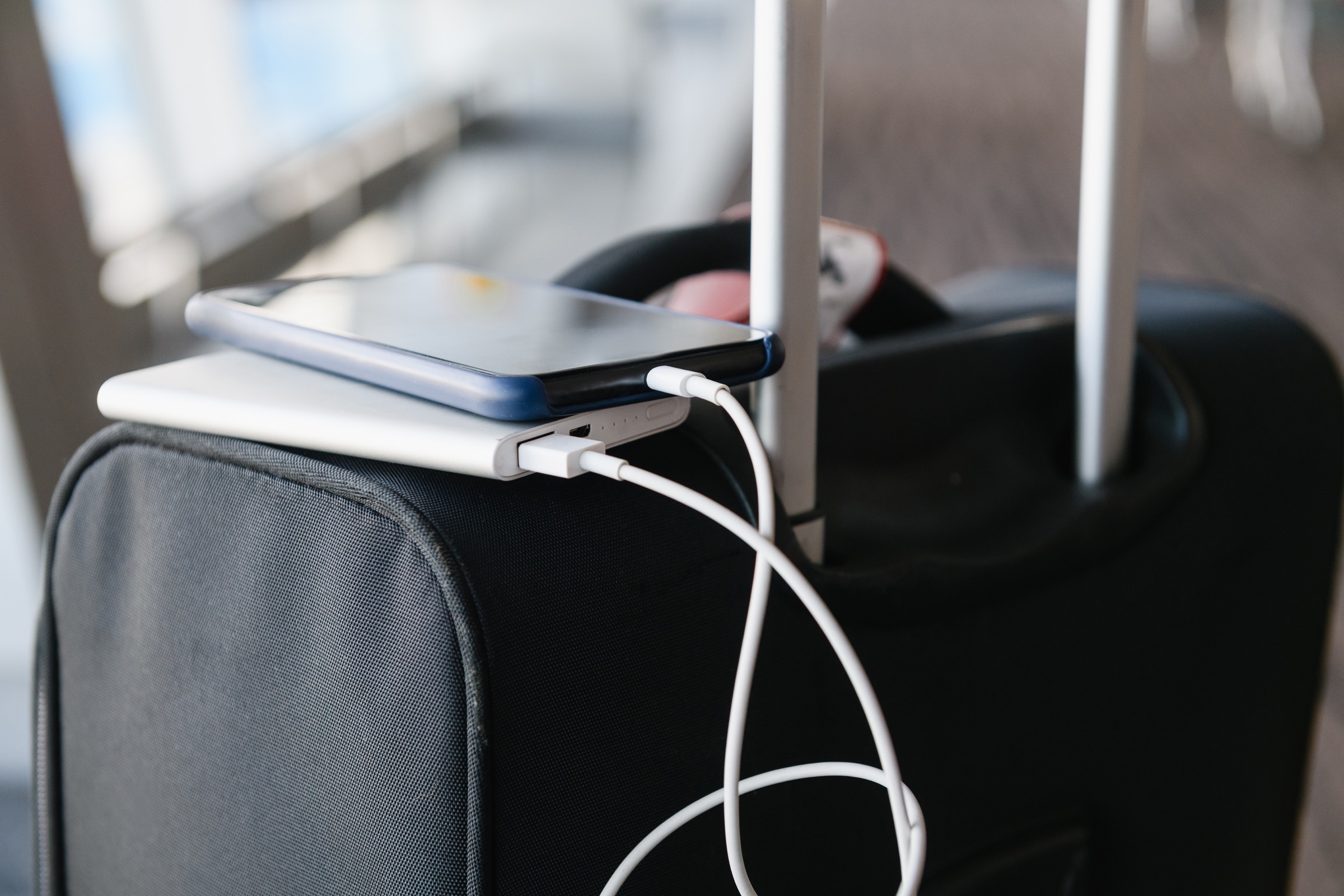
Under IATA’s 2026 table, power banks over 100Wh are forbidden as passenger baggage rather than eligible for the 160Wh approval band; operating airlines may be stricter.
Check my power bankWhat does your label say?
Use the printed Wh number when available. It is the figure airlines use.
The printed Wh rating takes priority over a generic conversion.
Check the battery label before you fly
mAh ÷ 1,000 × nominal V = WhStart with the Wh printed on the pack. The examples below use a typical 3.7V battery only when a conversion is needed.
Comparison table
| Battery label | Typical 3.7V example | Usual passenger rule | What to do |
|---|---|---|---|
| 10,000mAh | ≈37Wh | Below 100Wh | Carry it in the cabin and protect it |
| 20,000mAh | ≈74Wh | Below 100Wh | Carry it in the cabin and protect it |
| 27,000mAh | ≈99.9Wh | Close to the limit | Read the printed Wh and airline policy |
| 30,000mAh | ≈111Wh | Above the power bank limit | Do not take it as passenger baggage |
| Over 100Wh | Large power bank | Forbidden for power banks | Do not pack it as passenger baggage |
Airline and national rules can be stricter than this international starting point. Check the operating airline for every leg before travel.
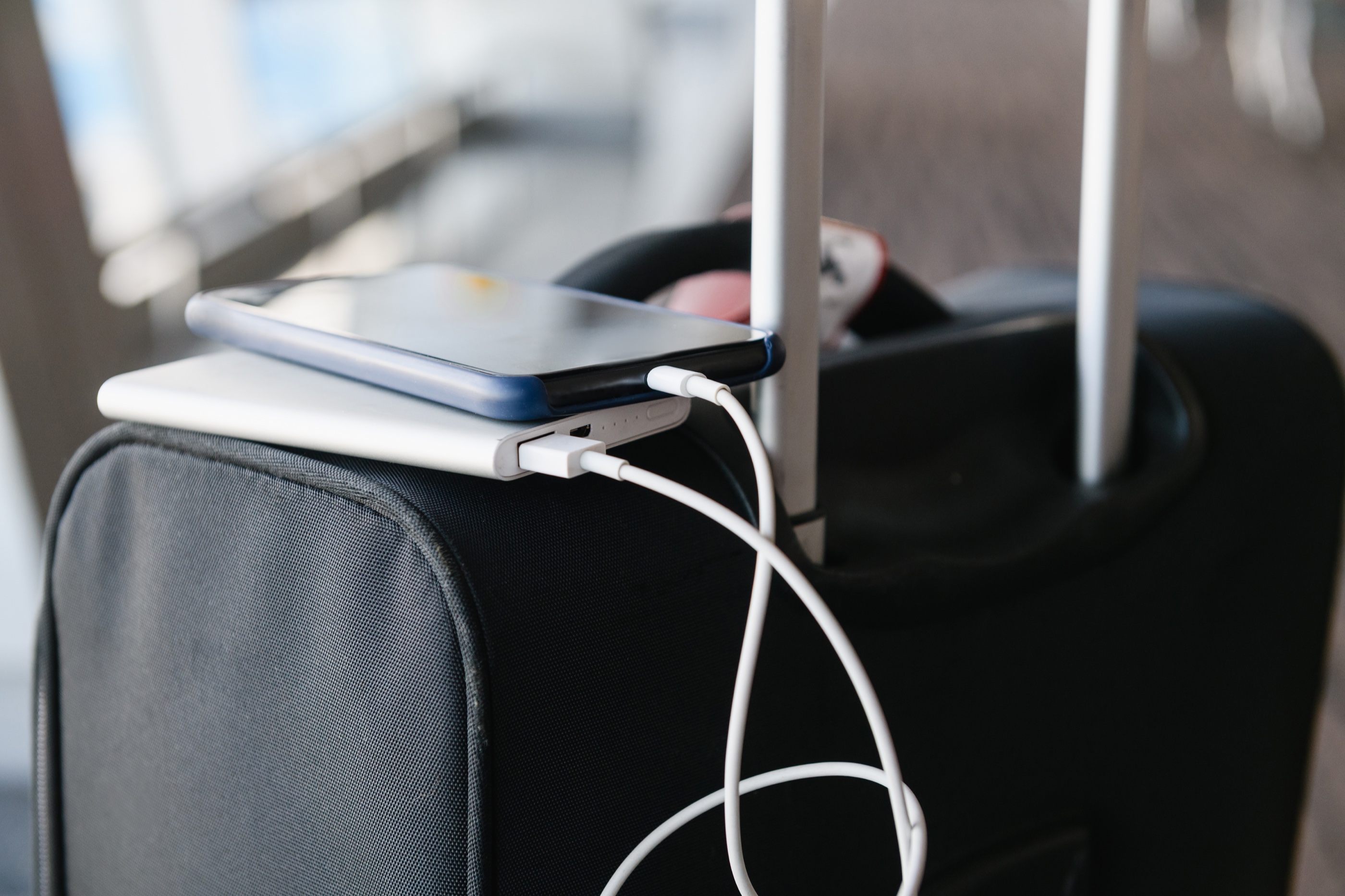
Check the label and the operating airline before you leave.
Keep the power bank in cabin baggage, protect it from short circuits and never assume one airline’s policy applies to the next.
Open Power Bank Finder →What does this mean
for your choice?
Power banks stay with you in the cabin
IATA’s 2026 guidance treats power banks separately from spare batteries. Put them in hand luggage, protect them against damage and short circuit, and remove them if your cabin bag is taken at the gate for the aircraft hold.
Use Wh—not mAh alone
Air travel limits use watt-hours. If Wh is missing, divide mAh by 1,000 and multiply by the battery’s nominal voltage: 10,000mAh ÷ 1,000 × 3.7V = 37Wh. Use the voltage printed on the exact product rather than assuming every pack is 3.7V.
The airline gets the final say
International guidance is a starting point, not a boarding guarantee. Airlines can restrict quantity, in-flight use, charging and where a power bank is stored. Check the operating airline for every leg, especially codeshare flights.
Damage changes the answer
Do not fly with a swollen, leaking, recalled or damaged power bank. Keep terminals and loose plugs away from metal objects, use a protective pouch, and alert cabin crew immediately if the pack becomes hot, expands, smokes or burns.
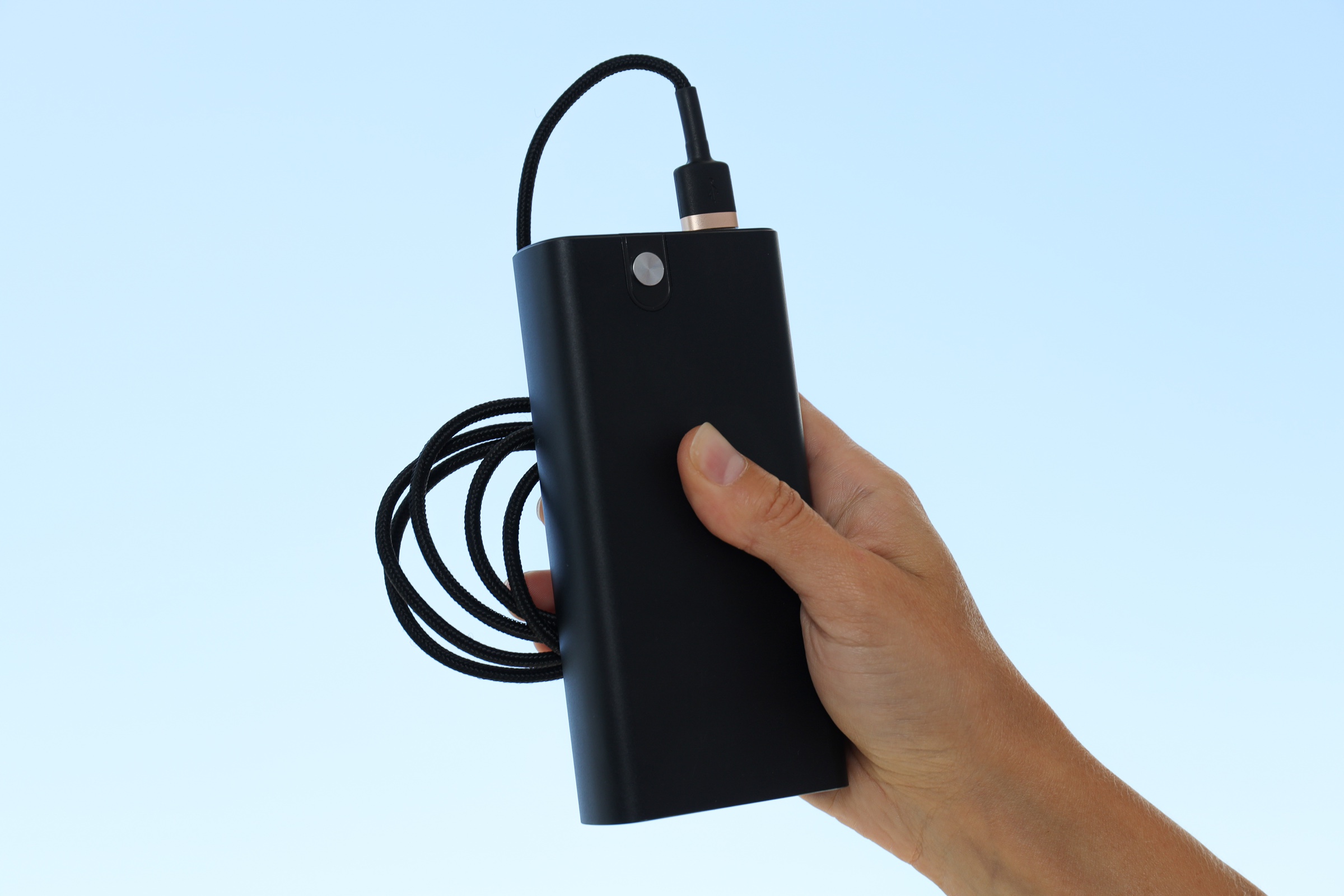
Check the pack, the bag and the airline.
The international Wh bands are only the starting point. The operating airline can set a stricter quantity, use or storage rule.
- The power bank is in carry-on baggage—not checked baggage
- The Wh rating is visible on the product or calculated from its own voltage label
- The operating airline allows this size and quantity on every flight leg
- No power bank exceeds 100Wh
- The power bank is not swollen, damaged or recalled
- Ports and terminals cannot short against keys, coins or other metal
- The pack is removed if cabin baggage is checked at the gate
- In-flight charging, use and storage follow the crew and airline policy
Practical answers
Can a 20,000mAh power bank go on a plane?
Usually, when it is a typical 3.7V pack: 20,000mAh is about 74Wh, below the common 100Wh threshold. It still belongs in carry-on baggage and the airline may apply stricter quantity or use rules.
Can I put a power bank in checked luggage?
No. IATA, FAA and EASA guidance says spare lithium batteries and power banks belong in carry-on baggage, not the aircraft hold. Remove the power bank if your cabin bag is gate-checked.
How do I convert mAh to Wh?
Divide mAh by 1,000 to get Ah, then multiply by the nominal battery voltage. For example, 10,000mAh ÷ 1,000 × 3.7V = 37Wh. Use the voltage printed on your exact power bank.
Is a 30,000mAh power bank allowed on a flight?
A 30,000mAh pack at 3.7V is about 111Wh. IATA’s 2026 passenger table lists power banks above 100Wh as forbidden rather than eligible for operator approval.
Can I use or charge my power bank during the flight?
Do not assume so. Airlines can prohibit charging the power bank, using it to charge another device, or storing it in an overhead locker. Follow the operating airline’s policy and cabin-crew instructions.
Evidence and sources5 official sourcesShow sources
Power banks worth checking against this calculation
These are relevant specification profiles, not automatic recommendations. Confirm energy, output protocol, cable behavior and the exact regional model before buying.