How long will a 1,000Wh power station run?
Use the interactive 1,000Wh runtime calculator, compare practical examples and understand the difference between watts and watt-hours.
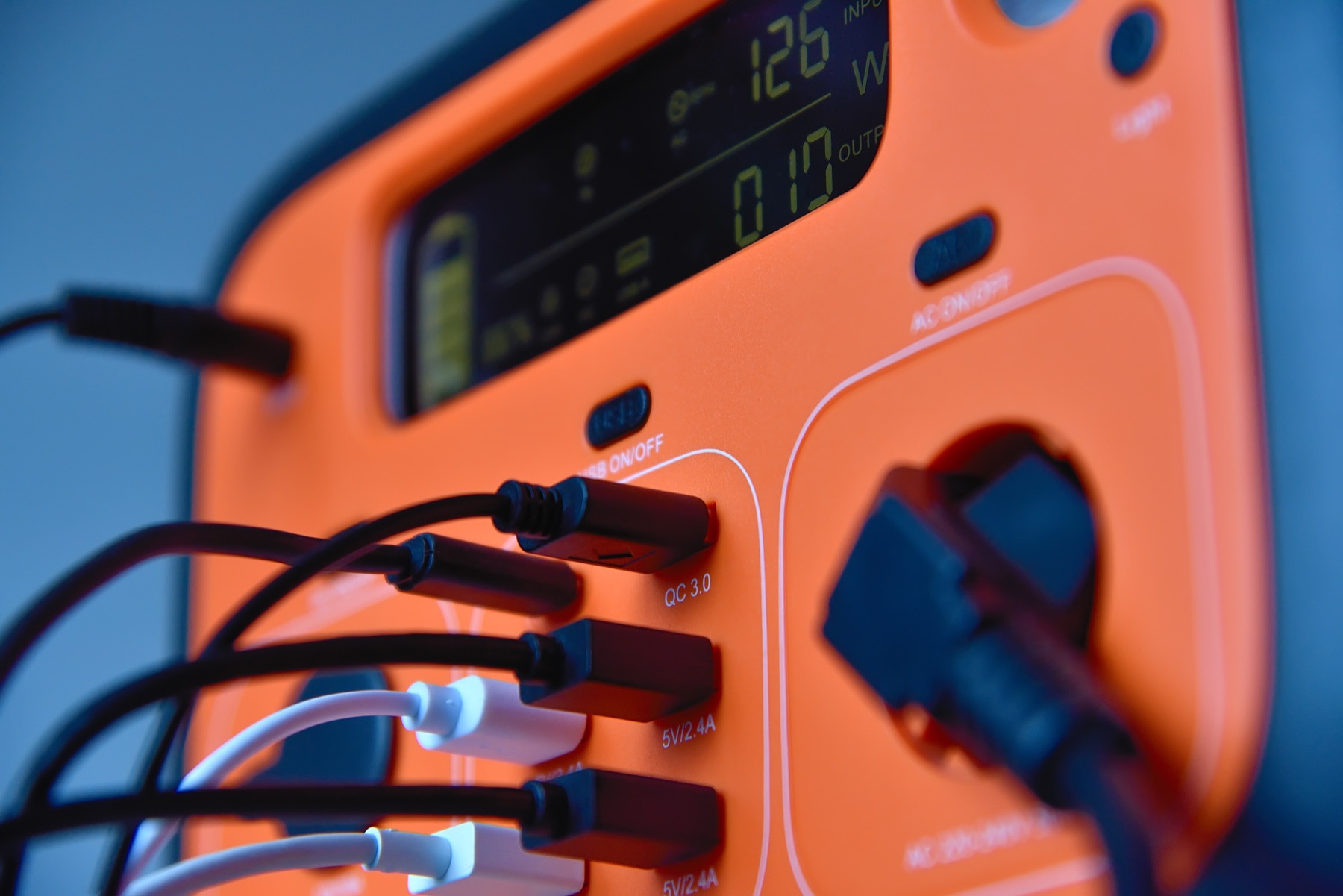
Low-load standby and high-load conversion behavior can change the result.
Try your wattsHow long will 1,000Wh last?
This quick estimate plans around 800Wh of usable energy. Enter average consumption—not only the largest number printed on the power adapter.
Runtime by average load
usable Wh ÷ average W = hoursUse the row closest to your situation. The explanation below shows what can move the result.
Comparison table
| Average load | Example category | Ideal at 1,000Wh | Planned at 800Wh |
|---|---|---|---|
| 25W | Router / small electronics | 40 hours | 32 hours |
| 50W | Laptop / compact device | 20 hours | 16 hours |
| 100W | Workstation / several devices | 10 hours | 8 hours |
| 500W | Medium appliance | 2 hours | 1.6 hours |
| 1,000W | High-power appliance | 1 hour | 0.8 hours |
Planning estimate only. Real runtime varies with temperature, load behavior, battery condition and conversion path.

Use your own watts, hours and reserve.
A realistic input gives you a useful range instead of a false promise.
Open Runtime Lab →What does this mean
for your choice?
Watts and watt-hours answer different questions
Watts describe the rate at which a device uses energy. Watt-hours describe the amount stored or consumed over time. A 1,000Wh battery does not mean it can supply every 1,000W appliance.
The inverter has its own ceiling
A battery may store enough energy but still have too little continuous or peak output. Motors, compressors and heating equipment require separate output checks before runtime matters.
Small loads expose standby loss
At low draw, the station's electronics and AC inverter can consume a meaningful share of the total. A native DC or USB-C path may reduce unnecessary conversion.

Check the complete power path.
A large enough battery can still be the wrong setup when its output, cable or regional version does not match.
- Average device draw rather than only maximum rating
- Station continuous and peak output
- AC, DC or USB-C conversion path
- Low-load auto-shutdown setting
- Reserve for cold, aging and unexpected use
Practical answers
Does a 1,000Wh station always deliver 1,000Wh?
No. Battery protection, inverter conversion, standby consumption, temperature and discharge rate reduce energy delivered to the device.
Can it run a 1,500W appliance?
Only if the station's continuous output supports that load. Capacity determines duration; inverter output determines whether the appliance can start and stay on.
Why does the screen estimate change while running?
The estimate responds to current load. Thermostats, chargers, motors and computer workloads vary over time, so remaining hours move with them.
Evidence and sources1 official sourceShow sources
Stations worth checking against this calculation
These are relevant specification profiles, not automatic recommendations. Confirm energy, output protocol, cable behavior and the exact regional model before buying.