Portable workshop day: grinder, battery charger and lights
A transparent one-day energy and output budget for intermittent grinding, cordless-tool charging and task lighting away from a fixed outlet.
Battery target for 1 day
Stated battery capacity, including a 25% extra energy margin on demand and 80% usable energy.
Adjust this exampleThis illustrative day uses about 1,000Wh, but energy is not the difficult part. With the listed loads overlapping, the planner asks for 2,575W at the largest start event; the exact tool and station still need a real startup test.
- Energy per day
- 1,000 Wh Power × hours × quantity
- Power check
- 1,375 / 2,575 W Simultaneous / peak — planning values
- Solar target
- 350 W 4 peak sun hours · 75% yield
Solar is a separate estimate. The battery target is calculated without intermediate recharging.
Define your power requirements for Australia.
No product is presented as an Australian candidate until its exact regional execution, local compliance route, support and seller evidence are verified.
1,563 Wh
Includes days, the extra energy margin on demand and the 80% usable-energy allowance
1,375 W · 2,575 W
Verify the exact appliance and inverter together
230V · 50Hz · Type I
Exact model, RCM/responsible supplier and local warranty still required
The devices in this example
These are sensible starting values. Change the hours and exact devices in the planner to make the answer yours.
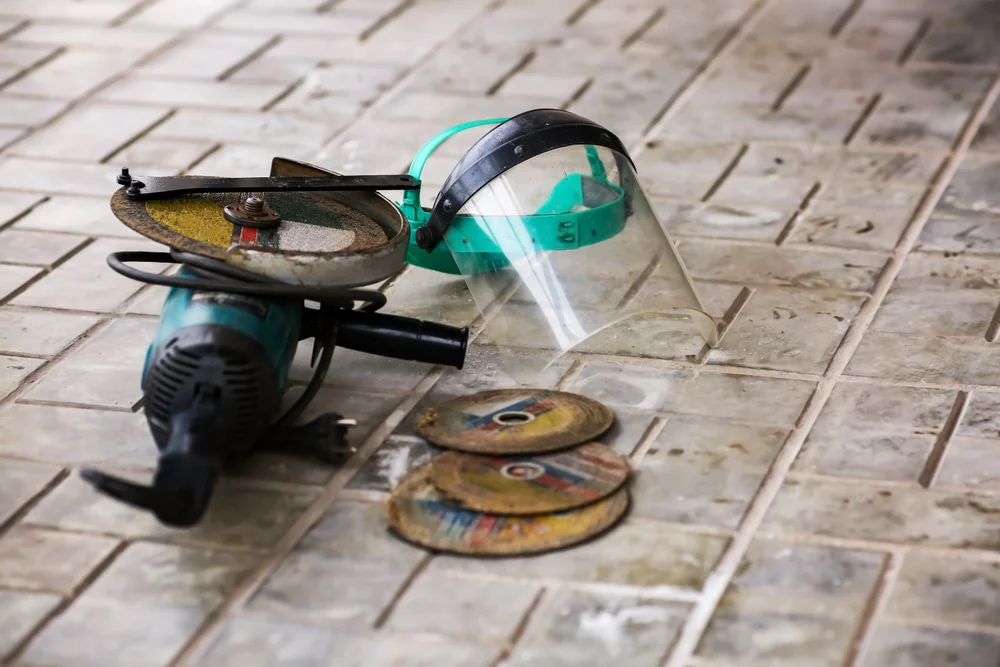
Angle grinder — active cutting
600 Wh per day- Average consumption
- 1,200 W
- Entered peak
- 2,400 W
- Hours per day
- 0.5 hours
- Quantity
- 1
Cordless-tool battery charger
300 Wh per day- Average consumption
- 150 W
- Entered peak
- 250 W
- Hours per day
- 2 hours
- Quantity
- 1
LED task lights
100 Wh per day- Average consumption
- 25 W
- Entered peak
- 25 W
- Hours per day
- 4 hours
- Quantity
- 1
Trigger time is not elapsed job time
A half-hour of cutting can be spread across a much longer work session. Record actual trigger-on minutes rather than counting every hour spent at the site.
Start behavior is the hard boundary
Blade load, extension leads, motor design and inverter response all affect a start. A wattage comparison narrows candidates; it does not certify the pairing.
Calculation detailsSee the assumptions behind this answer
- The angle grinder averages 1,200W for 30 minutes of actual trigger-on time
- One battery charger averages 150W for two hours
- Task lights draw 25W for four hours
- The planner conservatively allows the charger and lights to remain on when the grinder starts
How the battery target is formed
1,000 Wh per day × 1 day × 1.25 ÷ 0.8 ≈ 1,563 Wh
The daily consumption above is rounded for display. The calculation uses unrounded values. The factor is 1 + the extra energy margin, added to demand rather than kept as battery charge; the 80% usable-energy allowance is a separate factor.