Language and regionEnglish · South AfricaZA
IDBahasa Indonesia · IndonesiaDKDanskDanmarkThis page is not availableDEDeutschDeutschlandThis page is not availableATDeutschÖsterreichThis page is not availableCHDeutschSchweizThis page is not availableAUEnglishAustraliaThis page is not availableCAEnglishCanadaThis page is not availableINEnglishIndiaThis page is not availableENEnglishInternationalIEEnglishIrelandThis page is not availableNGEnglish · NigeriaPHEnglish · PhilippinesZAEnglish · South AfricaGBEnglishUnited KingdomThis page is not availableUSEnglishUnited StatesThis page is not availableESEspañolEspañaThis page is not availableMXEspañolMéxicoThis page is not availableCAFrançaisCanadaThis page is not availableFRFrançaisFranceThis page is not availableCHFrançaisSuisseThis page is not availableITItalianoItaliaThis page is not availableCHItalianoSvizzeraThis page is not availableNLNederlandsNederlandThis page is not availableNONorsk bokmål · NorgePLPolskiPolskaThis page is not availableBRPortuguêsBrasilThis page is not availablePTPortuguêsPortugalThis page is not availableFISuomi · SuomiSESvenskaSverigeThis page is not availableTRTürkçeTürkiyeThis page is not availableGRΕλληνικάΕλλάδαThis page is not availableJP日本語 · 日本
← News overview

On the go

A weekend without a socket, with laptop, light and music

Friday afternoon, a field, no power points. How do you keep your laptop, lights and speaker going until Sunday without dragging half your house along?

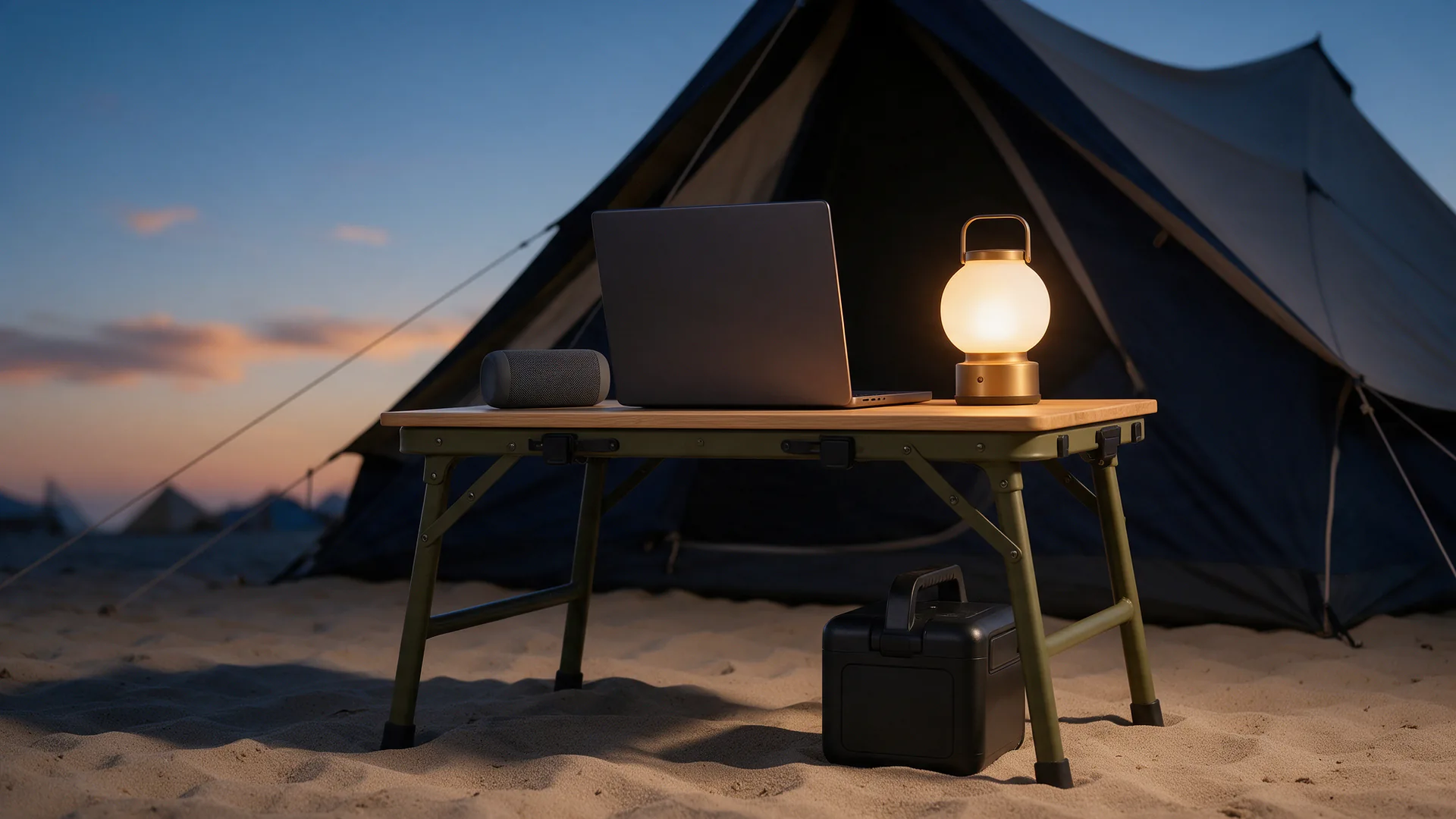
A portable power station on the grass at a campsite with a tent and a camping chair
Light luggage, realistic expectations. Generated editorial illustration, not a product photograph.

Friday: make a short list

Write down what really comes along: a laptop for a few hours of writing, a phone, a lantern, a Bluetooth speaker. Then write down how much you think you will use each one.

That second list matters most. An evening of music at low volume asks far less than a laptop that renders video.

For example: three hours of laptop work a day, one phone charge a day, a lantern for four hours each evening and a speaker for two. Those are your own assumptions, and they can change.

Saturday: charge smart

Charge USB-C devices directly over USB-C where possible. Going through the socket on a power station and then the laptop adapter costs extra energy along the way.

Turn off what you are not using. A lantern that burns all night or a laptop left on standby makes a difference across two days.

Keep batteries out of the full sun. Heat is bad for them, and a power station in the shade of the tent stays cooler.

Light and sound for the evening

Rechargeable lanterns and a speaker with its own battery are easy: charge them fully at home, and they may not need the power station at all. That keeps capacity for the laptop.

Sunday: an honest estimate

How long a setup lasts depends on your devices, their settings and the weather. A fixed number of hours would be a guess.

Would you rather calculate than guess? In the energy planner you enter your own devices and hours, and see which capacity suits your weekend. The result is an estimate, not a promise.

Sources

Check exact specifications in manufacturer and standards documentation.

Privacy