Language and regionEnglish · South AfricaZA
IDBahasa Indonesia · IndonesiaDKDanskDanmarkThis page is not availableDEDeutschDeutschlandThis page is not availableATDeutschÖsterreichThis page is not availableCHDeutschSchweizThis page is not availableAUEnglishAustraliaThis page is not availableCAEnglishCanadaThis page is not availableINEnglishIndiaThis page is not availableENEnglishInternationalIEEnglishIrelandThis page is not availableNGEnglish · NigeriaPHEnglish · PhilippinesZAEnglish · South AfricaGBEnglishUnited KingdomThis page is not availableUSEnglishUnited StatesThis page is not availableESEspañolEspañaThis page is not availableMXEspañolMéxicoThis page is not availableCAFrançaisCanadaThis page is not availableFRFrançaisFranceThis page is not availableCHFrançaisSuisseThis page is not availableITItalianoItaliaThis page is not availableCHItalianoSvizzeraThis page is not availableNLNederlandsNederlandThis page is not availableNONorsk bokmål · NorgePLPolskiPolskaThis page is not availableBRPortuguêsBrasilThis page is not availablePTPortuguêsPortugalThis page is not availableFISuomi · SuomiSESvenskaSverigeThis page is not availableTRTürkçeTürkiyeThis page is not availableGRΕλληνικάΕλλάδαThis page is not availableJP日本語 · 日本
← News overview

Technology

Power bank or power station? Start with the connection

If you only need to charge a phone or laptop during a power cut, an AC power station may be more than you need. Check the device’s input before comparing battery sizes.

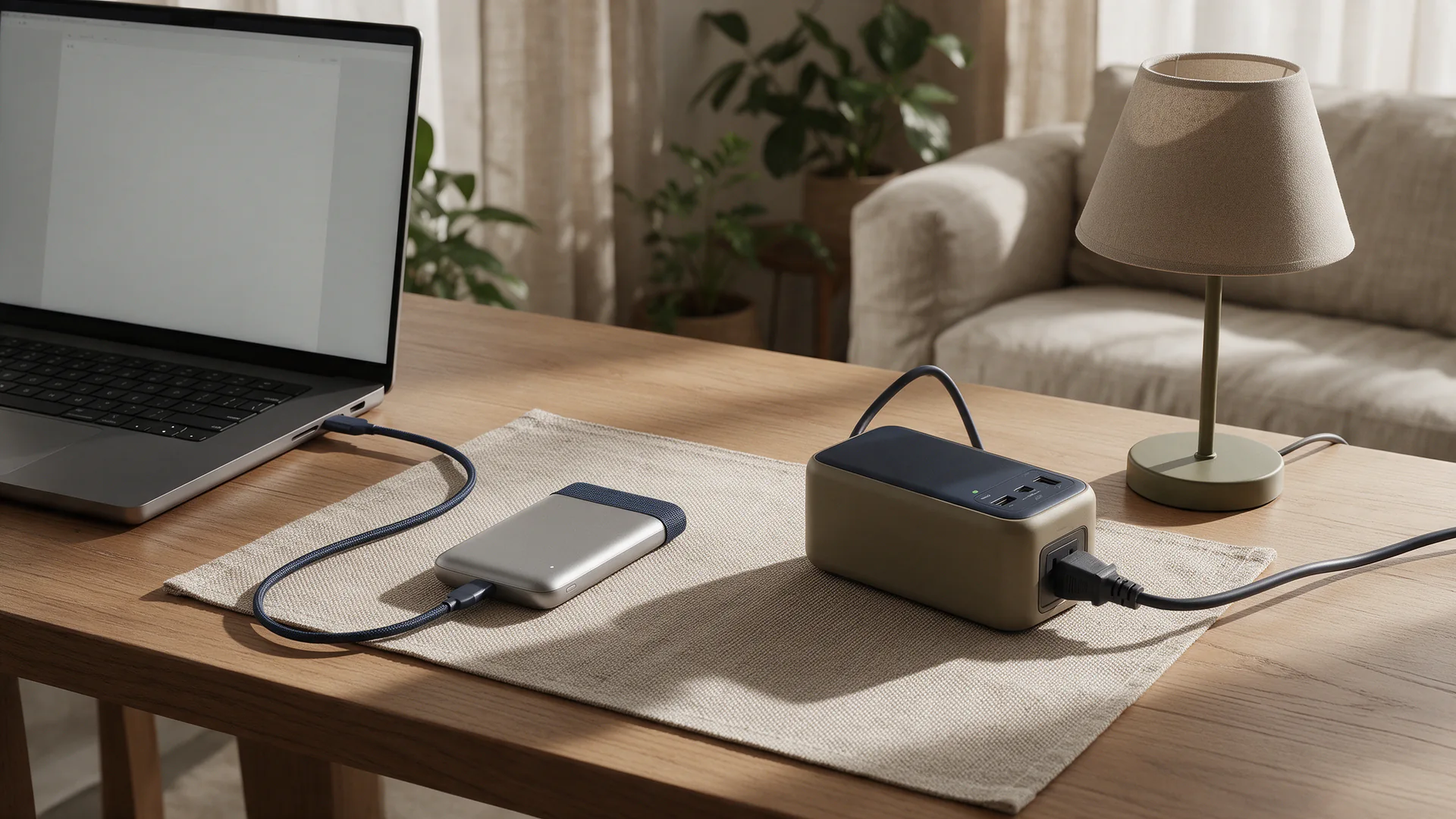
Illustration of a laptop charging by USB-C beside a lamp powered by a small station
USB-C charging or an AC socket: the first practical distinction. Generated editorial illustration, not a product photograph.

The USB-C shape does not settle the question

A matching connector does not guarantee the same power capability. Check that the charger and cable support the USB Power Delivery voltage and power requested by the laptop.

Compare stored energy in Wh as well as USB-C output. Capacity says how much energy is stored; watts describe power delivered at a given time.

An AC appliance needs regional checks

For an appliance that needs AC, check continuous output and startup requirements separately. South Africa’s standard low-voltage supply is 230 V at 50 Hz (NRS 048-2; Eskom), usually through SANS 164 sockets; check the exact appliance and station ratings and the actual installation. Station profiles from EcoFlow South Africa product pages are technical references; they do not establish stock, price or an approved purchase route.

An English-language listing may describe a US 120 V version. Confirm the South African model, the exact sockets, supplied lead and warranty with the manufacturer or seller.

Choose capacity from the time you need

Begin with watts multiplied by hours. Include conversion losses and the battery charge you intend to leave unused.

Enter your own device values, then test the actual combination. This edition confirms neither stock nor a purchase destination.

Sources

Check exact specifications in manufacturer and standards documentation.

Privacy