Generator vs power station: which backup is better?
Compare a fuel generator, portable power station and hybrid backup plan by indoor use, outage length, noise, maintenance and safe operation.
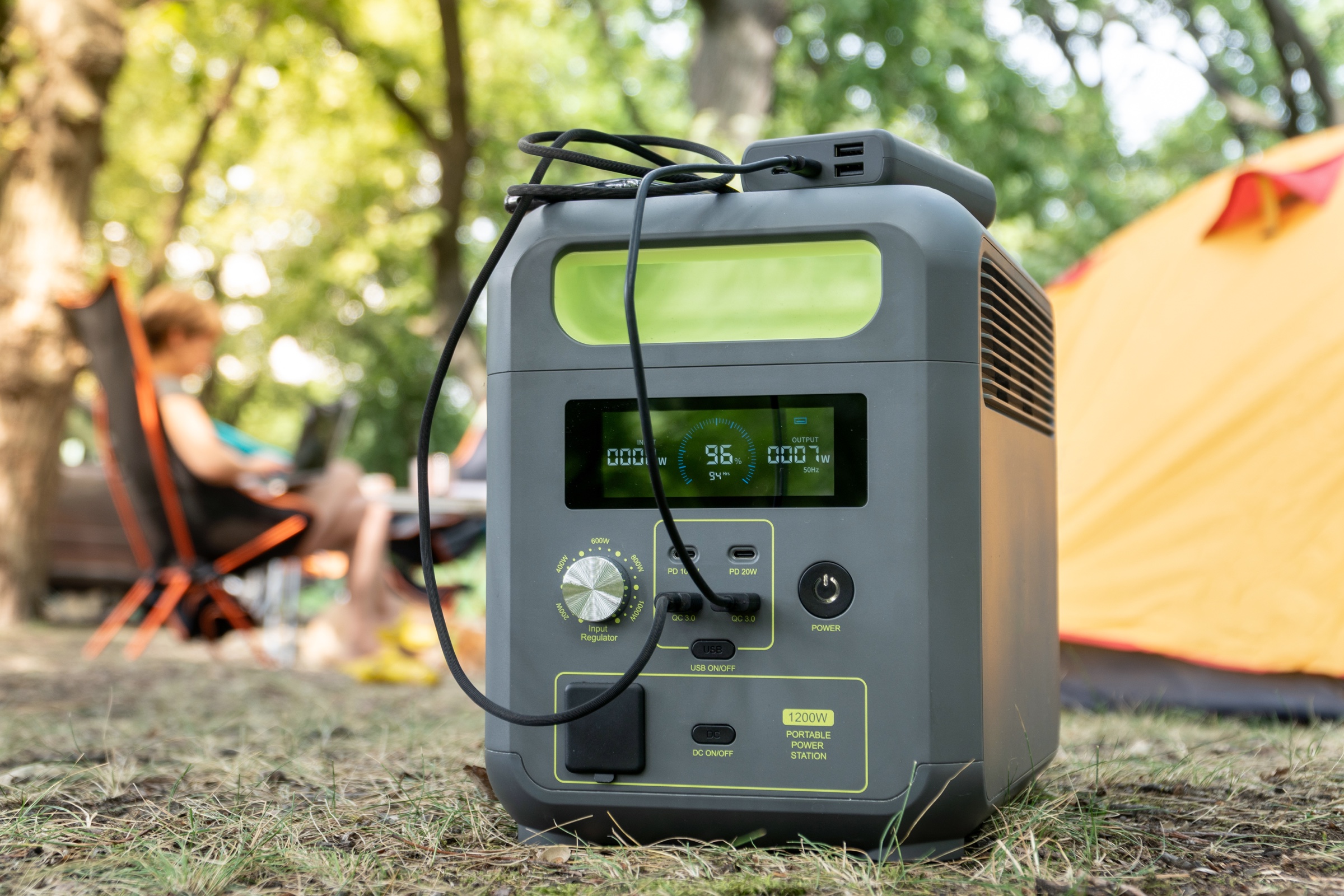
Choose a fuel generator when you need energy for longer than a battery can store and can run the engine safely outdoors. A hybrid can recharge a power station from a compatible generator, but only when both manuals permit the exact charging path.
The fuel generator itself always stays outdoors
Stored energy and available fuel solve different problems
Fridges, pumps and tools can need extra power to start
Plain languageWhat do the technical words mean?Open explanation +
- Watt-hours (Wh)
- The amount of energy stored in a battery. More Wh usually means a longer runtime.
- Continuous output
- The power a system can supply for an extended period.
- Starting surge
- The brief extra power that a fridge, pump or tool may need when it starts.
What does this mean
for your choice?
A power station stores energy
A portable power station is a battery, charger and inverter in one enclosure. It can run indoors because it has no combustion exhaust, but its watt-hours are finite. It still needs enough ordinary output, starting output and the correct sockets for every connected device.
A fuel generator makes energy while fuel lasts
A gasoline, propane or diesel generator can support a longer outage through refueling, but it adds exhaust, noise, hot surfaces, fuel storage and engine maintenance. It must remain outside and away from openings; an open garage door does not make indoor operation safe.
Hybrid backup can reduce engine run time
A compatible generator can sometimes recharge a power station through its normal AC charging inlet or a listed brand-specific connection. The battery can then run quiet loads while the generator is off. This is useful only after confirming the exact station input limits, generator output and approved cable path.
Compare the complete cost, not only purchase price
Include battery capacity or fuel consumption, safe transfer equipment, rated cords, carbon-monoxide alarms, maintenance, storage and replacement plans. The cheapest box can become the most expensive system when the missing safety equipment and operating costs are added.
Calculate the battery and generator as two different jobs.
A battery is sized by energy over time. A generator is sized by the loads that run and start at the same moment.
200W for 8 hours needs about 1,883Wh. Loads using 700W with one 900W extra start event need at least 1,600W starting output—before breathing room.
Three models to compare after the calculation.
- Continuous
- 3,700 W
- Maximum
- 4,500 W
North American RV use and longer dual-fuel backup with 30A output
North America 120V · 120V · Gasoline or propaneProfile and buying options →- Continuous
- 3,200 W
- Maximum
- 4,000 W
Fast direct-DC charging in a compatible North American EcoFlow hybrid system
North America 120V · 120V · Gasoline or LPGProfile and buying options →- Continuous
- 1,800 W
- Maximum
- 2,200 W
Portable 230V inverter power for camping, electronics and modest backup loads
Europe 230V · 230V · PetrolProfile and buying options →
Check the complete system.
Do not tick these off in your head. Check the manuals and test the real setup before an outage.
- Continuous output covers all devices that may run together
- Starting output covers motor and compressor surges
- Enough stored energy or safely stored fuel for the planned duration
- Generator placement follows current public-safety and manufacturer instructions
- A building connection uses properly installed transfer equipment—never a wall-outlet backfeed
- Power-station charging is explicitly supported for the exact generator output
- Correct regional voltage, frequency, sockets, cords and grounding instructions
- A real test run is completed before the next outage
Clear answers
Is a power station safer than a generator?+
A battery power station avoids carbon-monoxide exhaust at the point of use, but it still has electrical, battery and charging risks. A fuel generator adds serious CO, fuel, heat and backfeed hazards, so safe outdoor placement and the correct electrical connection are essential.
Which is better for a refrigerator during a long outage?+
A power station is quiet and convenient for the first hours, while a generator can restore energy during a multi-day outage if fuel and safe outdoor operation are available. First measure refrigerator running and starting power; then compare required watt-hours with battery capacity or generator run time.
Can I use a generator and power station together?+
Sometimes. Many stations can charge from a compatible generator through their normal AC inlet, while a few brand systems use a dedicated connection. The station manual must permit it and the generator must meet the stated voltage, frequency, waveform and continuous-power requirements.
Does ‘solar generator’ mean it has a fuel engine?+
Usually not. In consumer listings, ‘solar generator’ often means a battery power station sold with solar panels. It stores electricity and has no combustion engine. Check whether the product is a battery system or a fuel-burning generator before comparing it.