Do lithium-ion battery fire bags really work?
How lithium-ion fire-containment bags differ from simple LiPo bags, what they can and cannot contain, and which evidence matters for powerbanks, phones and laptops.

A correctly sized, independently tested product may reduce the spread of flame, sparks and hot debris, but it does not prevent thermal runaway or guarantee containment of heat, smoke, pressure and toxic gases. Treat the bag as a secondary barrier—not as permission to charge unattended.
See why this fitsThree product classes that should not be confused
prevention first + tested barrier secondUse the row closest to your situation. The explanation below shows what can move the result.
Comparison table
| Product class | Typical use | Evidence level | Buying decision |
|---|---|---|---|
| Basic LiPo charging bag | Small RC pouch batteries | Often only a material or seller claim | Do not assume it is rated for a powerbank |
| PED fire-containment bag | Phones, laptops and powerbanks | Look for an exact Wh class and product-level test | Best-matched bag class for portable electronics |
| Battery containment enclosure | Storage or charging of multiple devices | Purpose-built construction and system testing | Do not improvise with a sealed metal box |
| Aviation product tested to UL 5800 | Trained response to an in-flight PED event | Defined fire-containment performance | Useful evidence, but not automatic approval for unattended home charging |
| Enclosure tested to UL 1487 | Larger professional containment systems | Thermal-runaway and deflagration testing | Current scope does not automatically cover residential use |
No bag makes unattended charging safe. Product claims must be tied to a defined battery energy, test method and exact model.
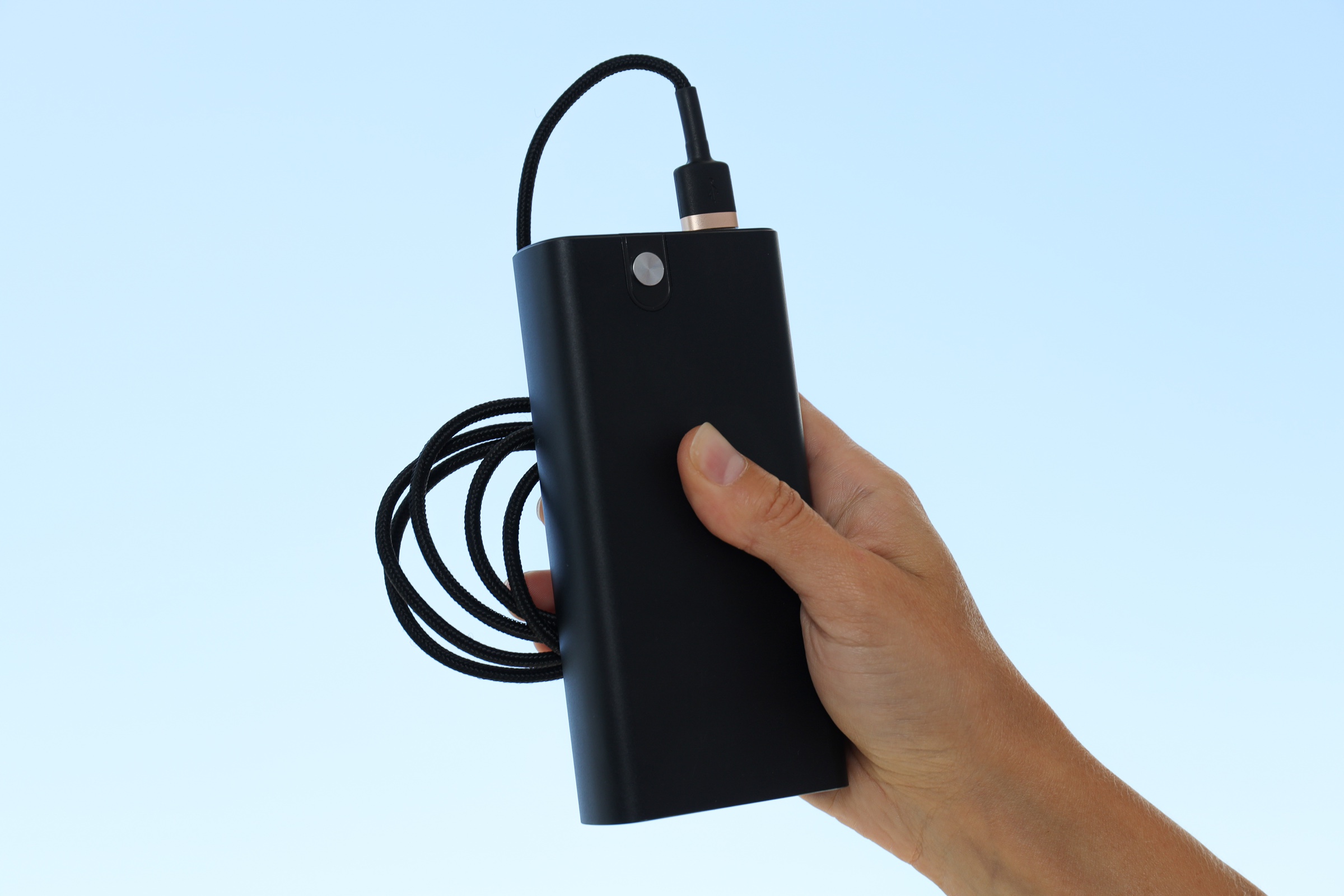
Start with the device you actually want to charge.
Energy, USB-C output and the cable you carry matter more than a large number printed on the listing.
See how buying links work →What does this mean
for your choice?
LiPo is not the name for every power bank fire
Power banks usually contain rechargeable lithium-ion cells. Some use pouch cells commonly described as lithium-polymer or LiPo, while others use cylindrical lithium-ion cells. Unless the exact cell construction is known, ‘lithium-ion battery fire’ and ‘thermal runaway’ are the accurate general terms.
Choose the product class before comparing brands
A thin hobby LiPo pouch, a portable-electronic-device containment bag and a larger battery containment enclosure solve different problems. For a powerbank, look for an explicit portable-electronics use case, an energy rating in watt-hours and testing of the complete bag—including seams, closure and venting—not only the fabric.
A bag limits consequences; it does not remove the cause
A fire-resistant enclosure can provide useful separation from nearby combustible material, but the outcome depends on cell energy, bag construction, seams, closure and venting. Heat, flammable vapour, smoke and ejecta can still escape. ‘Fireproof’ in a marketplace title is not a performance standard.
Prevention does more work than containment
Use a traceable power bank and the manufacturer-specified charging equipment. Charge it uncovered on a stable, non-combustible surface while awake and nearby, away from beds, sofas, direct sun, exits and anything that burns. Stop using a pack that swells, leaks, smells unusual, becomes excessively hot, changes colour or makes hissing or cracking sounds.
Do not pick up an unstable battery to put it in a bag
FAA guidance for trained cabin crews warns against handling a burning, smoking, expanding or very hot device because movement can provoke another reaction. At home, do not rely on a bag as an emergency manoeuvre: raise the alarm, get out, stay out and call the local emergency number. Follow local fire-service guidance rather than attempting improvised firefighting.
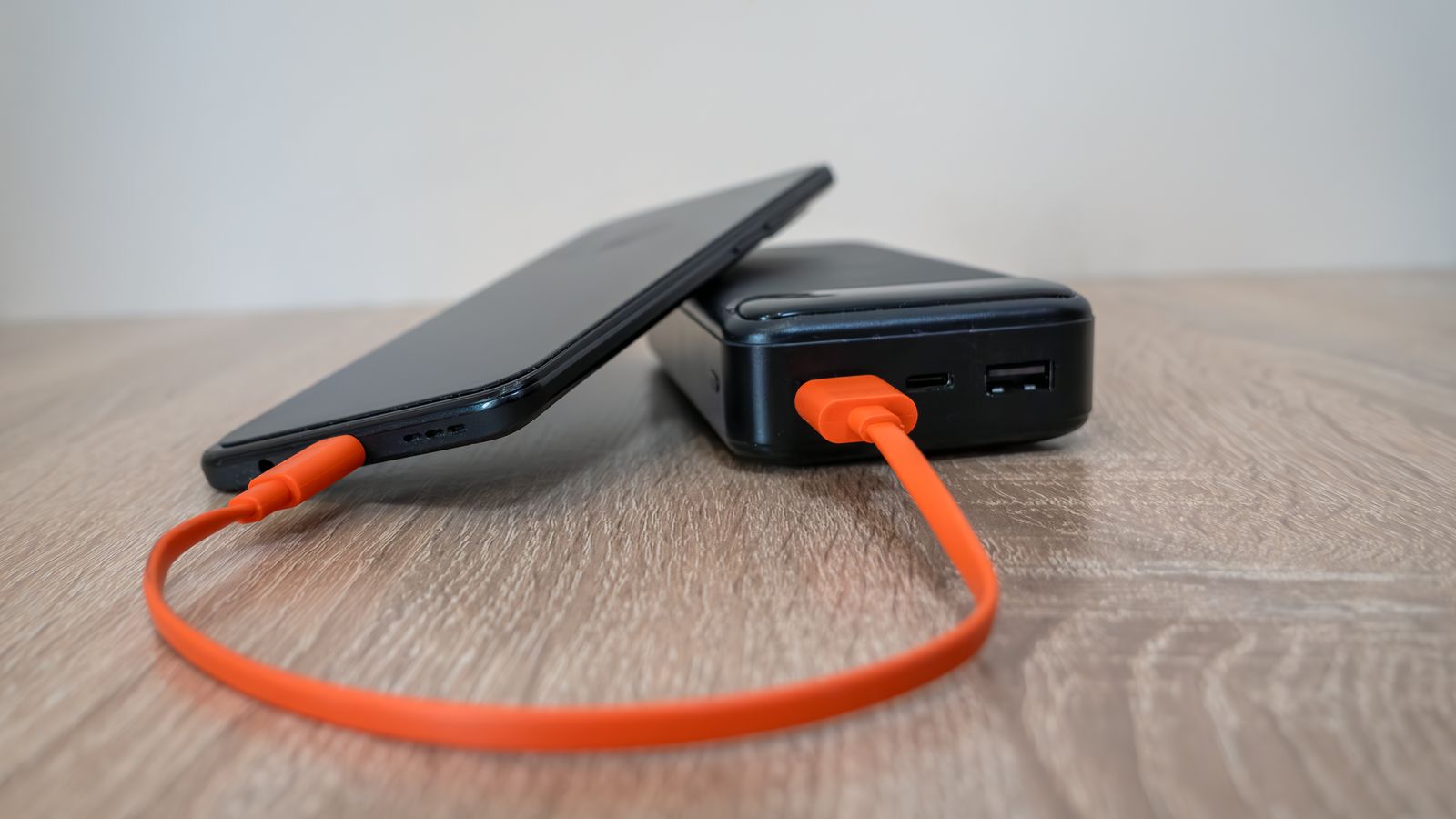
Evidence first. Price second.
The store name, country of manufacture and star rating do not decide the label. The exact product and the evidence attached to it do.
Exact model, traceable manufacturer, credible documentation, checked output and a usable support or recall route.
The listing clears the core checks, but any specification we have not independently tested remains clearly identified.
Missing identity, implausible capacity, unclear seller or unverifiable claims. It stays out of recommendations.
Treat ‘fireproof’ as a claim to verify.
A bag is an extra layer, not a cure for a damaged battery and not permission to charge while asleep or away.
- Exact internal dimensions and a clearly stated battery-energy limit
- Credible test report for the exact product—not only a flame icon
- Seams, closure and venting included in the test
- Instructions that permit the intended charging or storage use
- A stable non-combustible surface with clear space around the bag
- No sealed improvised metal box that can build pressure
- Charging remains attended and away from the escape route
- Seller identity, return route and product recall search
Practical answers
Is every power bank battery a LiPo battery?
No. LiPo commonly refers to lithium-polymer pouch-cell construction, which is part of the wider rechargeable lithium-ion family. A power bank can instead use cylindrical lithium-ion cells, so the cell type should come from the exact manufacturer documentation.
Are LiPo bags really fireproof?
That word is too absolute for most consumer products. A well-designed and properly tested bag may resist flame and reduce spread for a defined battery size and test scenario, but it cannot guarantee containment of every thermal-runaway event or eliminate heat, smoke and toxic gases.
Can I use a LiPo bag for a lithium-ion power bank?
Only when the manufacturer explicitly includes powerbanks or portable electronic devices and supplies credible test evidence for at least the powerbank’s watt-hour class. A shared lithium-ion chemistry does not prove that a small RC charging bag can contain the construction and energy of a powerbank.
Can I safely charge a power bank overnight inside a fire bag?
No. NFPA and fire-service guidance says not to charge lithium-ion batteries unattended or while asleep. A bag is not a substitute for supervision, correct charging equipment and a safe surface.
Should I put a smoking power bank into the bag?
Do not handle a hot, smoking, expanding or burning battery. FAA research warns that movement can trigger a further reaction. Raise the alarm, leave the area, call emergency services and follow local fire-service instructions.
What should an affiliate comparison rank first?
Evidence before commission: exact tested capacity, test method, closure and venting performance, intended use, internal size, instructions, seller traceability and total delivered price. Untested ‘fireproof’ bags should not be ranked as safety recommendations.
Evidence and sources7 official sourcesShow sources
Power banks worth checking against the same buying filter
These are relevant specification profiles, not automatic recommendations. Confirm energy, output protocol, cable behaviour and the exact regional model before buying.