How many times can a 10,000mAh power bank charge a phone?
Convert a 10,000mAh power bank to watt-hours, allow for charging losses and estimate full phone charges without relying on the headline capacity.
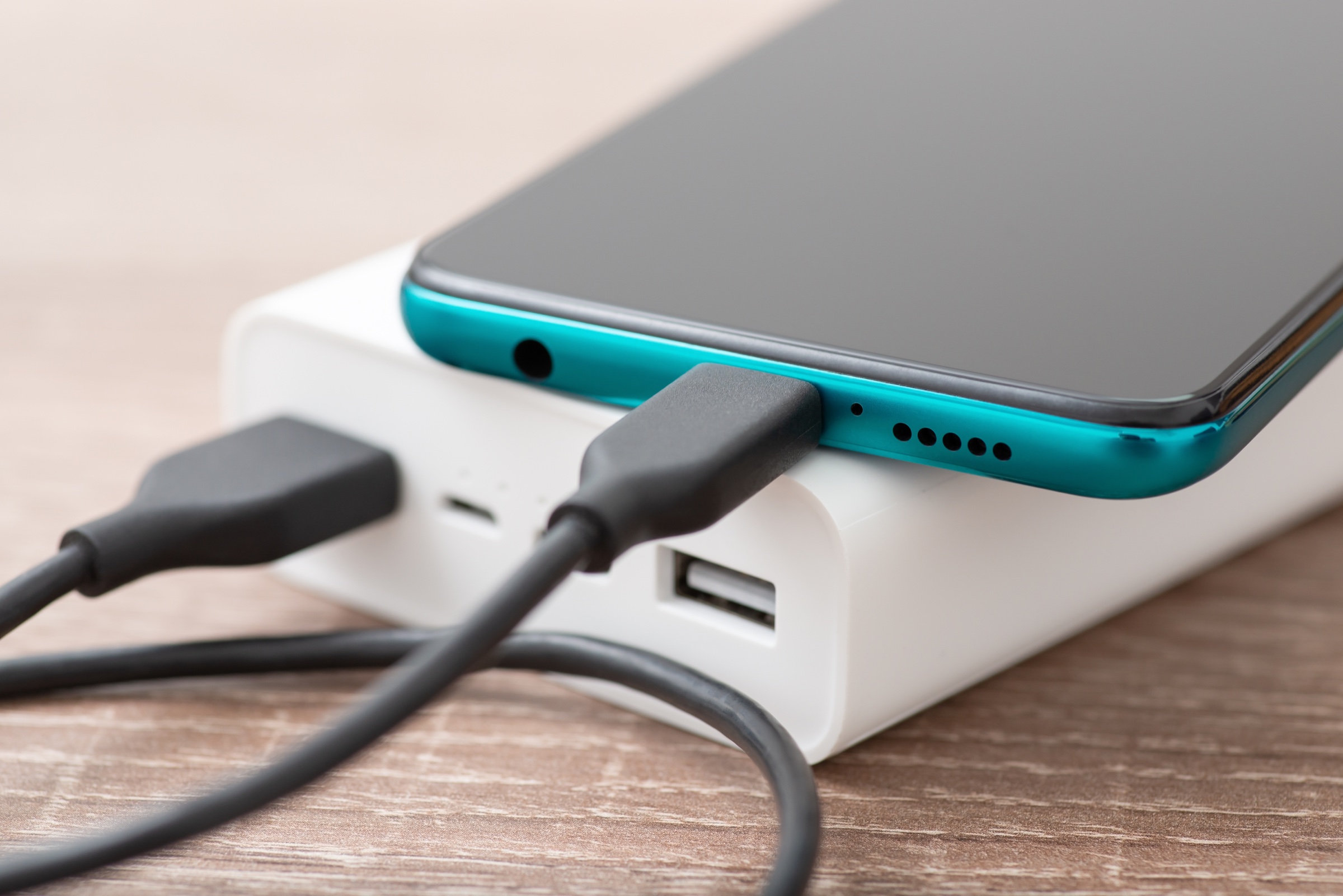
Smaller phone batteries may get more than two; larger batteries and real charging losses reduce the result.
See why this fitsEstimated charges from a 37Wh power bank
rated Wh × usable share ÷ device WhUse the row closest to your situation. The explanation below shows what can move the result.
Comparison table
| Phone battery | Usable bank energy | Calculated charges | Planning interpretation |
|---|---|---|---|
| 12Wh | 27.75Wh | 2.3 | Smaller phone battery |
| 15Wh | 27.75Wh | 1.9 | Mid-size planning example |
| 18Wh | 27.75Wh | 1.5 | Larger phone battery |
| 20Wh | 27.75Wh | 1.4 | Large phone battery |
Planning comparison only. Delivered energy varies with voltage conversion, cable loss, temperature, battery condition and device behavior.
Start with the device you actually want to charge.
Energy, USB-C output and the cable you carry matter more than a large number printed on the listing.
Open Power Bank Finder →What does this mean
for your choice?
mAh is incomplete without voltage
Milliamp-hours describe charge, not energy by themselves. Watt-hours include voltage and let you compare the power bank with the phone battery on the same basis. Use the Wh printed on each exact product where possible.
Energy moves through two converters
The pack raises its internal battery voltage to USB output, then the phone converts that input again for its own battery. Cable resistance, heat and background phone use also consume energy, which is why the table does not divide by the full 37Wh.
A partial phone is not an empty phone
Real top-ups often start above 0% and stop below 100%. The full-charge equivalent is useful for comparing packs, but your number of actual plug-in sessions can be higher when each session adds only part of the phone battery.
Check the complete power path.
A large enough battery can still be the wrong setup when its output, cable or regional version does not match.
- Rated watt-hours on the exact power bank
- Phone battery watt-hours or voltage and amp-hours
- Single-port USB-C output
- Supported fast-charge protocol
- Cable connector and current rating
- Capacity and output sharing when two devices charge
Practical answers
Why does a 10,000mAh power bank not charge a 5,000mAh phone twice?
The two mAh figures can refer to different voltages, and both conversion stages lose energy. Compare rated watt-hours and include a realistic delivered-energy allowance instead.
Is 75% guaranteed usable energy?
No. It is a transparent planning assumption. Efficiency changes with the power bank, voltage, cable, charge rate, temperature and phone behaviour.
Does faster charging reduce the number of charges?
It can change conversion efficiency and heat, but the larger distinction is that output watts describe speed while watt-hours describe stored energy. They must be checked separately.
Evidence and sources2 official sourcesShow sources
Power banks worth checking against this calculation
These are relevant specification profiles, not automatic recommendations. Confirm energy, output protocol, cable behaviour and the exact regional model before buying.