The model. Your possibilities.
Anker SOLIXC1000 Gen 2
A documented 1,024Wh successor with 2,000W continuous output, 600W solar input, a 140W USB-C port and 10ms UPS transfer at about 11.3kg.
Manufacturer specifications · check your regional version
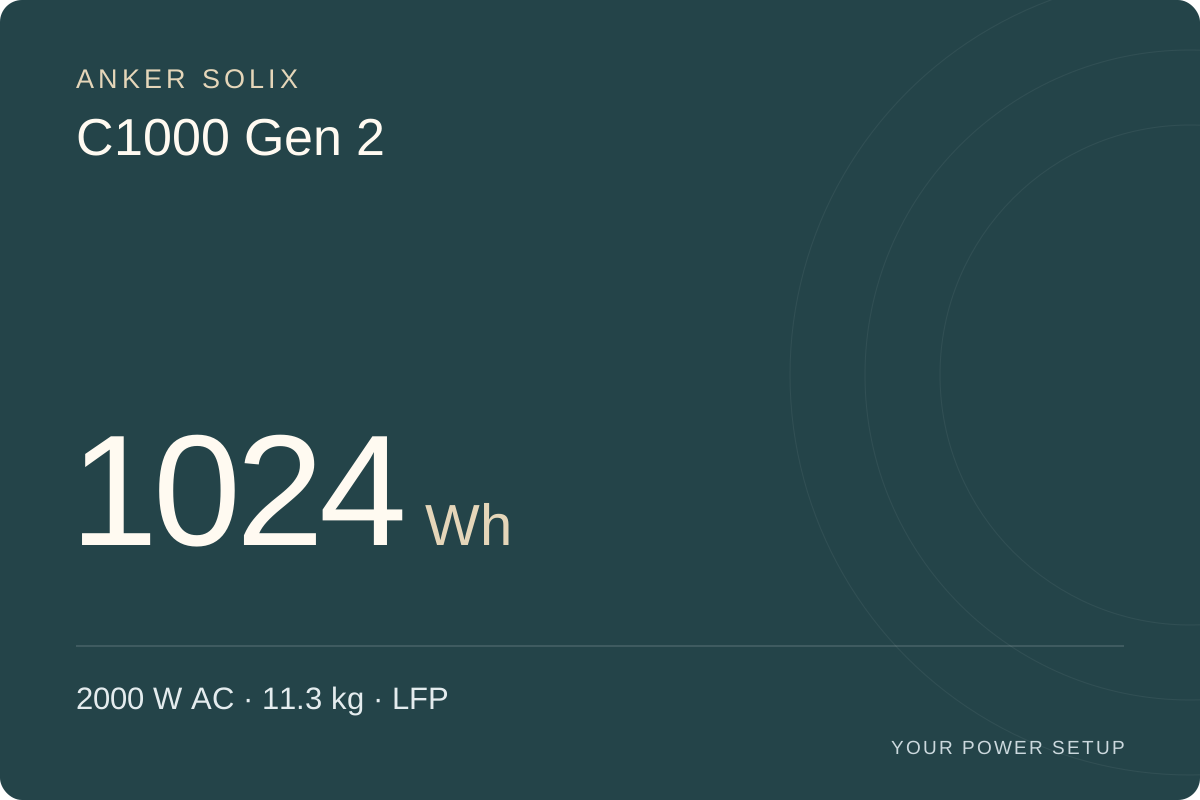
- Battery capacity
- 1,024 Wh
- Continuous AC output
- 2,000 W
- Weight
- 11.3 kg
- Solar input, maximum
- 600 W
Your setup, made clear
What would you like to power?
Start with an example or add your own devices. The estimate updates as you go.
Example: workspace
2 devicesEverything that needs to run together.
Usage, connection & starting peak
Use measured power where possible. A listed peak does not confirm its duration or the real starting behaviour.
Usage, connection & starting peak
Use measured power where possible. A listed peak does not confirm its duration or the real starting behaviour.
Reserve & conversion loss85% efficiency · 10% reserve
Example values are estimates. Use the real power draw of your devices for a more personal result.
Look closer, when you want to.
What can I connect?Cables, ports and solar input
What comes in the box?
AC and car charging cables are documented for the cited package.
Solar connection
XT60i
11–60V · 14.5A · 600W max per input
Check the solar cable →USB-C
140W + 20W shared
For 12V devices, also verify voltage, polarity, current and fuse—not only the plug shape.
Check my connection →Open Solar Lab →Specifications & sourcesManufacturer data, separate from estimates
- Continuous AC output
- 2,000 W
- Solar input
- 600 W · 11–60 V · 14.5 A per input
- Solar connector
- XT60i
- USB-C
- 140W + 20W shared
- Weight
- 11.3 kg (source)
- Transfer behaviour
- 10ms transfer
- Dimensions
- 384 × 208 × 244mm
- Battery type
- LFP
A transfer time is not a promise of uninterrupted UPS operation. Test critical equipment.
Evidence and source details
The manufacturer specification documents 1,024Wh LFP capacity, 2,000W continuous and 3,000W peak output, an 11–60V/600W solar input, a 140W USB-C port, 10ms UPS transfer and 11.3kg weight. It does not document an Australian-market unit.
- Source type
- Manufacturer specification
- Source region
- United States specification
- Last checked
Your Power Setup has not physically tested this unit. Calculations are not reviews or proof of compatibility.
Open manufacturer source ↗Is this model right for me?Uses and regional considerations
Portable Australian backup and single high-power USB-C workflows where the 2,000W ordinary output and lower weight fit better than dual solar inputs.
3,000W is peak output, not continuous. The cited electrical specification describes a 120V version, so the Australian 230V/50Hz Type I execution remains unverified on this record.
Plan what I need first →Simple runtime examplesCalculated ranges, not physical tests
- Starlink Mini25–40 W
- 20.5–36.9 h
- Laptop workstation45–100 W
- 8.2–20.5 h
- CPAP planning load40–60 W
- 13.7–23 h
- 12V fridge while running35–55 W
- 14.9–26.3 h
A fridge cycles on and off. Actual runtime can differ from these continuous-use examples.
Australia · 230V / 50Hz
- Type I · verify outlet, earth and RCM on the physical unit
- An overseas plug version is not an Australian execution
- an applicable Australian approval mark and RCM
- Verify it on the physical Australian unit.
- Grid context
- Australia · 230V / 50Hz
- Source record
- Anker SOLIX product specification (international record)
- Checked
- AU · 2026-08-26
- Exact Australian model code with a 230V / 50Hz label and Type I outlets — a shared product name is not shared hardware.
- Australian responsible-supplier and RCM/approval evidence for the exact unit; a travel adaptor is not a regional execution.
- Included AC lead, car lead and solar cable in the Australian bundle — pictured cables are not always included.
- Seller, delivery, warranty territory and consumer-support evidence for Australia before any purchase decision.
No verified Australian-market offering is claimed on this page. A documented manufacturer specification is not proof that the 230V/50Hz Type I Australian model exists, is approved, is stocked or is locally supported.
Australian evidence gateCalculate runtimeQuestions about this model
How much energy does the C1000 Gen 2 store?
The manufacturer lists 1,024 Wh. Conversion loss and a reserve reduce the energy available to your devices.
How much power can it deliver?
Normal continuous output is 2,000 W. A short surge figure does not prove that every motor or appliance can start.
Which solar panel can I use?
The documented input range is 11–60 V, up to 600 W total. Also check current, cold open-circuit voltage, connector and polarity.
Still comparing?
Compare capacity, output and the exact regional version.