Language and regionEnglish · InternationalEN
IDBahasa IndonesiaIndonesiaThis page is not availableDKDanskDanmarkThis page is not availableDEDeutschDeutschlandThis page is not availableATDeutschÖsterreichThis page is not availableCHDeutschSchweizThis page is not availableAUEnglishAustraliaThis page is not availableCAEnglishCanadaThis page is not availableINEnglishIndiaThis page is not availableENEnglishInternationalIEEnglishIrelandThis page is not availableNGEnglishNigeriaThis page is not availablePHEnglishPhilippinesThis page is not availableGBEnglishUnited KingdomThis page is not availableUSEnglishUnited StatesThis page is not availableESEspañolEspañaThis page is not availableMXEspañolMéxicoThis page is not availableCAFrançaisCanadaThis page is not availableFRFrançaisFranceThis page is not availableCHFrançaisSuisseThis page is not availableITItalianoItaliaThis page is not availableCHItalianoSvizzeraThis page is not availableNLNederlandsNederlandThis page is not availableNONorsk bokmålNorgeThis page is not availablePLPolskiPolskaThis page is not availableBRPortuguêsBrasilThis page is not availablePTPortuguêsPortugalThis page is not availableFISuomiSuomiThis page is not availableSESvenskaSverigeThis page is not availableTRTürkçeTürkiyeThis page is not availableGRΕλληνικάΕλλάδαThis page is not availableJP日本語日本This page is not available
← All news & stories

Tech

BLUETTI Pioneer 5000: what is a battery generator, really?

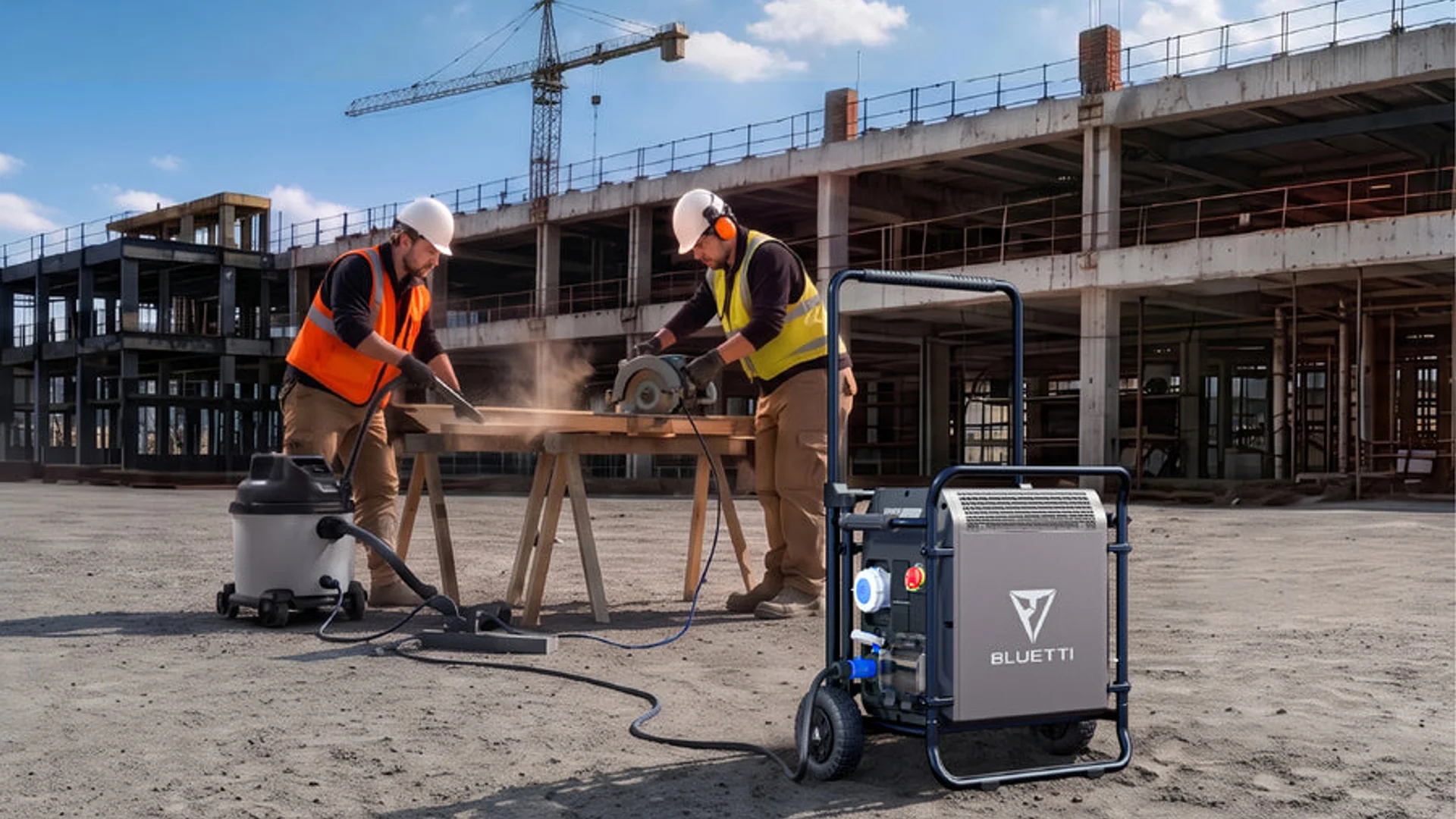
BLUETTI unveiled the Pioneer 5000 E-Generator at IFA in Berlin on 4 September 2026, aimed at building sites, events and other mobile work. The term battery generator is catchy, but it hides an important difference: this machine stores energy rather than producing it.

BLUETTI Pioneer 5000 E-Generator on wheels
BLUETTI PIONEER 5000 — BLUETTI

What BLUETTI announced

The Pioneer 5000 has a 5.12 kWh LFP battery that BLUETTI says can be expanded to 35 kWh. It lists 5 kW of continuous output, an 18 kW peak, an AC recharge from 5 to 80% in about 60 minutes and a 10 ms UPS switchover. It rolls on all-terrain wheels and is rated IP65 for dust and water and IK10 for impact.

BLUETTI quotes a noise level of 50 dB or less and an operating range of −20 to 55 °C. The announcement does not give prices, outlets or voltages per market.

Power and energy are two questions

Kilowatts tell you whether a tool can run at all; kilowatt-hours tell you for how long. The 18 kW peak is for brief start-up surges, not for continuous use.

Our own example: assume about 90% of 5.12 kWh is usable after conversion, roughly 4.6 kWh. A 2 kW saw running non-stop would last about 2.3 hours (4.6 ÷ 2). Real tools run in bursts, so a working day can last longer. At a constant 5 kW, the estimate drops to about 55 minutes.
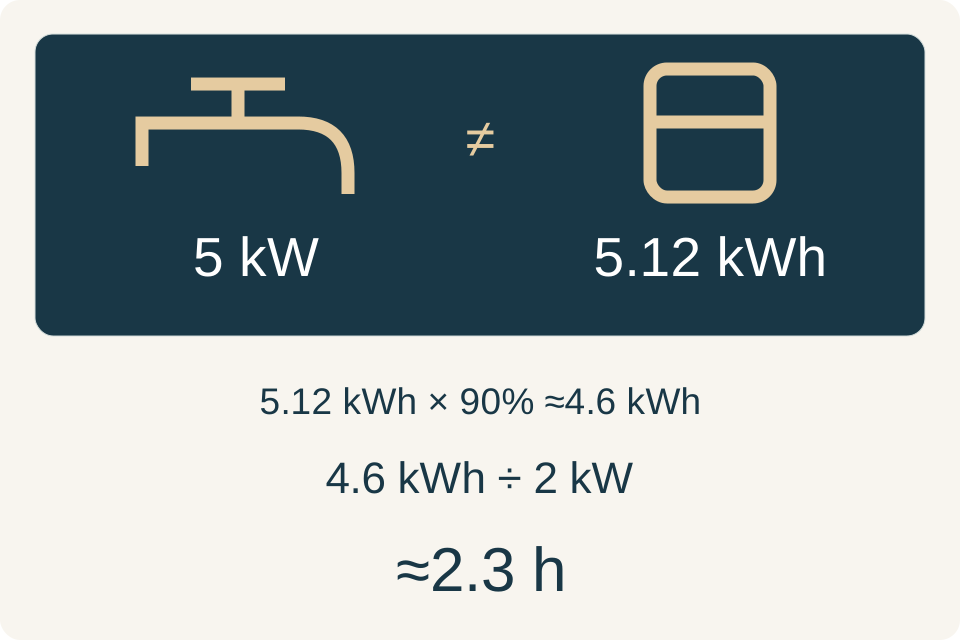
Graphic: 5 kW power versus 5.12 kWh energy, shown as a tap and a tank
Power is the flow, energy is the stored amount.

How it differs from a fuel generator

Nothing burns on site, so there are no exhaust fumes where people work; BLUETTI calls this zero tailpipe emissions. The electricity used to charge it may still come from fossil sources, so the benefit is local rather than automatic everywhere.

Refuelling takes minutes, recharging takes an hour or more. Plan charging between shifts, or use a fuel generator to top it up when needed.

Before you rely on it

Check the start-up current of your heaviest tool against the surge rating, and treat the ruggedness and noise figures as manufacturer specifications. Connecting to a building's wiring or a site distribution board is a job for a qualified electrician.

Compare it with conventional options in our generator overview or estimate your needs with the generator sizer.

Professional system announced internationally; BLUETTI has not published prices or market-specific availability in the announcement.

Sources

Privacy