The cables and small gear that make backup power usable.
A battery alone is not a complete setup. Plan how power reaches each appliance, how you measure the load and how you keep the route safe.
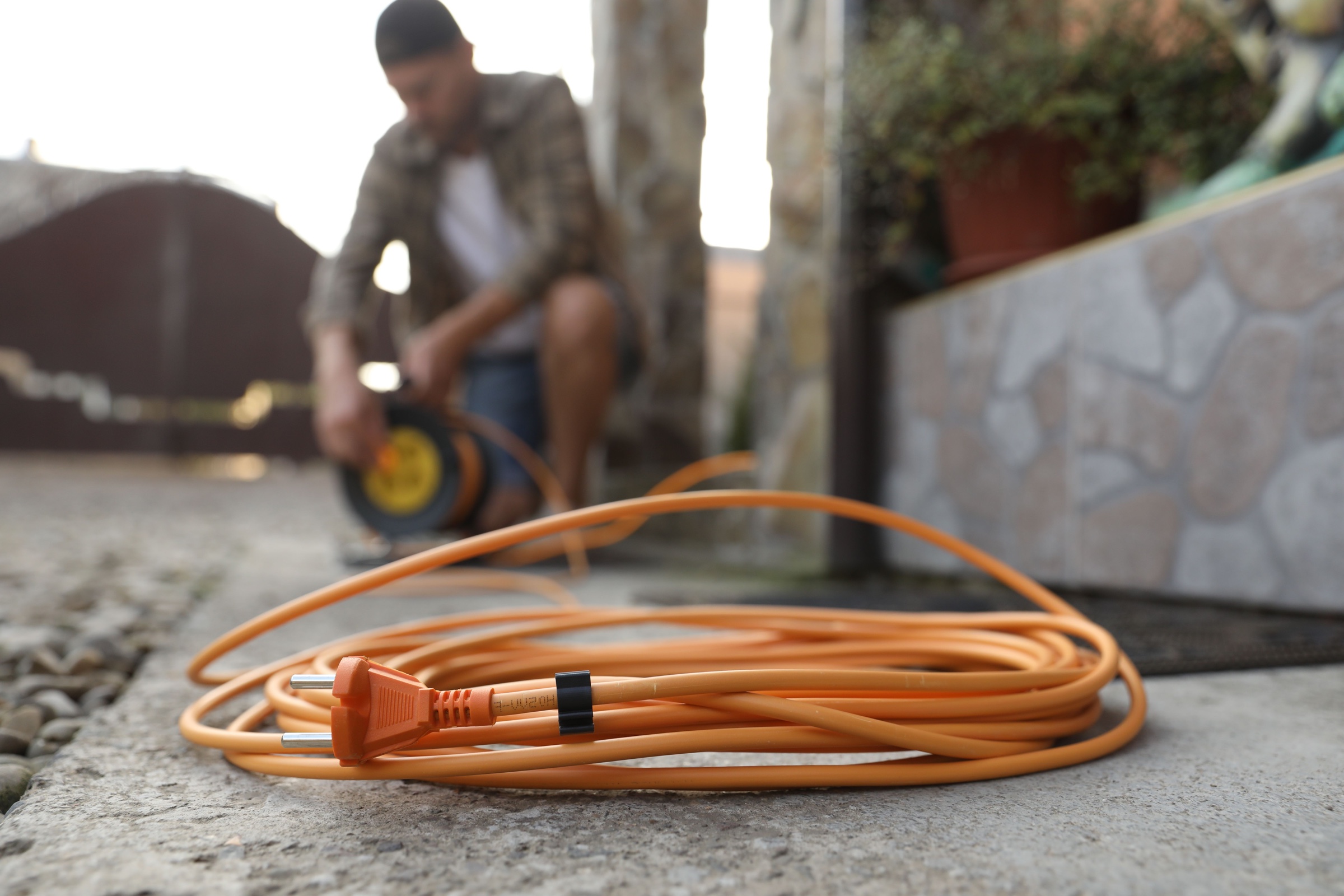
Choose the cable before you need it.
Enter the highest load that may run through this one cord—not the power station’s maximum output.
- Estimated current
- 8.3 A
- Estimated cable loss
- 2.1 V · 1.7%
- Regional ceiling used
- 15 A
- Use one correctly rated cord; do not daisy-chain leads.
- Keep plugs and sockets dry and protected from foot or vehicle traffic.
- Test RCD/GFCI protection with your exact power source; floating-neutral inverters may need manufacturer-specific guidance.
Planning aid only: verify the cord’s printed rating, plug standard and the manuals of every connected product.
Eight small product groups worth planning.
These are practical technical categories. Open the matching tool and verify the exact regional specification before use.
Extension cords
Bring power safely to the appliance. Choose by load, length, location and local plug.
Open the right tool →02Cable reels
Useful for distance, but only at the printed rating and fully unwound under substantial load.
Open the right tool →03Safe distribution
Use approved power strips and distribution gear—never an improvised backfeed cable.
Open the right tool →04Power measurement
A watt meter turns guesses into a real load and runtime plan.
Open the right tool →05Efficient lighting
LED lanterns and headlamps preserve battery capacity for essential equipment.
Open the right tool →06Cable protection
Covers, strain relief and dry connections reduce trip and damage risks.
Open the right tool →07CO alarms
Essential around fuel-powered backup. The generator itself always stays outdoors, far from openings.
Open the right tool →08Communication & spare batteries
Keep phones, radio, alerts and small lights available when the outage lasts.
Open the right tool →Start with the right regional product type.
These examples are a filtered technical reference. Confirm the exact regional model, rating, certification and manual before relying on one.
Southwire
12/3 SJTW 50ft Outdoor Extension Cord
- Conductors
- 12/3
- Length
- 50ft / 15.24m
- Certification
- UL/CUL listed
A shorter heavy-gauge North American outdoor route for loads within its 15A rating.
Southwire
12/3 SJTW 100ft Outdoor Extension Cord
- Conductors
- 12/3
- Length
- 100ft / 30.48m
- Plug
- NEMA 5-15P
A long North American outdoor route where 12-gauge conductors help control voltage drop.
Kidde
COB10 Carbon Monoxide Alarm
- Power
- Sealed battery
- Battery life
- 10 years
- Backup role
- No outlet required
A North American battery alarm that remains active when utility power is unavailable.
Defender
XPRESS 100 Cable Protector
- Channel
- 100 × 30mm
- Module size
- 1005 × 250 × 40mm
- Temperature
- −30 to 60°C
Protecting a cable crossing where people walk and a clearly visible, modular cover is appropriate.

Build one labelled kit—not a drawer full of unknown cables.
- Label each cable with its maximum load and intended appliance.
- Store adapters, light, meter and instructions together.
- Test the full route under a normal load before relying on it.
Questions people ask before use.
Can any extension cord handle a power station?+
No. The printed current or watt rating, conductor size, length, plug standard and indoor/outdoor rating all matter. The lowest-rated part limits the route.
Why must a cable reel be unwound?+
A tightly wound cable cannot lose heat as easily. Under a substantial load this can overheat the reel, so follow its printed wound and unwound ratings.