Connectivity
Starlink Mini
Manufacturer-sourced range- Typical range
- 25–40 W
- Starting value
- 40 W
- Brief peak
- 60 W
Check and edit these values once you have a nameplate or measurement.
Choose what must stay powered, then plan UPS output and the time needed to save work and shut down safely.
Build my plan ↓
Choose the closest example, then replace its watts with your actual load.
Exact models show their source. If the model is not indexed yet, use an editable category estimate instead.
8 of 27 results shown · search or filter to narrow the list
Check and edit these values once you have a nameplate or measurement.
Check and edit these values once you have a nameplate or measurement.
Check and edit these values once you have a nameplate or measurement.
Check and edit these values once you have a nameplate or measurement.
Check and edit these values once you have a nameplate or measurement.
Check and edit these values once you have a nameplate or measurement.
Check and edit these values once you have a nameplate or measurement.
Check and edit these values once you have a nameplate or measurement.
These are example inputs, not measurements. For important equipment, use measured consumption or its label.
How to measure the load →Allow time to respond, save or transfer work, and shut systems down. The plan adds a further five-minute margin.
Plan approximately 25 minutes of protected time. This is a requirement, not a runtime promise. Check the exact model’s official runtime curve at your measured load.
Output and communication are initial checks. Verify runtime, grounding, sockets, software and the actual equipment separately.
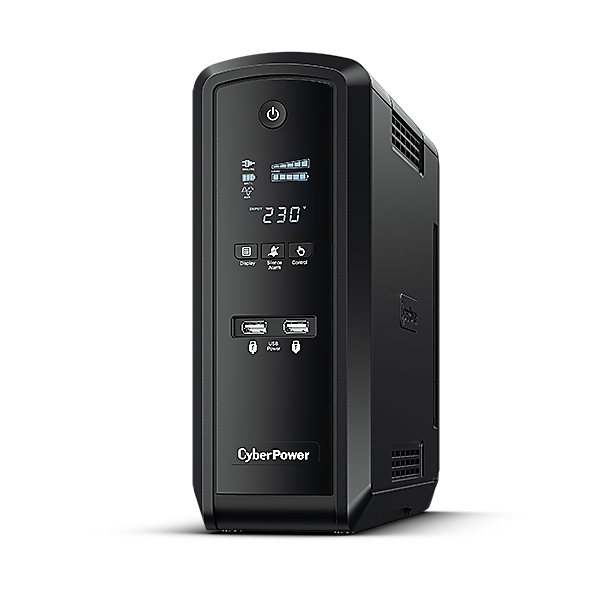
CP1500EPFCLCD: image from the Philippine product page, not proof of the actual sockets, included lead or delivery.CyberPower ↗
The manufacturer’s Philippine specification. Use this for initial output and control checks, then verify runtime and the shutdown procedure with the actual equipment.
The Philippine page lists 230 V±10% output with 8 NEMA5-15R battery-backed outlets and an IEC C14 inlet with a NEMA5-15P lead. Plug shape does not mean 120 V. Verify the actual lead ratings, grounding and appliance voltage; do not substitute the six-Schuko European namesake.
One HID USB management port is documented. This record does not establish a network-card shutdown route. Confirm software and NAS/operating-system support and test the complete sequence.
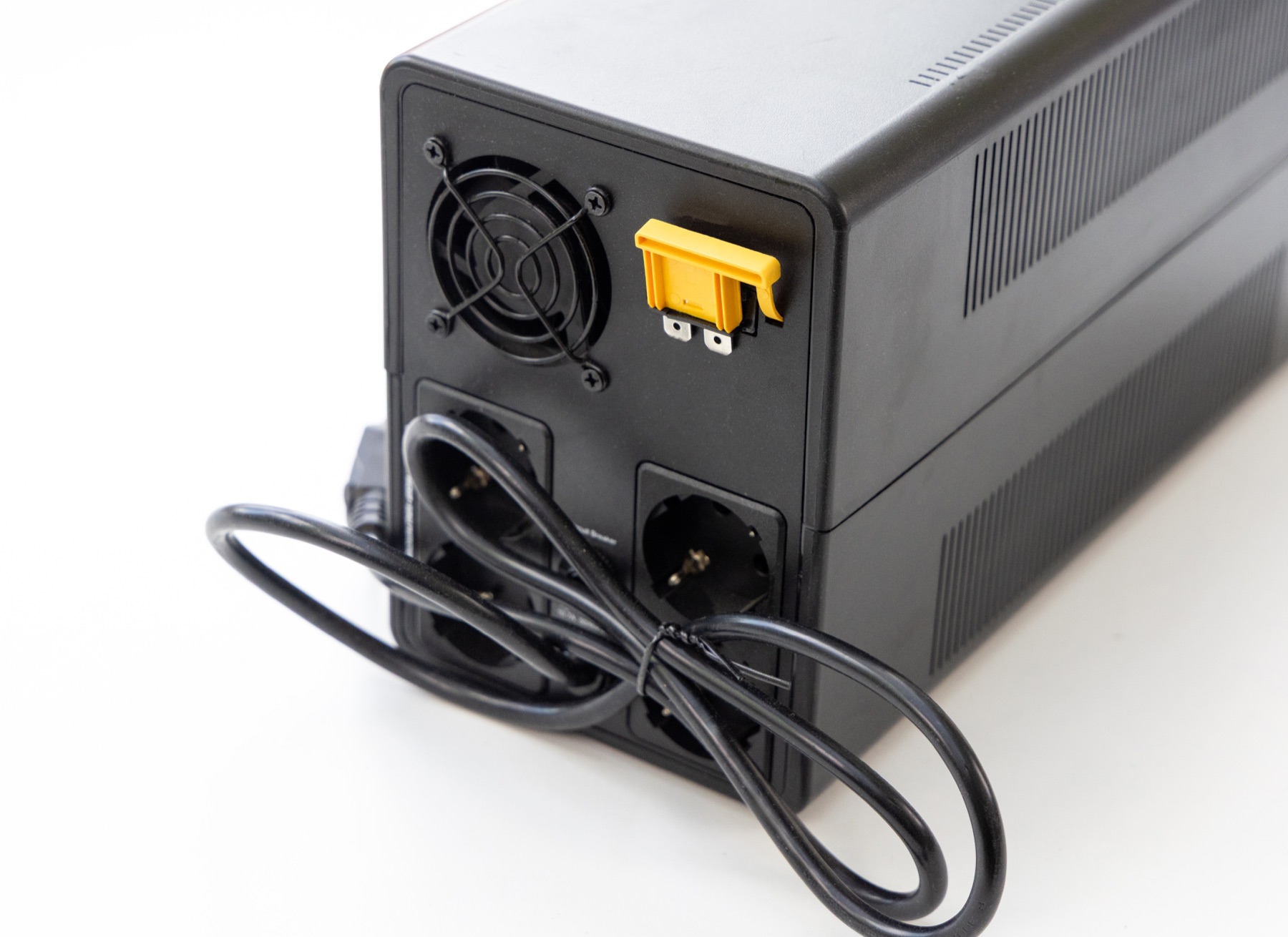
A UPS may combine battery-backed and surge-only outlets. Connect essential computing, storage and networking equipment to the outlets identified as battery-backed in its manual.
VA alone does not determine runtime. Battery condition, conversion loss and the manufacturer’s discharge curve matter. Use this planner to set power and time requirements, then verify the exact model.