Choose a solar generator for Nigeria
A solar generator usually combines a battery power station with solar panels. Start with your appliances and outage duration, then check the battery, inverter and panel as separate parts.
Start with your appliances and outage duration, then check the battery, inverter and panel as separate parts.
See why this fitsPlanning examples and comparison checks
Use the row closest to your situation. The explanation below shows what can move the result.
Comparison table
| Item | Input | Interpretation |
|---|---|---|
| Fan example | 40 W × 8 h | 320 Wh |
| Router example | 12 W × 8 h | 96 Wh |
| Laptop example | 45 W × 4 h | 180 Wh |
Planning estimate only. Real runtime varies with temperature, load behavior, battery condition and conversion path.

Use your own watts, hours and reserve.
A realistic input gives you a useful range instead of a false promise.
Open Power Planner →What does this mean
for your choice?
Make a load list
For a fan, router and laptop, measure or read each input rating and enter the hours you need. A 40 W fan for eight hours uses 320 Wh; a 12 W router for eight hours uses 96 Wh. A laptop averaging 45 W for four hours adds 180 Wh. These example loads total 596 Wh before conversion losses, station idle draw and reserve. They are not typical-consumption claims for every appliance.
Size energy and output separately
At an assumed 85% conversion efficiency and 10% unused reserve, 596 ÷ 0.85 ÷ 0.9 is about 779 Wh. Actual runtime changes with the equipment, battery condition and operating temperature. Add simultaneous running watts and check starting loads separately. A larger battery does not necessarily have a larger inverter.
Check what the bundle includes
The Nigerian manufacturer shop has a solar-generator category, but a listing title alone does not establish the exact panel, battery revision, included cable or supplied socket. Check the bundle contents and the delivered model identifier. Do not treat a photograph of a foreign outlet as evidence of the Nigerian package.
Plan how you will recharge
Panel watts are a rated value, not a promise of daily energy. Shade, orientation, sunlight and input limits change charging. Confirm panel open-circuit voltage, current, connector and polarity against the exact station manual. Allow for charging time between outages.
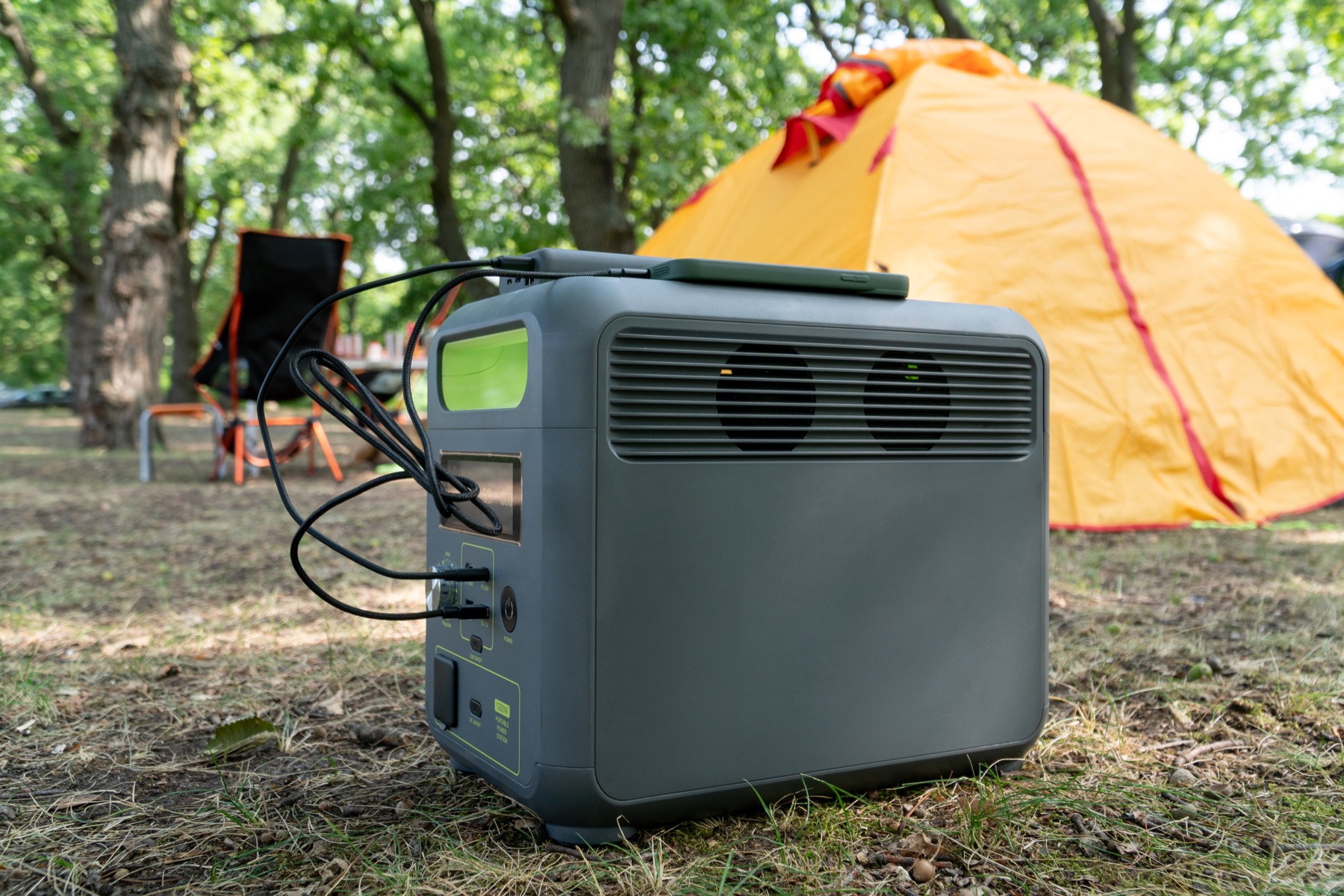
Check the complete power path.
A large enough battery can still be the wrong setup when its output, cable or regional version does not match.
- Measured load and simultaneous output
- Battery energy and usable reserve
- Exact voltage, frequency and complete cable path
- Dated model, package, warranty and seller evidence
Practical answers
Is this a recommendation to buy a locally available model?
No. The calculations and source-region catalogues help define the requirement. Exact Nigerian variants, stock, delivery and approved purchase links have separate checks.
Evidence and sources1 official sourceShow sources
Separate documented specifications from calculated matches.
Products shows source-region technical references. No Nigerian model has yet passed the exact-variant and photograph checks for calculated recommendations. A calculated match is not a compatibility guarantee or a purchase recommendation. Enter your actual device load and check its connections and instructions.