
What to do first
A blackout is usually not an emergency by itself. It becomes one if someone is in danger, if someone at home depends on powered medical equipment, or if there is a fire or a fallen powerline involved. Horizon Power tells Western Australians to call 000 first “in a life threatening emergency”, and TasNetworks says to call 000 “if someone is in danger”. Neither number is an outage reporting line — the fault numbers below are.
With that check done, four things cover most of the first hour:
- Leave the fridge and freezer doors shut. Every state source on this page leads with that instruction, because the hour figures below assume the doors stayed closed.
- Turn off appliances, so nothing restarts unexpectedly when the supply returns. Energy Safe Victoria gives this as advice for a Victorian home.
- Use a torch or a battery lantern, not candles. Energy Safe Victoria names “a torch or a battery-operated lantern” as safe alternative lighting.
- Report the outage to your distributor — the company that owns the poles and wires, not the retailer you pay. In Victoria, Energy Safe Victoria states that restoring power “is the responsibility of the electricity supply company which owns and maintains the poles and wires bringing power to your home”.
Your supply is 230 V (see the voltage section further down), so the equipment that works during an outage is equipment you already have: torches, batteries, a power bank and, if you use one, a battery power station that burns no fuel.
Source: Energy Safe Victoria, Power outages and energy safety (reviewed 9 April 2024) · Horizon Power, Power outages in regional WA
How long does your state say to prepare for?
This is the clearest state-against-state difference in Australian public advice, and the honest answer names both figures instead of averaging them.
- Queensland — three days. Get Ready Queensland asks households to think about “what items everyone in your house might need if you had to stay at home for three days”, with spare batteries and toiletries described as enough for three days and a three-day menu plan for non-perishable food. Its water figure is 10 litres of drinking water per person at a minimum. The same page adds that households in rural or remote areas, or at risk of extended isolation, may need supplies for more days.
- New South Wales — 14 days. NSW Health says that while many emergencies “will only extend over a few days”, planning for “a 14-day stay at home (possibly without water and electricity)” prepares a household for a wide range of circumstances, and its pantry list suggests holding enough “to enable a household to be confined at home for up to 14 days”. Its water entry is 3 litres per person per day.
Note the scale of the disagreement: the Queensland figure is a whole-of-emergency benchmark covering loss of power, water and gas and being unable to reach shops, while the NSW figure is written specifically for a household confined at home without water and electricity. Even the water figures differ (10 litres per person in the Queensland kit against 3 litres per person per day in the NSW list). This guide gives no single “Australian” number, because none of the sources on this page publishes one — the emergency management agency in your state or territory is the right place to check what applies to you.
Source: Get Ready Queensland, Pack a kit (last updated September 2026) · NSW Health, Preparing for an emergency — the smart thing to do (last updated 23 March 2023)
Who runs the network where you live, and who you report to
Australia has no single outage number and no single distributor for the whole country. The Australian Energy Regulator’s comparison service, Energy Made Easy, puts it plainly on its faults page:“For faults or emergencies, call your energy distributor” and“There are different distributors for each state and territory”, with the distributor’s number printed under ‘Faults and emergencies’ on your bill. That is why the answer to “who do I call?” is a state-by-state list rather than one national line.
The distributor that owns the poles and wires, and the reporting route each one publishes, is:
- New South Wales has three: Ausgrid (Sydney metro — inner, northern and eastern — and surrounds), Endeavour Energy (Greater Western Sydney, the Blue Mountains, the Southern Highlands and the Illawarra, and the South Coast) and Essential Energy(country and regional NSW, and southern regional Queensland). Ausgrid publishes a live outage map, a report-an-outage form and SMS outage notifications.
- Victoria has five, and Energy Safe Victoria prints all five fault numbers on its outage page: Citipower 13 12 80, Powercor 13 24 12, AusNet Services 13 17 99, Jemena 13 16 26 and United Energy 13 20 99.
- Queensland has two. Energex covers Brisbane, the Gold Coast, the Sunshine Coast and surrounds, and Ergon Energy covers country and regional Queensland. Get Ready Queensland lists 13 62 62 to report lost power or a supply problem with Energex and 13 22 96 for Ergon, with separate 24/7 numbers for fallen powerlines and electric shocks (13 19 62 and 13 16 70).
- South Australia has one: SA Power Networks, listed as covering all of SA. Its own site gives 13 13 66 as the 24/7 faults and emergencies line, and13 12 61 for general enquiries.
- Western Australia is split by region. Western Power publishes the outage tracker and asks households to call 13 13 51 to report an outage.Horizon Power covers regional WA and gives a 24/7 hotline, 13 23 51, to report a fault or outage — adding that fallen powerlines should be assumed live and left alone.
- Tasmania has one: TasNetworks, listed as covering all of Tasmania. Its site gives 132 004 for electrical emergencies (shocks, sparking, fallen powerlines and life support) and publishes a current-outages map plus a report-a-power-outage form.
- The Australian Capital Territory has one: Evoenergy, listed as covering all of the ACT. Its site lists 13 10 93 for electricity and 13 19 09 for gas, alongside its own outage pages.
- The Northern Territory is different again. The NT Utilities Commission’s register of electricity licences shows that the network licence is held by Power and Water Corporation(as is the system control licence), so that is the network business to contact. The current NT fault number could not be confirmed from the operator’s own pages while this draft was written, and an out-of-date outage number is worse than none, so no NT fault number is printed here. Check your bill or powerwater.com.au for the current number.
One more national layer is worth knowing. AEMO, the Australian Energy Market Operator, describes the National Electricity Market as “operating in New South Wales, the Australian Capital Territory, Queensland, South Australia, Victoria and Tasmania” — a list that does not include Western Australia or the Northern Territory. Market arrangements are not something a household acts on during a blackout; who owns the wires in your street is.
This site is not a distributor and publishes no outage status or outage map of its own. Read the status where the distributor that owns the wires publishes it.
Source: Energy Made Easy (AER), Faults and emergencies (last updated 26 October 2023) · Energy Made Easy, Who is my energy distributor? (last updated 5 September 2024; the table lists NSW, QLD, ACT, SA and TAS distributors, and not Victoria, WA or the NT) · Energy Safe Victoria (9 April 2024) · Get Ready Queensland, Reconnecting utilities (last updated September 2026) · SA Power Networks, Outages · Western Power, Outages · Horizon Power (regional WA) · TasNetworks, Power outages · Evoenergy, Outages · NT Utilities Commission, Register of electricity licences (Power and Water Corporation network licence, 12 Sep 2024) · AEMO, National Electricity Market
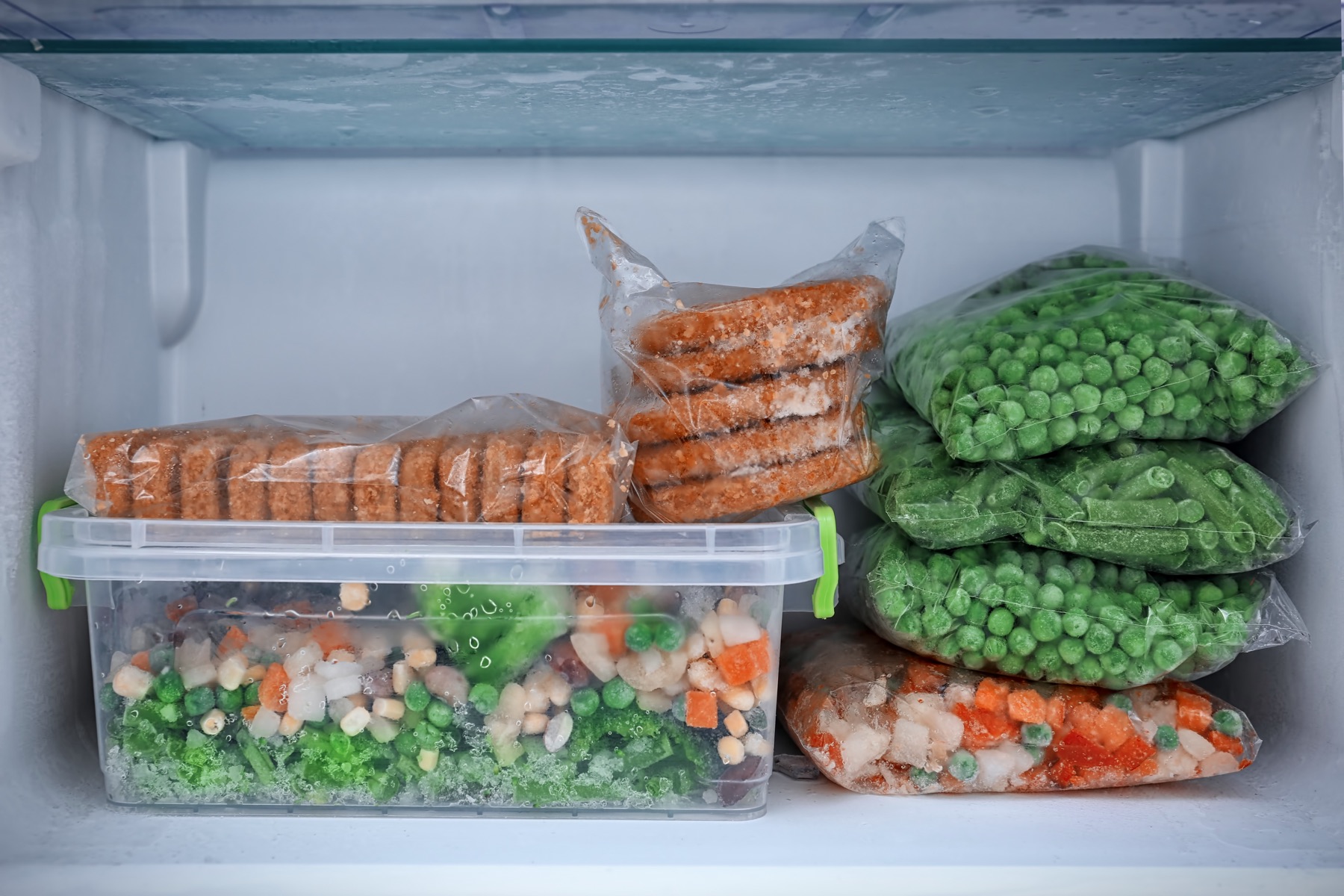
Food: 48/24, “at least 24 hours”, and the refreezing split
The food hour figures are the second place where Australian sources do not agree, so here they are side by side instead of merged into one number. In every case the clock only runs while the doors stay shut.
The fridge
- Western Australia — 2 hours. WA Health states that during an unplanned outage “your food will remain safe in your refrigerator for 2 hours”, and that if it has been more than 4 hours the food should be thrown out. Its separate 4-hour/2-hour rule for potentially hazardous food between 5 °C and 60 °C gives: under 2 hours — refrigerate or use immediately; over 2 and under 4 hours — use immediately; 4 hours or longer — throw it out.
- Queensland — 4 hours. Queensland Health states that “a closed refrigerator should keep food cold for four hours”, and that refrigerated food left above 5 °C for more than four hours should be disposed of.
- New South Wales — 4 hours. NSW Health states that refrigerated foods “will remain safe for up to 4 hours after a power failure”, and asks households to use a thermometer to be sure food has not exceeded 6 °C.
- Victoria — 4 hours at 5 °C or above. The Victorian Government’s outage page says that once cold or frozen food is no longer cold to the touch (5 °C or above) it can be kept and eaten for up to 4 hours, and after that it must be thrown away.
That is one state at two hours and three states at four hours. WA Health is the outlier on the fridge; treat the shorter figure as the conservative one if you live in Western Australia.
The freezer
- Western Australia — 48 hours full, 24 hours half full. WA Health: “a full freezer can keep food frozen for up to 48 hours, while a half full freezer can kept food frozen for 24 hours”, with the door kept shut. Its working note is that a freezer in good condition can keep food frozen for between 1 and 2 days.
- Queensland — 48 hours full, 24 hours half full. Queensland Health gives the same pair: “frozen food after 48 hours if the freezer is full, or after 24 hours if the freezer is half full”, and states that freezers “will usually not defrost and spoil food for at least 24 hours if half full or 48 hours if full”.
- South Australia — “at least 24 hours”, with no full/half split. The SA Health fact sheet says: “Freezers will usually not defrost for at least 24 hours, provided the door has been kept shut.” It does not divide the figure into full and half-full as WA and Queensland do.
- New South Wales — 1 day. NSW Health states that “frozen foods will remain safe for up to 1 day after a power failure”. It does not publish a full/half-full split on that page.
Victoria’s outage page does not give freezer hours at all, so no figure is shown for it here.
Refreezing: permitted, forbidden, and unclear
This is the sharpest disagreement, and no single sentence covers Australia:
- Western Australia permits it below 5 °C. WA Health: “Foods that have partly defrosted or defrosted but remain very cold (5 °C or less) can be refrozen”, adding that the food-safety risk is not the issue but the quality may suffer.
- Victoria permits it while the food is still solid. The Victorian Government states: “If power is restored when frozen food is still solid, the food is safe to refreeze.”
- Queensland says do not. Queensland Health: “If frozen food has partially thawed, do not re-freeze. The food should be eaten as soon as possible or disposed of.” The same page repeats that thawed frozen foods “should not be refrozen but should be kept cold and be eaten as soon as possible”.
- South Australia is in between. The SA Health fact sheet says that if frozen foods have thawed, “some foods should not be refrozen but be kept below 5 °C and eaten as soon as possible. Other foods may be refrozen, but will lose quality.” It does not name which foods fall on which side of that line.
- New South Wales — the NSW Health page gives the fridge and freezer hours and the 6 °C thermometer check, but does not address refreezing, so no NSW refreezing rule is quoted here.
Queensland is the only one of these five sources that prohibits refreezing. Western Australia permits it at 5 °C or less, and Victoria permits it while the food is still solid. South Australia is explicitly mixed — some thawed foods should not be refrozen while others may be, with a loss of quality — and New South Wales does not address it at all. Because the sources genuinely conflict, each position above is shown with its state label rather than resolved into one national rule.
Source: WA Health (HealthyWA), The power is off — is your food? (no date shown) · Queensland Health, Food safety after a disaster (page dated 4 January 2024; archived copy) · NSW Health (23 March 2023) · Victorian Government, Staying safe during a power outage (page last updated 13 January 2026; archived copy) · SA Health, Food safety in an emergency — in the home (fact sheet PDF; no date shown on the sheet)
Generators: outdoors, and never into a wall socket
The generator rules come from different states’ regulators, and they are not one merged instruction. Attribute each to the state that published it:
- Energy Safe Victoria states that portable generators “should never be used indoors or in enclosed areas” because they emit carbon monoxide “that you cannot see or smell”, and that a generator “should only be used outside, in a well-ventilated area” — its outage page spells the same rule out as including garages and tents. On the wiring: “Never try to power the house by connecting the generator into a wall socket or switchboard, unless there is an existing dedicated generator inlet”, because back-feed endangers utility workers and neighbours on the same network, and “any changes to household wiring must be carried out by a licensed electrician”. It also asks for heavy-duty extension cords rated in watts or amps at least equal to the generator.
- SA.GOV.AU, from the South Australian Department for Energy and Mining, is the source for the changeover switch, and this wording must not be attributed to Energy Safe Victoria: “A licensed electrician must install a changeover switch so the generator and the normal electricity supply can’t run at the same time”, with an inlet installed where needed and a certificate of compliance issued afterwards. The same page states that severe penalties apply if the system does not follow the right electrical safety standards (AS/NZS 3000), and that portable generators must not be used inside or in any closed-in space, or near open windows, vents and doors, so that carbon monoxide is kept out of the home.
This page gives no instructions for connecting, installing, wiring or back-feeding a generator into a home, a socket, a switchboard or a circuit. Anything that touches a home’s fixed electrical installation is work for a licensed electrician in every state source on this page. If you want backup power without that work, the equipment that needs no wiring at all is a battery power station charged before the outage.
Source: Energy Safe Victoria, Using a generator safely (reviewed 16 March 2026) · Energy Safe Victoria, Power outages and energy safety (reviewed 9 April 2024) · SA.GOV.AU, Using generators for back-up power (page last updated 14 February 2024; archived copy)
Voltage, plugs and appliances
Australian low-voltage supply is 230 V, with an allowed tolerance of+10% / −6% — a range of 216 V to 253 V. Two Australian government publications give that figure:
- The Australian Energy Market Commission writes that most jurisdictions “have now adopted a nominal voltage of 230V, consistent with the International Electrotechnical Commission (IEC) standard 60038 and with the Australian mirror standard 60038”, and that “Australia has generally adopted a +10%/-6% tolerance, giving an allowed range of 216V to 253V”.
- The NSW Office of Environment and Heritage states that Australian Standards recommend voltage be supplied “at 230 V with a range of +10% to -6% (i.e. between 253 V and 216 V)”, attributes that to AS 60038, and notes that previous standards recommended 240 V — which is why older appliances at a site may be rated for 240 V.
Two limits on that are worth stating. First, AS 60038 itself is a paid standards document and was not read for this draft: the 230 V figure rests on the two government publications above, not on the text of the standard. Second, no frequency figure is stated here, because no primary source giving one was found.
On plugs and appliances, the standard that applies to Australian plugs and socket outlets isAS/NZS 3112: the Electrical Equipment Safety System’s certification bulletin requires the latest requirements of AS/NZS 3112 Appendix J to be applied to equipment with plug portions for insertion into socket outlets. If you use equipment brought in from a country with a different plug and a different nominal voltage, that is a question for the equipment’s manufacturer or a licensed electrician, not for an adapter chosen on price.
Source: Australian Energy Market Commission, Final report ENERFR 2019 — EPR0068 (PDF, 2019; nominal 230 V and the +10%/-6% range) · NSW Office of Environment and Heritage, Voltage optimisation guide (PDF, April 2016; 230 V +10%/-6%, attributed to AS 60038) · EESS information bulletin 20-001, AS/NZS 3112 Appendix J (April 2020)
Questions people ask
How many days of supplies should I keep?
It depends on your state, and the two published figures do not match: Queensland — three days (Get Ready Queensland), New South Wales — 14 days (NSW Health). No source on this page gives a national number, so none is given here. Get Ready Queensland also says rural or remote households at risk of extended isolation may need more.
How long do the fridge and the freezer hold?
Fridge: WA Health says 2 hours; Queensland Health, NSW Health and the Victorian Government all use about 4 hours. Freezer: WA Health and Queensland Health say 48 hours full and 24 hours half full; SA Health says only “at least 24 hours” with no full/half split; NSW Health says up to 1 day. Show the shortest figure for your state rather than the longest anywhere.
Can I refreeze food after a power outage?
There is no single Australian answer. WA Health permits refreezing food that stayed at 5 °C or less. The Victorian Government says frozen food is safe to refreeze if the power returns while it is still solid. Queensland Health says do not re-freeze partially thawed frozen food. SA Health says some thawed foods should not be refrozen while others may be, with a loss of quality. NSW Health does not address it.
Who do I report the outage to?
The distributor that owns the poles and wires where you live — Ausgrid, Endeavour Energy or Essential Energy in NSW; Citipower, Powercor, AusNet Services, Jemena or United Energy in Victoria; Energex or Ergon Energy in Queensland; SA Power Networks in South Australia; Western Power or Horizon Power in Western Australia; TasNetworks in Tasmania; Evoenergy in the ACT; and Power and Water Corporation in the Northern Territory. Your retailer does not fix the network. Keep 000 for emergencies.
Can I run a generator in the garage with the door open, or plug it into a wall socket?
Energy Safe Victoria says portable generators should never be used indoors or in enclosed areas, and its outage page names garages and tents. On the socket: never power the house by connecting a generator into a wall socket or the switchboard unless there is an existing dedicated generator inlet, and any change to household wiring is a licensed electrician’s work. SA.GOV.AU adds that a licensed electrician must install a changeover switch so the generator and the normal supply cannot run at the same time. This page gives no installation instructions.
Does this site know whether there is a power outage near me?
No. This site is not a distributor and publishes no outage map or live status. Use your distributor’s own outage page or its faults number.
Sources and draft status
Get Ready Queensland: Pack a kit · Get Ready Queensland: Reconnecting utilities (September 2026) · NSW Health: Preparing for an emergency — the smart thing to do (23 March 2023) · WA Health (HealthyWA): The power is off — is your food? · Queensland Health: Food safety after a disaster (4 January 2024) · SA Health: Food safety in an emergency — in the home (fact sheet) · Victorian Government: Staying safe during a power outage (13 January 2026) · Energy Safe Victoria: Using a generator safely (16 March 2026) · Energy Safe Victoria: Power outages and energy safety (9 April 2024) · SA.GOV.AU: Using generators for back-up power (14 February 2024) · Energy Made Easy (AER): Faults and emergencies · Energy Made Easy: Who is my energy distributor? · SA Power Networks: Outages · Western Power: Outages · Horizon Power: Faults and outages (regional WA) · TasNetworks: Power outages · NT Utilities Commission: Register of electricity licences · AEMO: National Electricity Market · AEMC: Final report ENERFR 2019 (PDF) · NSW Office of Environment and Heritage: Voltage optimisation guide (PDF, April 2016) · EESS: Information bulletin 20-001, AS/NZS 3112 Appendix J
Every hour figure, phone number and rule above is quoted from the source named beside it, and the states are shown separately wherever they differ: three days against 14 days for supplies, 2 hours against 4 hours for the fridge, 48/24 against “at least 24 hours” and one day for the freezer, and permitted in some states against forbidden in another on refreezing. Nothing here is a national average, because the sources do not give one.
This is an editorial draft for review. It contains no product offer, no purchase recommendation and no electrical installation instructions. AS 60038 (a paid standards document) was not read; the Northern Territory fault number is not stated because it could not be confirmed from the operator’s own pages when this draft was written; and no frequency figure is stated because no primary source giving one was found. Where a source page was temporarily unavailable, the source line above refers to an archived copy of that same page. Language review and final content review are still outstanding, and no safety approval is claimed. Also in this edition: all guides for Australia · grid-down essentials.