Shade costs more than you think
A branch shadow over part of the panel can pull the output down much further than the size of that shadow suggests. Heat and dirt also play a part: the US Department of Energy names them alongside shade as factors in real-world yield.
So look before you unfold. Where will the shadow of the tent, the van or that tree be in an hour?
Face the sun, and follow it
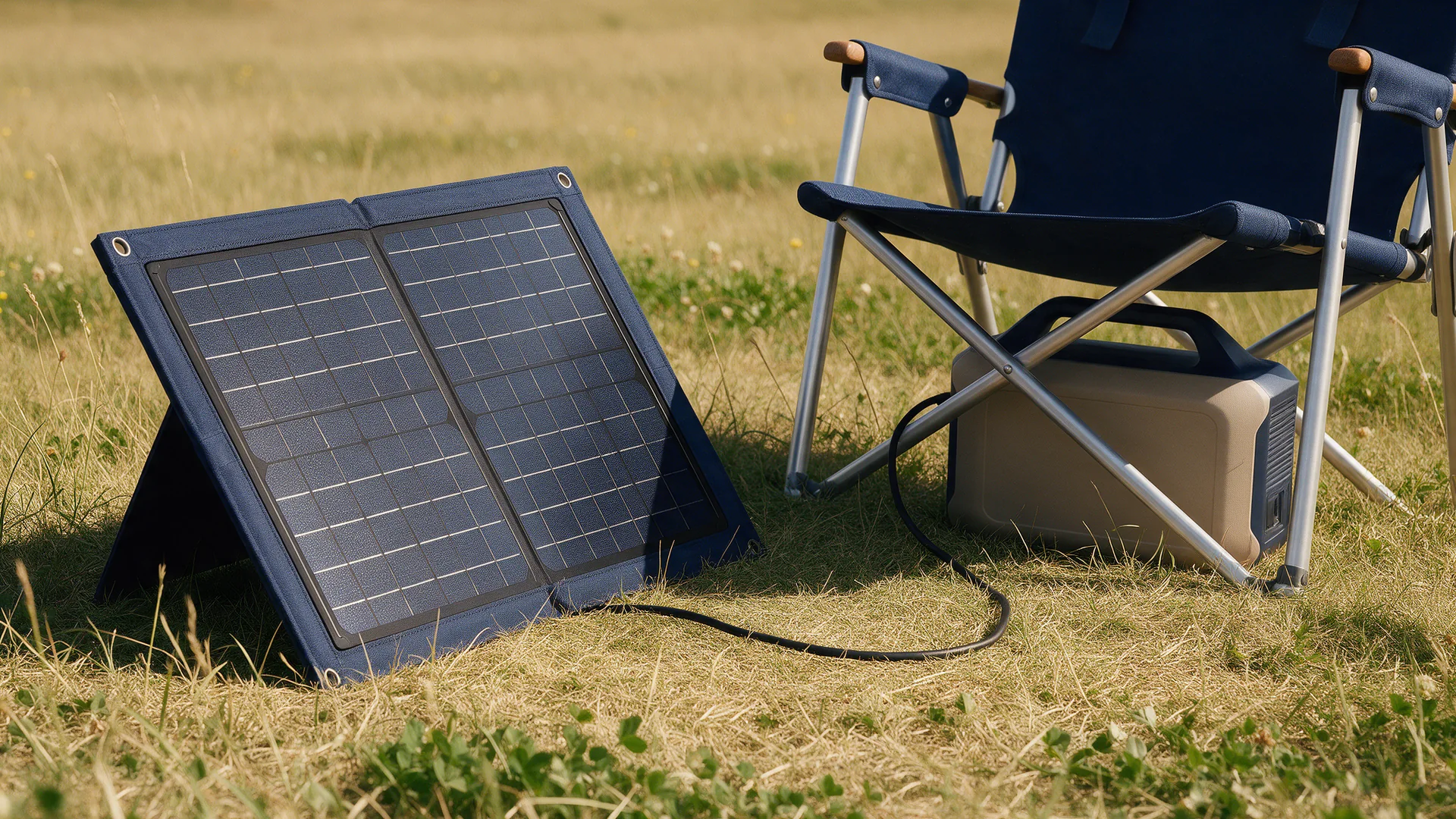
A panel that faces the sun head-on catches the most light. Most foldable panels have a stand; adjust it so the sun falls on the panel as straight as possible.
Turn the panel a few times a day, for example at lunch and in the afternoon. It is a small effort that you often see straight away on the display.
Clouds lower the output but do not always stop it. Hazy light still gives something; a thick grey sky much less.
Give it air and keep it clean
Panels work better when they are not baking. Leave some air underneath, not flat on hot sand or a dark roof. Wipe off dust and pollen with a soft cloth.
Keep the power station itself in the shade, because batteries do not like heat either.
A connection that fits
Check that the panel's connector and voltage match the solar input of your power station. The manual lists the input range. Use a ready-made cable meant for that pairing, not a do-it-yourself solution.
A bigger panel is not automatically faster. If the power station accepts less solar input than the panel can deliver, the power station sets the limit.
Not sure which cable fits? The guide on solar cables for power stations walks you through the common connectors.
Sources
Technical claims checked against these sources on 28 September 2026.