Friday: make a short list
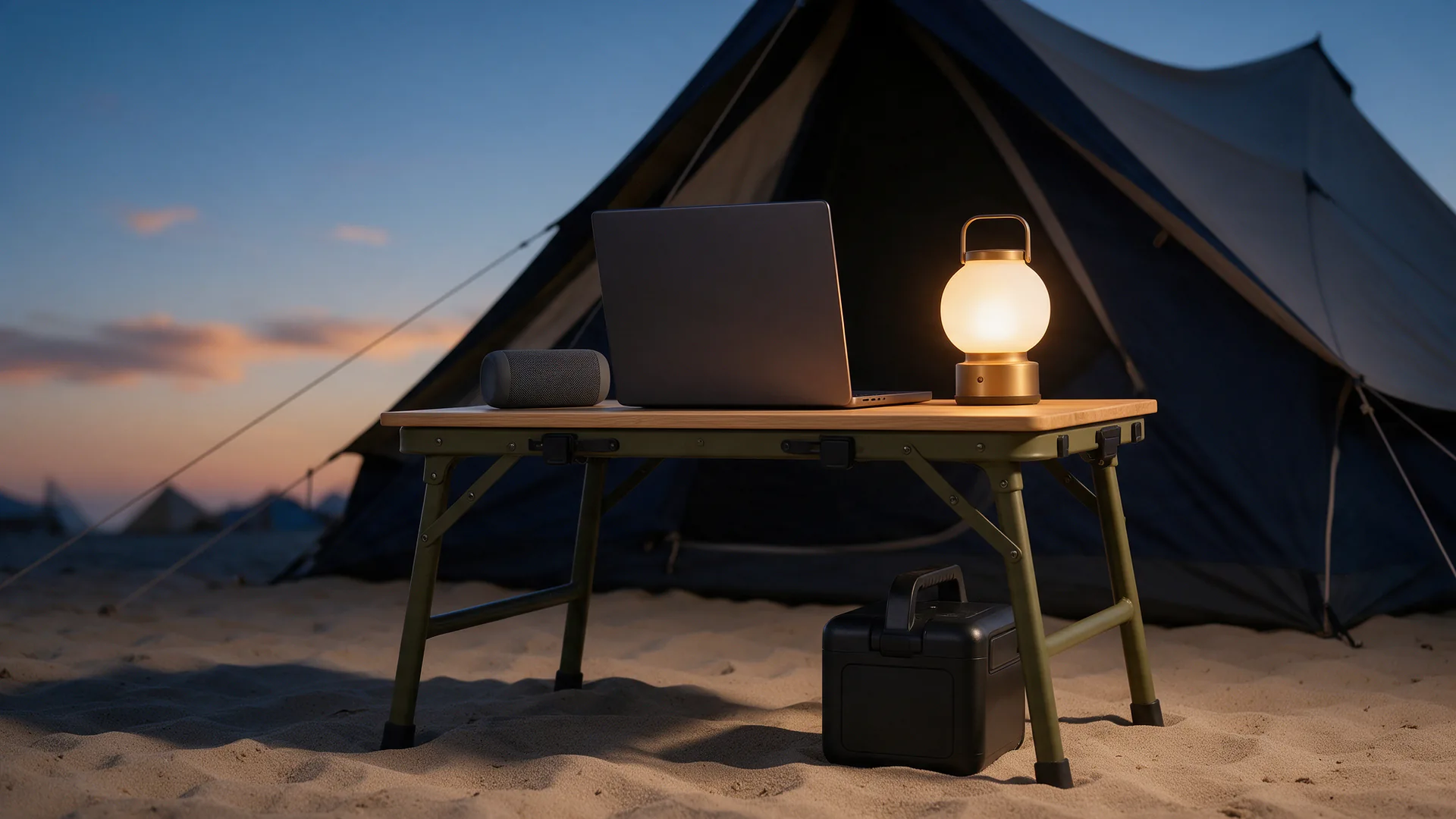
Write down what really comes along: a laptop for a few hours of writing, a phone, a lantern, a Bluetooth speaker. Then write down how much you think you will use each one.
That second list matters most. An evening of music at low volume asks far less than a laptop that renders video.
For example: three hours of laptop work a day, one phone charge a day, a lantern for four hours each evening and a speaker for two. Those are your own assumptions, and they can change.
Saturday: charge smart
Charge USB-C devices directly over USB-C where possible. Going through the socket on a power station and then the laptop adapter costs extra energy along the way.
Turn off what you are not using. A lantern that burns all night or a laptop left on standby makes a difference across two days.
Keep batteries out of the full sun. Heat is bad for them, and a power station in the shade of the tent stays cooler.
Light and sound for the evening
Rechargeable lanterns and a speaker with its own battery are easy: charge them fully at home, and they may not need the power station at all. That keeps capacity for the laptop.
Sunday: an honest estimate
How long a setup lasts depends on your devices, their settings and the weather. A fixed number of hours would be a guess.
Would you rather calculate than guess? In the energy planner you enter your own devices and hours, and see which capacity suits your weekend. The result is an estimate, not a promise.
Sources
Technical claims checked against these sources on 28 September 2026.