
What to do first
A power cut is not usually an emergency in itself. It becomes one if someone is in danger, if a person depends on powered medical equipment, if a fire starts or if there is any chance of carbon monoxide. If anyone is in danger, call 999 first and deal with the power afterwards.
With that check done, four things cover most of the first hour in a British home:
- Leave the fridge and freezer doors shut. The Food Standards Agency treats an outage of under four hours as unlikely to make chilled or frozen food unsafe.
- Keep one light switched on so that you notice when the supply returns.
- Report it on 105 — free, and it puts you through to the network operator for your area.
- Keep anything that burns fuel outside, including any portable generator. Carbon monoxide is the real danger in an outage, not the dark.
Your supply in the UK is 230 V at 50 Hz through Type G sockets, so the equipment that works during a cut is the equipment you already have: torches, batteries, a power bank and, if you use one, a battery power station that needs no fuel.
Who to report it to — and who actually fixes it
The company that fixes a power cut is not your energy supplier. Ofgem is explicit that your local network operator is responsible for fixing power cuts in your area, and that its rules cover England, Scotland and Wales. Your supplier handles the account and the billing; the network operator owns the cables, the wires and the substations.
Ofgem gives two ways to report an unplanned cut: report it directly to your local network operator using their website, or call 105 for free, which puts you through to your electricity network operator. The 105 service is run by the Energy Networks Association on behalf of the distribution network operators in Great Britain, and its own site describes the number as the free route to your local operator wherever you live in England, Scotland or Wales.
Use the postcode lookup to find the operator that covers your address, then keep its name and its fault number with your household paperwork. That turns the next outage into a two-minute job instead of a research project.
Energy Networks Association: who is my network operator? · powercut105.com
Is it just your home, or the whole area?
Before you ring anyone, look out of the window. If other houses on the street are dark too, the fault is almost certainly on the network and belongs to your network operator — report it and wait for the update. If your neighbours all still have power, the problem is more likely to be inside your own property.
Two practical checks are worth doing in that second case. Look at your consumer unit to see whether a switch has tripped, and check whether a prepayment meter has run out of credit. Be cautious with anything that involves opening up or rewiring a circuit: work on a fixed electrical installation belongs to a competent, registered electrician, and a fault in your own wiring is not something the network operator repairs.
Ofgem publishes the time limits within which a network operator must restore supply after a cut: 12 hours for interruptions outside severe weather, 24 hours in severe storm category 1 and 48 hours in severe storm category 2. Those limits also depend on how many homes and businesses are affected, so they are an obligation on the operator rather than a promise about your street — the honest answer to how long yours will be off is still that nobody can give you a time.
Food in the fridge and the freezer
The Food Standards Agency publishes household guidance for exactly this situation, and it does give hour figures — so this page uses the FSA’s numbers rather than a rule of thumb.
- Under four hours: the FSA treats such a short outage as unlikely to make food in chilled or frozen storage unsafe.
- The fridge: the FSA says your fridge should stay cold for up to four hours with the door kept shut.
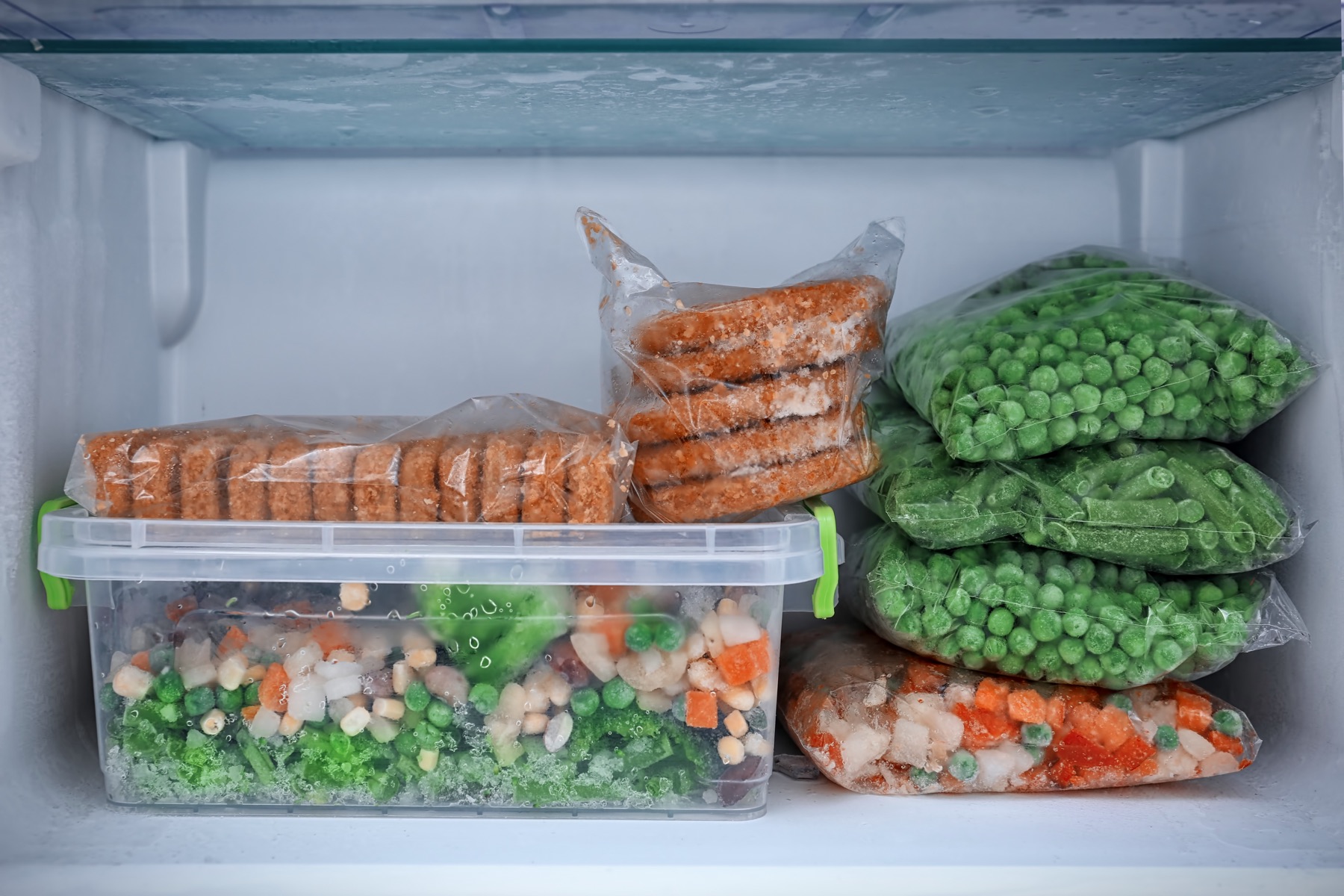
- The freezer: the FSA says food should stay frozen for up to 48 hours in a full freezer, or 24 hours if it is half full — and it labels these as estimates, because fridge and freezer temperatures vary with make and model and with how often the door is opened.
- Temperature matters more than the clock. The FSA recommends a fridge thermometer. In normal circumstances it recommends 5 °C or below, but during a power cut food can be stored in a fridge under 8 °C. If the temperature reaches 8 °C or above, chilled food should be eaten within four hours first, and discarded after four hours unless the power comes back within that window.
- If it is cold outside, the FSA allows a second option. When the weather is below 8 °C the FSA says you can store food outside — in clean, dry conditions, out of direct sunlight, protected from animals, and in a sealed box to prevent contamination and tampering.
The FSA’s other household instructions are easy to follow: keep fridge and freezer doors closed as much as possible, eat the food that needs refrigeration first, then defrosted frozen food that does not need cooking, then room-temperature perishable food, then tinned, bottled and dried food. Food that is normally stored in a cupboard continues to be safe to eat. The FSA’s test for chilled food is temperature and time — so use a fridge thermometer rather than your own judgement about how the food looks.
The FSA also names the groups who need extra caution: young children, pregnant women, older people and people with an underlying health condition. It adds that if you cannot boil water, ready-to-use infant formula is an option. And if you are running a business rather than a household, the FSA points you to your local authority’s food safety team instead of this page.
Generators, camping stoves and carbon monoxide
Carbon monoxide is the hazard that turns a manageable power cut into a serious one. The HSE describes it as a gas you cannot see, taste or smell, produced by the incomplete burning of carbon-based fuels, and warns that it can kill quickly without warning. The NHS lists portable generators among the household appliances that can produce it, alongside gas boilers, cookers, heaters and open fires.
The rule for a household is short. Any generator, camping stove or barbecue that burns fuel is used outdoors only, well away from doors, windows, vents and any occupied space. It never goes in a house, a garage, a shed, a tent or an awning, and an open door or window does not make an enclosed space safe. The NHS’s own instruction is equally direct: do not use a barbecue or camping stove indoors or inside a tent, and do not leave engines running in an enclosed space such as a garage. Where the Food Standards Agency does mention a camping stove or barbecue for cooking when the power is off, it adds that most of these appliances are designed for outdoor use only and that you should follow the manufacturer’s instructions for using them safely.
A generator also has an electrical side. Connecting a generator to a home’s fixed wiring, back-feeding a circuit or wiring a changeover arrangement is not a household task — it belongs to a competent, registered electrician, because a supply that feeds back into the network endangers the people repairing it. This page gives no instructions for connecting a generator to a socket, a consumer unit or your home’s wiring. Plug-in equipment that needs no wiring at all, such as a battery power bank or power station charged before the outage, avoids that problem entirely.
If you already burn gas, oil, wood or coal at home, the NHS says to get a carbon monoxide alarm for each room containing such an appliance, to keep those appliances properly installed and well maintained, and to keep rooms well ventilated; the HSE adds that such appliances should be serviced and maintained by a competent person and the chimney regularly swept.
If you smell gas or think an appliance is leaking carbon monoxide, the HSE gives the free National Gas Emergency Service number: 0800 111 999, open 24 hours. For symptoms of carbon monoxide poisoning, the NHS says to stop using the appliance, go outside, call NHS 111 for advice, and call 999 or go to A&E if someone is struggling to breathe, is confused, has lost consciousness, is weak, or has chest or muscle pain.
Source: HSE, carbon monoxide awareness FAQ (including the 0800 111 999 gas emergency number) · NHS, carbon monoxide poisoning
Questions people actually ask
Who do I ring about a power cut?
105, which is free and connects you to your local electricity network operator. You can also report the fault directly on that operator’s website. Your energy supplier does not fix the network, and 999 is for emergencies only.
Is 105 a national number?
It is the free power cut reporting number for England, Scotland and Wales: the Energy Networks Association describes 105 as the free number that puts you through to the electricity network operator for your area, and notes that operators can also be contacted directly.
How long will my power be off?
No one can give you a time for your own street. Ofgem’s rules set the outside limits within which a network operator must restore supply — twelve hours in normal conditions, longer in severe storm categories — and those depend on how many properties are affected.
How long does an unopened fridge keep food cold?
The Food Standards Agency says up to four hours with the door kept shut, and it treats a shorter outage as unlikely to make chilled or frozen food unsafe.
How long does an unopened freezer keep food frozen?
The Food Standards Agency says up to 48 hours in a full freezer, or 24 hours if it is half full, and describes both as estimates that vary with the appliance and with how often the door is opened.
Is it safe to run a generator in the garage with the door open?
No. Generators belong outdoors, away from doors, windows and vents. Carbon monoxide cannot be seen or smelled, and the HSE warns it can kill quickly without warning.
Does this site know whether there is a power cut near me?
No. This site is not a network operator and publishes no outage map. Use your network operator’s own live map, or ring 105.
Sources
Food Standards Agency: food safety in a power cut — advice for consumers · Ofgem: check if you can get a payment for a power cut · Energy Networks Association: find my network operator · powercut105.com: report a power cut on 105 · HSE: carbon monoxide awareness FAQ · NHS: carbon monoxide poisoning
This is an editorial draft. It contains no product offer, no purchase recommendation and no electrical installation instructions. UK guidance is quoted with the date or publication it comes from, and every hour figure on this page is the Food Standards Agency’s.