EcoFlow RIVER Gen4 and small loads: why a 10 W router uses more than 10 W
EcoFlow unveiled the RIVER 260 Gen4 and RIVER 520 Gen4 at IFA in Berlin on 4 September 2026, aimed at devices that draw under 100 W.
3 min read
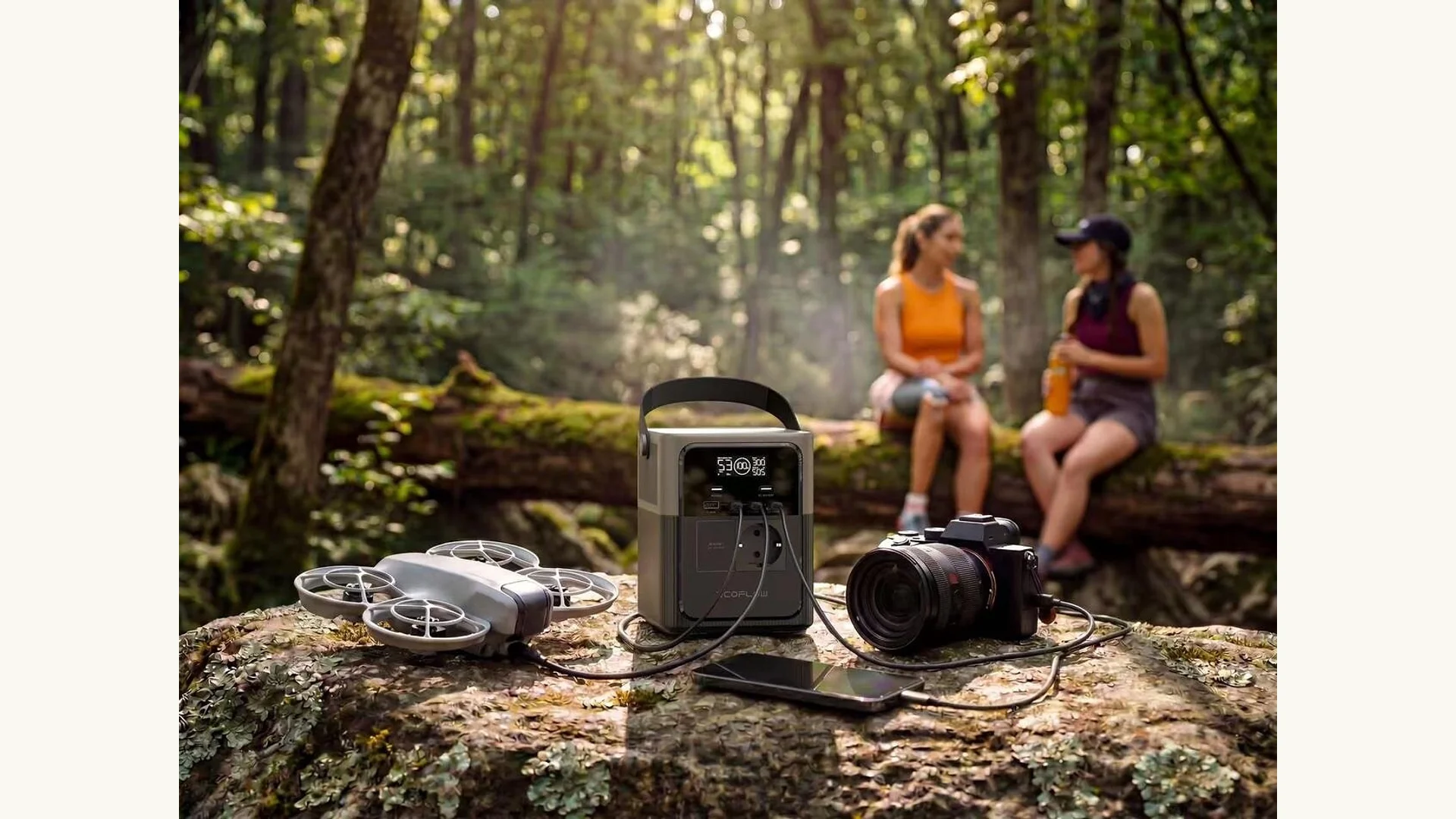
With small loads, the station's own consumption can matter almost as much as the device.
RIVER 260 Gen4: 256 Wh and 300 W; RIVER 520 Gen4: 512 Wh and 500 W, according to EcoFlow.
EcoFlow claims about 30% lower active idle power than an industry average it measured itself.
Details
What EcoFlow announced
That focus touches a problem many owners of small power stations notice: low loads often run out sooner than the label suggests.
The RIVER 260 Gen4 stores 256 Wh, delivers 300 W and weighs about 3.0 kg. The RIVER 520 Gen4 stores 512 Wh, delivers 500 W and weighs about 4.6 kg.
Both use LFP cells and have a 140 W USB-C port that can charge and discharge.
EcoFlow also lists X-Boost figures of 600 W and 1,000 W. X-Boost is not extra continuous capacity: it lowers the voltage so some heating appliances can run at reduced power.
EcoFlow's IFA event page uses different naming and figures in places; the details here follow the dated announcement of 4 September 2026.
EcoFlow's announcement does not include prices or market-by-market launch dates.
Where the extra watts go
When you use an AC outlet, an inverter turns the battery's direct current into alternating current.
That inverter uses power as long as it is switched on, and some energy is lost in the conversion. At 200 W this overhead is a small share; at 10 W it can be a large one.
EcoFlow says the Gen4's active idle power is about 30% below an industry average, based on its own measurements of selected products.
It does not publish the absolute figure, so treat the percentage as a manufacturer claim rather than an independent test.
A worked example
Take a 256 Wh station and assume about 230 Wh is usable after battery protection and conversion. A router draws 10 W.
If running the AC side adds an assumed 8 W, the total is 18 W and the battery lasts about 13 hours (230 ÷ 18).
If the router can run from a DC or USB-C output with an assumed 1 W overhead, the total is 11 W and the estimate rises to about 21 hours (230 ÷ 11).
These numbers are illustrative assumptions, not measurements of a RIVER Gen4. They show why the output you choose can matter as much as battery size.
What works with any small station
Use a DC or USB-C output only if it matches the voltage and connector on the device's own adapter. Switch the AC side off when nothing needs it, and check real consumption with a plug-in energy meter.
EcoFlow quotes a UPS switchover of under 10 ms, under defined conditions. Whether a particular router or computer stays on during a switch depends on that device, so test it before relying on it.
For the whole internet chain, read Wi-Fi on backup power or see how long a router and modem run on a power station.