
First: the 72-hour baseline, not a stopwatch
Public Safety Canada frames household preparedness as self-sufficiency for at least 72 hours. Its power outage page states plainly: “You should be prepared to take care of yourself and your household for a minimum of 72 hours.” The emergency kit page repeats the same horizon with the words “Be prepared to be self-sufficient for at least 72 hours”, and the kit checklist says to plan for “at least 3 days (72 hours)”.
Read that as a floor for your own stores, not as a forecast. The federal page also warns that“All areas in Canada experience occasional power outages”, caused by freezing rain, hailstorms, geomagnetic storms, high winds, wildfire damage to the supply network, and demand during heat waves and cold snaps. It lists frozen water pipes, communication failures, food and water contamination and exposure to extreme heat, extreme cold or carbon monoxide as the ways an extended outage can hurt a household.
Source: Public Safety Canada, Power outages (page details 2025-09-12) · Public Safety Canada, Emergency kits (page details 2025-09-12) · Public Safety Canada, Emergency kit checklist (page details 2026-04-30)
What to store
The federal emergency kit checklist is the shortest honest answer to “what do I store”. It asks forstored or bottled water: two litres per person per day for drinking, cooking and hygiene; non-perishable food such as canned food, energy bars and dried foods, replaced once a year; a manual can opener; a wind-up or battery-powered flashlight; a wind-up or battery-powered radio; extra batteries and battery packs; a first aid kit; extra keys; cash in smaller bills and coins; a mobile phone charger and power bank; and tissue paper, toilet paper and paper towels.
The same checklist treats personal needs as part of the kit rather than an optional extra: prescription medications and medical equipment, eyeglasses and contact lens solution, infant formula and baby food, pet food, water and medication, and a list of medications with dosage. It also says to add more supplies if you can, in case the emergency lasts longer than the baseline.
Health Canada gives the water figure in two parts: 2 litres of water per person per day, with2 additional litres of water per person per day for cooking and cleaning — the same four litres in total as the kit page. Its food list is “items that won’t spoil, such as canned food and energy bars”, with a reminder to keep food allergies, celiac disease and food intolerances in mind.
Water is the part people most often under-count. The federal kit page asks for water to be increased to include enough for pets, and Health Canada adds that if tap water is not safe, all water used for drinking, preparing food, dental hygiene, ice cubes, washing fruit and vegetables and preparing hot or cold drinks must be boiled — or disinfected by the method on that page if boiling is not practical.
Source: Public Safety Canada, Emergency kit checklist (2026-04-30) · Health Canada, Food and drinking water safety in an emergency (page details 2026-05-08)
What to check: the fridge and the freezer
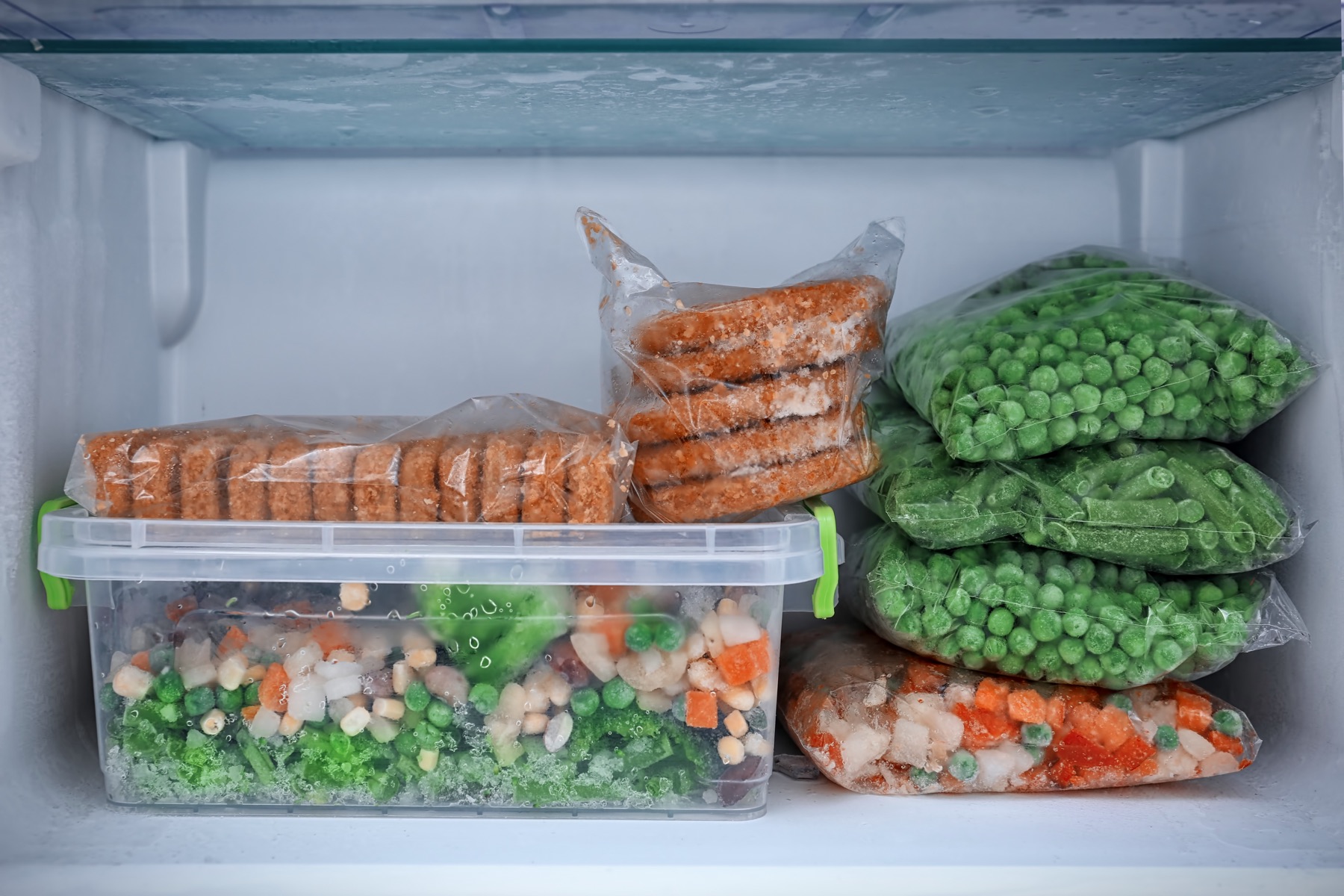
Keeping the doors shut is the instruction every Canadian source leads with. Public Safety Canada puts it as“Don’t open your freezer or fridge unless it is absolutely necessary”, and Health Canada says “Do not open the refrigerator or freezer door unless necessary”. Hydro-Québec asks households not to unplug either appliance and to avoid opening the doors.
The hour figures are where the federal and provincial sources do not fully agree, so here they are side by side.
Health Canada, for a household: a full freezer will keep food frozen for about 48 hours; a half-full freezer for about 24 hours; an unopened refrigerator will keep food cold for about 4 hours. The same page says to throw away all food that has been at room temperature for 2 or more hours, and to throw away all food with an obvious unusual colour or odour — while adding the warning that “Food contaminated with bacteria does not always smell bad or appear spoiled.”
The Government of Québec (provincial), for a household: a fridge thermometer should read between0 °C and 4 °C, which means food stays cold for about four to six hours after an outage; for an outage of more than six hours the food should be sorted when the power returns, and the page gives a keep-or-discard table for dairy, fruit and vegetables, meat, soups, eggs, desserts, pasta and condiments. For the freezer it says frozen food can be stored for 48 hours in a freezer filled to capacity that is kept closed, and 24 hours in a half-filled freezer.
Hydro-Québec (provincial utility): “Un congélateur plein gardera la nourriture congelée de 24 à 36 heures si la porte demeure fermée” — a full freezer keeps food frozen for 24 to 36 hours if the door stays closed. Hydro-Québec’s utility page gives the shortest freeze window of the sources on this page. Treat the shorter figure as the conservative one for a Québec household, and check the appliance and the guidance that applies where you live.
Two practical consequences follow from the sources rather than from us. Use a refrigerator thermometer, because Health Canada asks you to “Check your refrigerator and freezer thermometers to help you determine if the food is still cold or frozen enough” — a thermometer tells you something your hands and nose cannot. And do not move frozen food outdoors, even in a Canadian winter: Health Canada states“Do not place frozen food outside, even in winter”, because animals could get at it and contaminate it, and the sun’s rays could thaw it even when the outdoor temperature is very cold.
Source: Health Canada, Food and drinking water safety in an emergency (2026-05-08) · Public Safety Canada, Power outages — get prepared (page details 2026-03-12) · Gouvernement du Québec, What food to throw away after a power outage or flood (last update 2024-11-12) · Hydro-Québec, Pendant une panne (French; read 2026-09-22)
What to do first: check, then notify your utility
The federal sequence during an outage is short: “Check if the power outage is only in your home”, “Check your circuit breaker panel or fuse box”, then“Contact your power or hydro company to report the outage”, and monitor that company and local authorities for information. Public Safety Canada warns not to touch the breaker or fuse panel with wet hands or while standing on a damp floor.
Who you contact is provincial, because the distribution utility is. Two verified examples:
- Ontario — Hydro One: report online, text outage to 92887 (WATTS), or call 1-800-434-1235, its province-wide power outage and emergency number, described as available 24 hours a day, 365 days a year. If the call is a life-threatening emergency, Hydro One says to call 911 first. Its outage information is published on the Storm Centre outage map.
- Québec — Hydro-Québec: report a panne online through the reporting service, or by phone on 1 800 790-2424. Hydro-Québec’s own outage information and map is published as Info-pannes, and it advises keeping a list of emergency numbers, including its own, ready in advance.
The general rule from these two sources is the one to carry: the utility that owns the lines in your area is the body that knows about the outage and publishes the information about it. Find its number before you need it, because it can change.
On the emergency number itself, the federal rule is narrow: 9-1-1 is for emergencies. Public Safety Canada tells you to call 9-1-1 or your local emergency services after you are outside if a carbon monoxide alarm sounds, and Hydro One asks for 911 first if a call represents a life-threatening emergency. An ordinary outage is a call to the utility, not to the emergency line.
One point about this site: we are not a utility and we publish no outage status of our own. Read the status where the utility that owns the lines publishes it.
Source: Public Safety Canada, Power outages — get prepared (2026-03-12) · Hydro One, Outage tools — report an outage and the outage map (Ontario; read 2026-09-22) · Hydro-Québec, Pendant une panne (French; read 2026-09-22)
Backup power: the household rules, not an installation guide
Public Safety Canada lists options for backup power such as batteries or power banks, and it states that“Battery- or solar-powered portable generators do not produce carbon monoxide and can be used anywhere”. Health Canada recommends considering solar- or battery-powered portable generators as well, and states that carbon monoxide, which is produced by burning fuel, “can only be detected with a carbon monoxide alarm”. For fuel-burning equipment, the federal rules for a household are explicit:
- “Always follow the manufacturer’s instructions”.
- Run a portable fuel-burning generator at least 6 m (20 feet) from all homes or buildings, with the exhaust directed away from open windows and doors and all windows and doors near it closed.
- Use portable fuel-burning generators that automatically shut off when carbon monoxide levels are high, and make sure carbon monoxide alarms are working.
- “Connect lights and appliances directly to the generator”.
- If extension cords are necessary, use properly rated, CSA-approved cords.
- “A back-up generator may only be connected to your home’s electrical system through an approved transfer panel and switch that has been installed by a qualified electrician”, and Public Safety Canada also says to “Get advice from a licensed electrician before you install a generator”.
- “Never plug a generator into a wall outlet”.
That last pair is the boundary of this page. Anything that touches your home’s fixed wiring is work for a licensed electrician, and this draft gives no instructions for connecting, installing, wiring or feeding power back into a building or the grid. Québec reaches the same place from its own direction: Hydro-Québec states that under Chapter V — Electricity of the Québec Construction Code, generator installation must be done by a master electrician (maître électricien) to avoid the risk of electrocution or a short circuit that could start a fire.
Source: Public Safety Canada, Power outages — get prepared (2026-03-12) · Hydro-Québec, Pendant une panne (French)

Carbon monoxide is the risk that runs through all of it
Health Canada describes carbon monoxide as a gas that “has no smell, taste or colour” and that “can only be detected with a carbon monoxide alarm”. It is produced whenever fuel is burned — gasoline, propane, natural gas, oil, wood, coal, butane, including in vehicle exhaust — and the sources it names include generators, lighting equipment such as lanterns, and outdoor cooking appliances such as grills, barbecues and camping stoves.
The federal outage guidance turns that into rules for a household: do not use outdoor fuel-burning cooking equipment indoors, and do not operate it in a shed, garage, crawlspace or basement “even with the windows and doors open”; keep it away from air intakes, open doors and windows; and if you use a vehicle to charge electronics or to warm up, do not idle it in a garage, even with the garage door open. If a carbon monoxide alarm sounds, leave the house for fresh air, do not try to find the source, call 9-1-1 or local emergency services once outside, and do not re-enter until a qualified professional says it is safe.
Hydro-Québec states the same risk for fuel-burning space heaters, lighting, generators and portable stoves designed for outdoor use — indoor use carries a strong risk of asphyxiation and poisoning because they release carbon monoxide that no chimney will carry away, and it recommends using them only outdoors.
Source: Health Canada, Carbon monoxide: overview (page details 2024-11-12) · Health Canada, Carbon monoxide: preventing exposure (page details 2024-11-12) · Public Safety Canada, Power outages — get prepared (2026-03-12) · Hydro-Québec, Pendant une panne (French)
When the power comes back
Public Safety Canada asks for a staged return rather than everything at once: “Give the electrical system a chance to stabilize before reconnecting tools and appliances”, turn the heating-system thermostats up first, reconnect the fridge and freezer, then wait 10 to 15 minutes before reconnecting other tools and appliances. It also says to make sure the hot water heater is filled before turning the power on, to check food safety in refrigerators, freezers and cupboards, never to touch electrical power lines, to stay away from them, and to report downed power lines to the appropriate officials in your area.
Hydro-Québec’s after-an-outage list is the same shape: bring electrical appliances, including baseboard heaters, back gradually; wait until temperature and humidity are normal before restarting televisions, audio systems, computers and microwaves; reset timers, clocks and thermostats; do not walk through water to reach the distribution panel; throw out spoiled food from the refrigerator and freezer; and if your electrical installation was damaged, have it inspected by a master electrician.
Hydro One adds the distance rule for lines: always stay clear of downed lines or equipment by at least 10 metres, and never assume they are safe to approach.
Source: Public Safety Canada, Power outages — get prepared (2026-03-12) · Hydro-Québec, Après une panne (French; read 2026-09-22) · Hydro One, What happens when the power goes out (Ontario)
Questions people ask
How long should I be ready to manage on my own?
Three days. Public Safety Canada asks households to take care of themselves for a minimum of 72 hours, and its kit checklist says to plan for at least 3 days (72 hours) and to add more supplies if the emergency lasts longer.
How much water is that?
Four litres per person per day in total: Health Canada gives 2 litres per person per day plus 2 additional litres per person per day for cooking and cleaning. The federal kit checklist states two litres per person per day for drinking, cooking and hygiene. Increase the amount if you have pets.
How long do the fridge and freezer hold?
Health Canada: about 48 hours for a full freezer, about 24 hours for a half-full freezer, and about 4 hours for an unopened refrigerator. Québec’s provincial page: food in the fridge stays cold about four to six hours, and frozen food keeps 48 hours in a freezer filled to capacity or 24 hours in a half-filled one. Hydro-Québec states 24 to 36 hours for a full freezer with the door closed. The figures differ by source and the shortest one is the safest to act on.
Should I put frozen food outside? It is January.
No. Health Canada states: “Do not place frozen food outside, even in winter” — animals could get at it and contaminate it, and the sun’s rays could thaw it even when the outdoor temperature is very cold.
Can I tell from the smell whether food is still safe?
No. Health Canada states that food contaminated with bacteria does not always smell bad or appear spoiled, and its food-safety guidance in emergencies is to not eat food you think may not be safe — when in doubt, throw it out.
Where does a generator go?
Outside, and at least 6 m (20 feet) from all homes or buildings per Public Safety Canada, with exhaust directed away from windows and doors and those windows and doors closed. Never plug a generator into a wall outlet, and have any connection to your home’s electrical system made through an approved transfer panel and switch installed by a qualified electrician. This page gives no installation instructions.
Who do I report the outage to?
The utility that owns the lines where you live — for example Hydro One on 1-800-434-1235 in its Ontario service area, or Hydro-Québec on 1 800 790-2424 in Québec. Keep 9-1-1 for emergencies, including a carbon monoxide alarm after you have left the building.
Sources and draft status
Public Safety Canada: Power outages (page details 2025-09-12) · Public Safety Canada: Power outages — get prepared (page details 2026-03-12) · Public Safety Canada: Emergency kits (page details 2025-09-12) · Public Safety Canada: Emergency kit checklist (page details 2026-04-30) · Health Canada: Food and drinking water safety in an emergency (page details 2026-05-08) · Health Canada: Carbon monoxide — overview (page details 2024-11-12) · Health Canada: Carbon monoxide — preventing exposure (page details 2024-11-12) · Gouvernement du Québec: What food to throw away after a power outage or flood (last update 2024-11-12) · Hydro-Québec: Pendant une panne (French) · Hydro-Québec: Après une panne (French) · Hydro One: What happens when the power goes out (Ontario) · Hydro One: Outage tools — report an outage and the outage map (Ontario)
The federal sources set the 72-hour baseline and the household rules for fuel-burning equipment. Food-safety hours come from Health Canada, the Government of Québec and Hydro-Québec, and they are not identical — each figure above is shown with its source. Outage reporting is provincial, and the two examples here are the utility pages themselves.
This is an editorial draft for review. It contains no product offer, no purchase recommendation and no installation instructions. Also in this edition: all guides for Canada · grid-down essentials.