Can you charge a power station with a generator?
Learn when generator charging works, why inverter output is not a universal guarantee, and which voltage, frequency, power and cable checks come first.
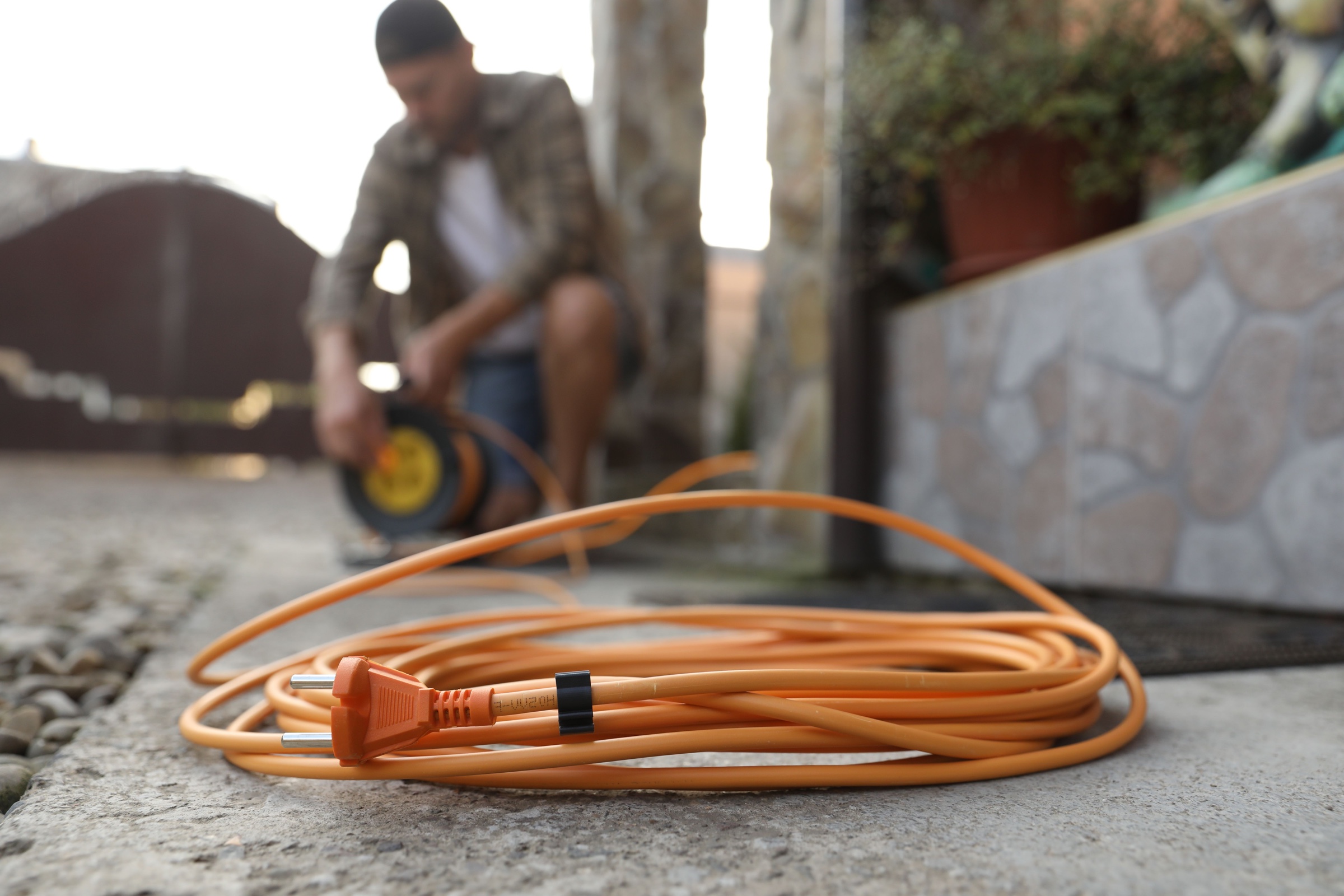
An inverter generator is a sensible starting class, not automatic compatibility. A dedicated smart generator works only with the exact listed stations, adapters and cables.
Use only the path named in the station manual
Voltage, frequency, waveform and continuous watts must fit
Keep exhaust away from doors, windows and vents
Plain languageWhat do the technical words mean?Open explanation +
- AC charging inlet
- The mains-style input used to charge the power station.
- Pure sine wave
- A smooth AC waveform required or preferred by many charging systems.
- Continuous output
- What the generator can supply for the whole charging session, not its brief peak figure.
What does this mean
for your choice?
Start in both manuals
Find ‘generator charging’ in the station manual and note its accepted input voltage, frequency, waveform and charging power. Then compare those figures with the generator’s continuous—not peak—output. A product page that merely says ‘AC charging’ is not enough evidence for every generator.
Leave continuous-power headroom
The station may request hundreds or more than one thousand watts while charging. Add any other load plugged into the generator and stay within its continuous rating. Where the station permits it, reducing AC charge speed can make a smaller generator easier to match.
Pure sine wave is useful, not the whole answer
Some manufacturers explicitly recommend a pure-sine inverter generator and specify a narrow frequency and voltage range. That improves the starting point, but neutral-ground behavior, protection devices, regional frequency and the station’s own input logic can still decide whether charging begins.
A smart generator is a closed compatibility path
Brand-specific systems can add automatic start, direct charging or data communication. Those features are not generic. For example, EcoFlow lists specific DELTA models and an adapter requirement for one Smart Generator generation; the logo alone does not approve every current DELTA model.
Test the exact system before relying on it
Run the generator in its approved outdoor location, connect the station with the specified cable, confirm stable input watts and watch a complete charging session. Stop if charging repeatedly drops out, protective devices trip, the cord heats up or either manual’s operating limits are exceeded.
Count charging watts as a real generator load.
The power station's AC charging draw and every other simultaneous load must fit inside the generator's continuous output.
1,200W charging plus 300W of other loads needs 1,500W continuously. An 1,800W generator leaves only 300W nominal room, so confirm the exact charging setting and manuals.
Three models to compare after the calculation.
- Continuous
- 3,200 W
- Maximum
- 4,000 W
Fast direct-DC charging in a compatible North American EcoFlow hybrid system
North America 120V · 120V · Gasoline or LPGProfile and buying options →A matching plug is not a complete compatibility check.
Open a route and then verify the exact products in both manuals.
Generator AC outlet → station AC inletOpen explanation+
RouteUse this exact connection path only as documented.
When it may workThe exact station manual permits generator charging
Never assumeA matching plug proves compatibility
Verify firstVoltage, frequency, waveform, continuous W, cord and grounding instructions
Brand smart generator → dedicated station portVerify first+
RouteUse this exact connection path only as documented.
When it may workThe manufacturer lists the exact station and adapter
Never assumeEvery product from the same brand connects
Verify firstModel list, cable, firmware and regional version
Generator → station solar/DC inletVerify first+
RouteUse this exact connection path only as documented.
When it may workOnly with an expressly approved regulated source and cable
Never assumeArbitrary generator AC or DC belongs on a solar port
Verify firstVoltage, current, polarity and connector limits
Check the complete system.
Do not tick these off in your head. Check the manuals and test the real setup before an outage.
- The station manual explicitly describes generator charging
- Generator voltage and frequency match the regional station input
- Pure-sine or other waveform requirement is met
- Continuous generator watts exceed the requested charge power plus other loads
- The original or correctly rated grounded charging cord is used
- Grounding and neutral instructions for both products are followed
- Generator remains outdoors and dry according to its manual
- The charging session remains stable during a supervised test
Clear answers
Do I need an inverter generator to charge a power station?+
Some station manuals recommend or require stable pure-sine output, which makes an inverter generator a strong starting point. But ‘inverter’ on the generator does not replace checking the exact voltage, frequency, continuous watts, grounding and station manual.
How large should the generator be?+
Its continuous rating must cover the station’s requested AC charging watts plus every other simultaneous load, with practical headroom. Do not size from the generator’s short peak number. If the station supports a lower charging rate, that can reduce the required generator size.
Can I connect generator DC output to the solar input?+
Not unless the station or generator manufacturer explicitly approves that regulated path. Solar inputs have strict voltage, current, polarity and connector limits. A physical adapter does not make an arbitrary generator output safe.
Can the power station run appliances while the generator charges it?+
That depends on the exact station. Pass-through or UPS behavior, input limits and heat management vary, and some manuals discourage simultaneous use during generator charging. Follow the model-specific instructions rather than assuming it works like a building transfer system.
Why does my power station reject generator power?+
Common causes include unstable voltage or frequency, insufficient continuous watts, a waveform the charger rejects, grounding or neutral behavior, eco-mode cycling, an overloaded cord or an input setting that does not match the local frequency. Diagnose from both manuals; do not bypass protection.